
Short answer: Function, not paint.
Real answer: A real farmhouse is built to work: a dry back entry, a covered porch, food storage, windows that watch the yard and room to grow. White siding and black windows are the modern farmhouse look. You can have the look without the function, and the function is what lasts.
Farmhouse checker
Is your house a real farmhouse, or just the look?
Tick what the house has. You get a verdict, a function score and a look score, and your next three changes with the Seattle rules for each. Nothing you enter leaves this page.
Your next three changes
Your checklist
A plain-language guide, not a code review. Rules change; confirm with your city before you build. Sources: Seattle Department of Construction and Inspections, U.S. Department of Energy, University of Missouri Extension, Public Health – Seattle & King County.
I live in a farmhouse, in finish and in function. It’s a 1945 house on just under an acre, with a garden that’s automated but still a lot of work. These old features still earn their keep. Here’s how to tell a real farmhouse from the look.
Same thing, other names: farmhouse style, modern farmhouse, farm house, farmhouse architecture, country farmhouse. Historians call the classic Northwest shape an upright and wing, also known as a gable front and wing.
The definition
What makes a house a farmhouse
Built for work first
Farmers built farmhouses to work. The house had to keep mud, rain and cold out, and keep food in for the winter.
So the parts that mattered were practical. A back door for dirty boots, a porch to work under, a cool room for potatoes, windows that watched the fields.
The Northwest farmhouse shape
Washington’s state architectural historian names a common type, the upright and wing. It was built from about 1870 to 1910, first on farms and then in town.
It has a tall front gable and a lower side wing, in an L or T shape. The kitchen usually sits in the side wing. In the Northwest, the front door often moved there too, under a covered porch.
- 1Tall front gable. The upright: parlor, stairs and bedrooms.
- 2Side wing. The kitchen wing, often one and a half stories.
- 3Covered porch. On the wing, in the Northwest: a dry place to work.
- 4Front door. Moved to the wing, under the porch.
- 5Big windows. Placed to watch the yard, the animals and the weather.
- 6Shade tree. One big tree by the house for summer shade.
- 7Growing space. Beds, a shed or a coop within a few steps.
A real one in Seattle
Seattle has one on the National Register: the Wilke Farmhouse on Queen Anne. Charles Wilke, a carpenter, built it in 1898, out in the country at the time.
His barn held chickens and horses, and an orchard grew to the south. As land values rose, he cut the orchard and built houses on it. That’s Seattle in one lot.
Style
Farmhouse style vs modern farmhouse
What the modern farmhouse added
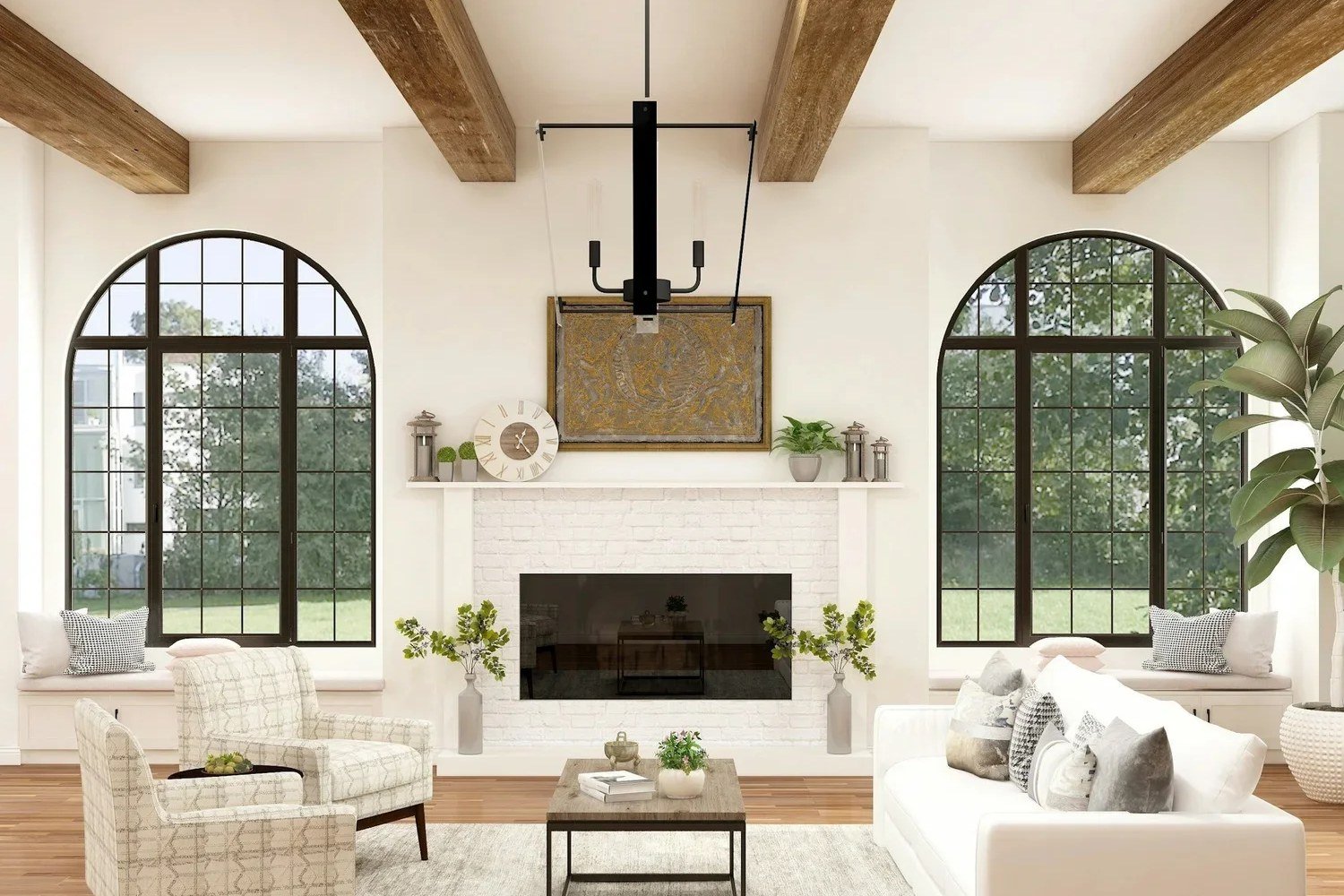
Modern farmhouse is a style. It borrows the shapes and adds a uniform: white board and batten, black windows, a metal roof, shiplap and barn doors.
Some of my clients call a plain modern house a farmhouse. Builders call some of these NW contemporary. I’d call most of them a farmhouse in a new coat.
Is farmhouse style out in 2026?
Designers say the inside look is fading. NewHomeSource reports that white kitchens, shiplap, distressed finishes and barn doors fell out of favor in 2025.
The house plans still sell. Zonda’s Houseplans.com says modern farmhouse has been its best seller since 2019, and a third of its 2025 sales. Bright, open plans age well. Barn doors don’t.
Farmhouse function: keeps working
- A mudroom or back entry for dirty boots
- A covered porch by the door you use
- A pantry or cool storage
- Windows that watch the yard
- Bright, open plans
Modern farmhouse look: fading inside
- All-white kitchens
- Shiplap walls
- Distressed finishes
- Sliding barn doors
Exteriors with board and batten and a wide porch are holding on. Modern farmhouse plans were a third of Houseplans.com sales in 2025.
Why are most farmhouses white?
Status, at first. Yankee Magazine notes that early white lead paint was expensive, so a white house signaled prosperity.
By the Colonial Revival of the 1880s, white became the standard. In 1921, titanium made white paint whiter still. Today it’s simply a choice.
Inside
Inside: big windows, a mudroom and cool storage
Oversized windows for watching the land
Old farmhouses had big windows placed to watch livestock, weather and crops without stepping outside. They were a work tool, not just light.
Today the same window watches a backyard garden in Green Lake, chickens on Beacon Hill or a sunset in Monroe. In my preview videos, I’d enlarge a window or add full-lite doors in almost every home.
The trade-off is heat. The U.S. Department of Energy says windows account for 25 to 30% of home heating and cooling energy. Big glass needs good glass.
Mudrooms
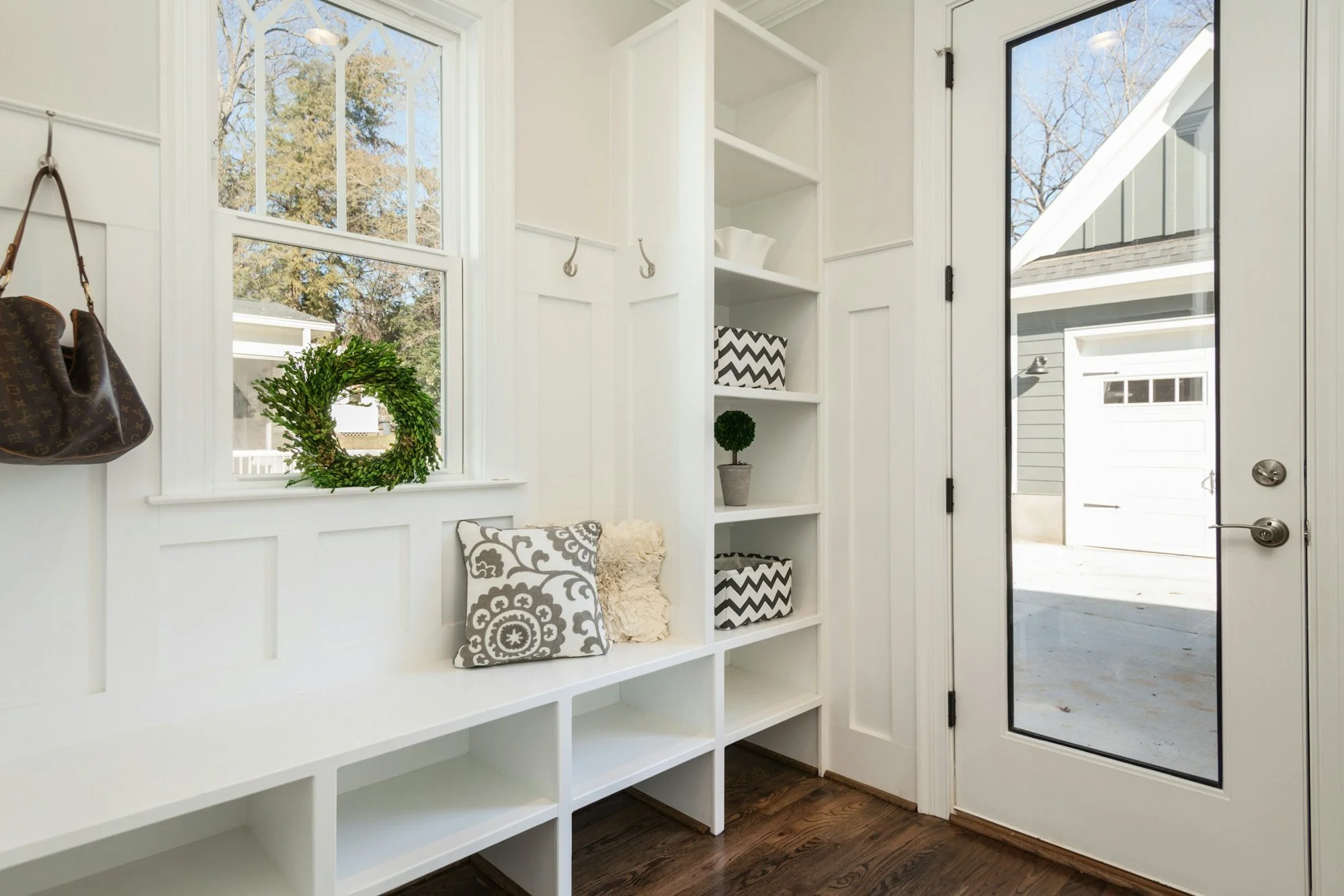
A mudroom is one of the most practical farmhouse features ever made. It stops boots, wet coats, soggy dogs and a Seattle hike at the door.
Even buyers in Issaquah and Redmond, far from any farm, ask for one. It keeps the rest of the house cleaner. A bench, hooks and a hard floor by the garage door can do the job.
Root cellars and cold storage rooms
Before refrigerators and grocery delivery, there were root cellars: cool, dark, damp rooms for potatoes, onions, apples and preserves.
The modern version is a walk-in pantry, a cold garage nook or a shelved basement corner. University of Missouri Extension groups stored food by what it needs, below.
Outside
Outside: a porch, one shade tree and room to grow
Covered porches, as useful as they are pretty
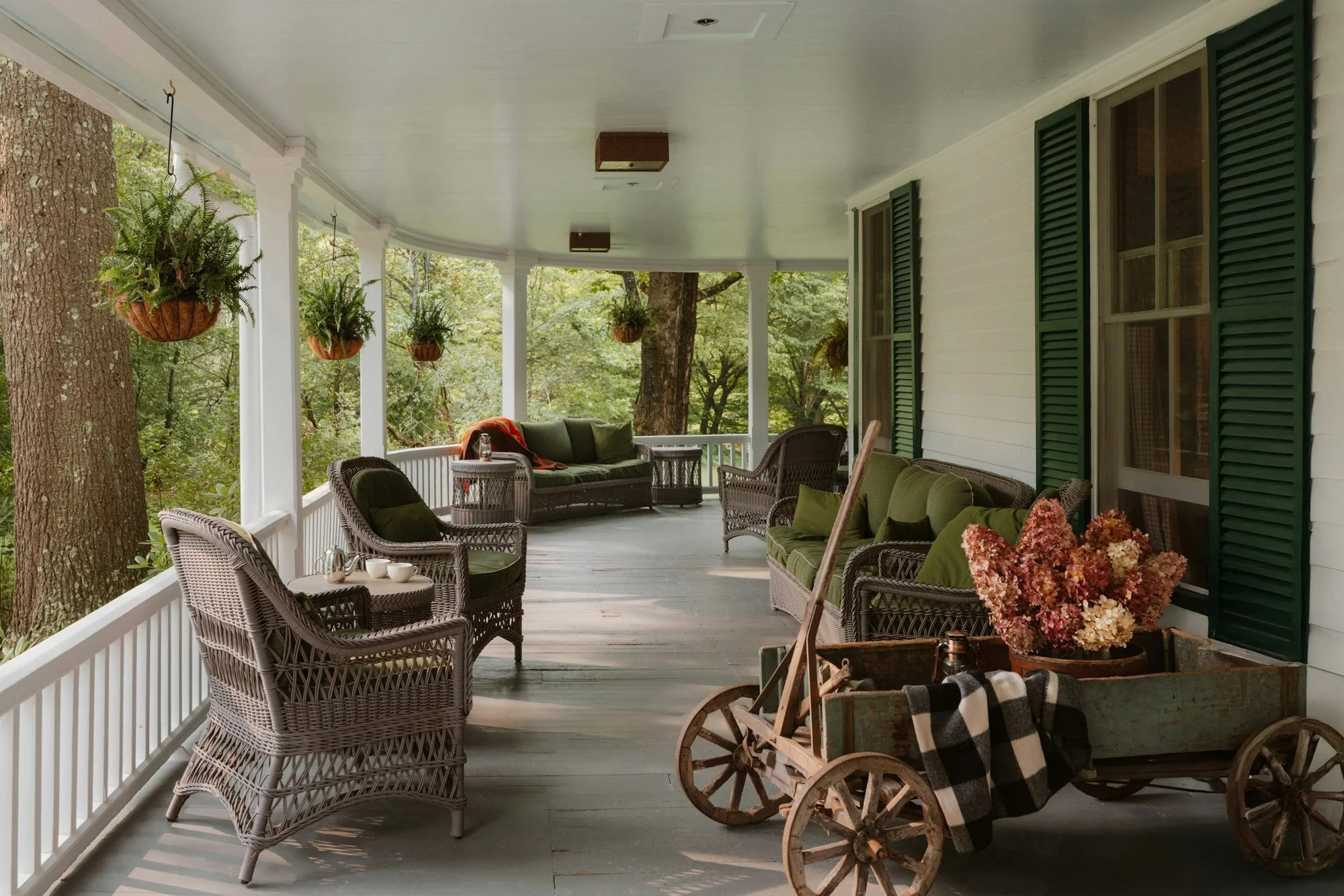
That dreamy wraparound porch had a job. It was a workspace, a mudroom with a roof and a weather buffer. People pulled off boots there, rested and shelled peas in the shade.
In our wet, then suddenly sunny, weather, a porch still matters. It protects the door and siding, and it gives you a dry place after the garden or a dog walk.
One big shade tree
Open farmland had little shade. One big tree by the house or the work yard was where the farmer cooled off and ate lunch.
In Seattle, a maple, oak or other big tree by the patio does the same job. The Department of Energy’s landscaping guide explains the placement below.
Timeframe Shades windows in year one; a slow tree can take up to 10 years to shade the roof
- 1Summer. High sun hits the leaves. The house stays shaded.
- 2Winter. Low sun passes the bare branches and reaches the window.
Gardens, potting sheds and growing space
A real farmhouse had a garden plot, a tool shed or a greenhouse. They weren’t hobbies. They were food.
From Ballard to Bothell, owners are reviving it with raised beds, compost and small greenhouses. Sun is the limit; what grows well in a Seattle yard covers crops and timing.
Seattle rules
Seattle rules for farmhouse living: hens, sheds and windows
Hens and farm animals
Seattle allows up to eight domestic fowl on any lot, and more on lots over 10,000 square feet. Roosters aren’t allowed.
Cows, horses, sheep and full-size goats need a lot over 20,000 square feet. Rules change at the city line: Bellevue allows six fowl.
Sheds, greenhouses and coops
You don’t need a permit for a shed if it’s one story with a roof of 120 square feet or less. It must sit on a slab, piers or soil.
It also can’t be attached to the house or sit in or near an environmentally critical area. It can’t be over 12 feet tall. Where it can go is its own rule.
Windows, porches and mudrooms
SDCI says any change to the building envelope needs a permit, however small. A new or bigger window opening is a change to the envelope. A new porch roof isn’t on the no-permit list either.
Kitchen cabinets and surface finishes usually don’t need one. A mudroom built from hooks, a bench and a new floor usually doesn’t either.
Sellers and buyers
Buying or selling a farmhouse in Seattle
Selling
Buyers remember the dry porch, the mudroom and the sunny beds. Name them in the listing and show them in the photos, not just the white siding.
Fix the porch and mudroom before you list. Getting a house ready to sell covers what to fix first; my pricing and staging plan stays in my seller guide.
Buying
An old farmhouse can hide a lot. Look for thin 2x4 walls, single-pane windows, old heat and, on acreage, a septic system and an outbuilding nobody permitted.
Ask for the permit history on barns, sheds and back cottages. Unpermitted work and septic systems each have their own guide.
Selling
- Photograph the porch, mudroom, pantry and beds
- Name the working spaces in the listing
- Fix the porch roof and back entry first
- Have permits ready for sheds and cottages
Buying
- Check wall insulation and window age
- Ask how it’s heated, and look for an old oil tank
- On acreage, get the septic records
- Ask for permits on barns, sheds and back cottages
My own farmhouse
My house was built in 1945. It’s three stories on a small footprint, with 2x4 walls and a lot of windows. One heat pump runs three mini-split heads for the whole house. Those windows are the best part of living there, and the biggest part of the heating bill. That’s the farmhouse deal: light and land, paid for in care.
FAQ
Frequently asked questions about farmhouse style
What makes a house a farmhouse?
Function: a working back entry, a covered porch, food storage, windows that watch the yard and space to grow. The look, white siding and black windows, came later.
What’s the difference between farmhouse and modern farmhouse?
A farmhouse is a working house, often an upright-and-wing shape built before 1910. Modern farmhouse is a newer style that borrows the shape and adds board and batten, black windows and metal roofs.
Is farmhouse style going out of style in 2026?
The inside look is fading: white kitchens, shiplap, distressed finishes and barn doors. The house plans still sell best at Houseplans.com, and porches, mudrooms and pantries aren’t going anywhere.
What style is replacing modern farmhouse?
Houzz and the National Kitchen and Bath Association name transitional style, a mix of traditional and contemporary. NewHomeSource says cottage and barndominium plans are rising.
Why are most farmhouses white?
Early white lead paint was expensive, so a white house signaled prosperity. By the 1880s Colonial Revival, white had become the standard look.
Is a farmhouse the same as a Craftsman?
No. A Craftsman has wide eaves, exposed rafters and heavy, often tapered porch columns on stone bases. A classic farmhouse is plain folk building: a tall front gable and a side wing.
Can I keep chickens at a Seattle farmhouse?
Yes. Seattle allows up to eight domestic fowl on any lot, more on lots over 10,000 square feet, and no roosters. HOA rules can be stricter.
Do I need a permit for a greenhouse in Seattle?
Not if it’s one story with a roof of 120 square feet or less, on a slab, piers or soil. It also can’t be in or near an environmentally critical area.
The bottom line
A farmhouse is a house that works hard and looks good doing it. Start with the door you use every day, then the porch, then the storage.
The paint is up to you. Pick the features you’ll still use in ten years.
Related: what grows well in a Seattle yard, backyard privacy and finding old photos of your house.
Sources
- Washington State Department of Archaeology & Historic Preservation, Architectural Style Guide: Upright and Wing, accessed November 2026
- Queen Anne Historical Society, “Wilke Farmhouse – 1920 2nd Ave N”, accessed November 2026
- National Park Service, National Register of Historic Places: Wilke Farmhouse (NRIS 74001962), listed November 1, 1974
- NewHomeSource, “How New-Home Design Evolved in 2025 and What’s Next for 2026”, December 17, 2025
- Builder, “Is the Modern Farmhouse Going Out of Style?”, 2025
- Yankee Magazine, “A Darker Shade of Pale: The Hidden History Beneath New England’s White Paint”, June 28, 2026
- U.S. Department of Energy, Energy Saver weekly tip on windows, June 27, 2024
- U.S. Department of Energy, A Consumer’s Guide to Home Landscaping (DOE/EE-0341), October 2010
- University of Missouri Extension, Home Storage of Fruits and Vegetables in Root Cellars (MP562), reviewed January 2023
- Seattle Department of Construction and Inspections, Animal Codes (SMC 23.42.052), accessed November 2026
- Seattle Department of Construction and Inspections, Sheds, accessed November 2026
- Seattle Department of Construction and Inspections, Do You Need a Permit?, accessed November 2026
- Pennsylvania Historical and Museum Commission, Bungalow/Craftsman Style 1900–1930, accessed November 2026
- Public Health – Seattle & King County, Backyard poultry, accessed November 2026