
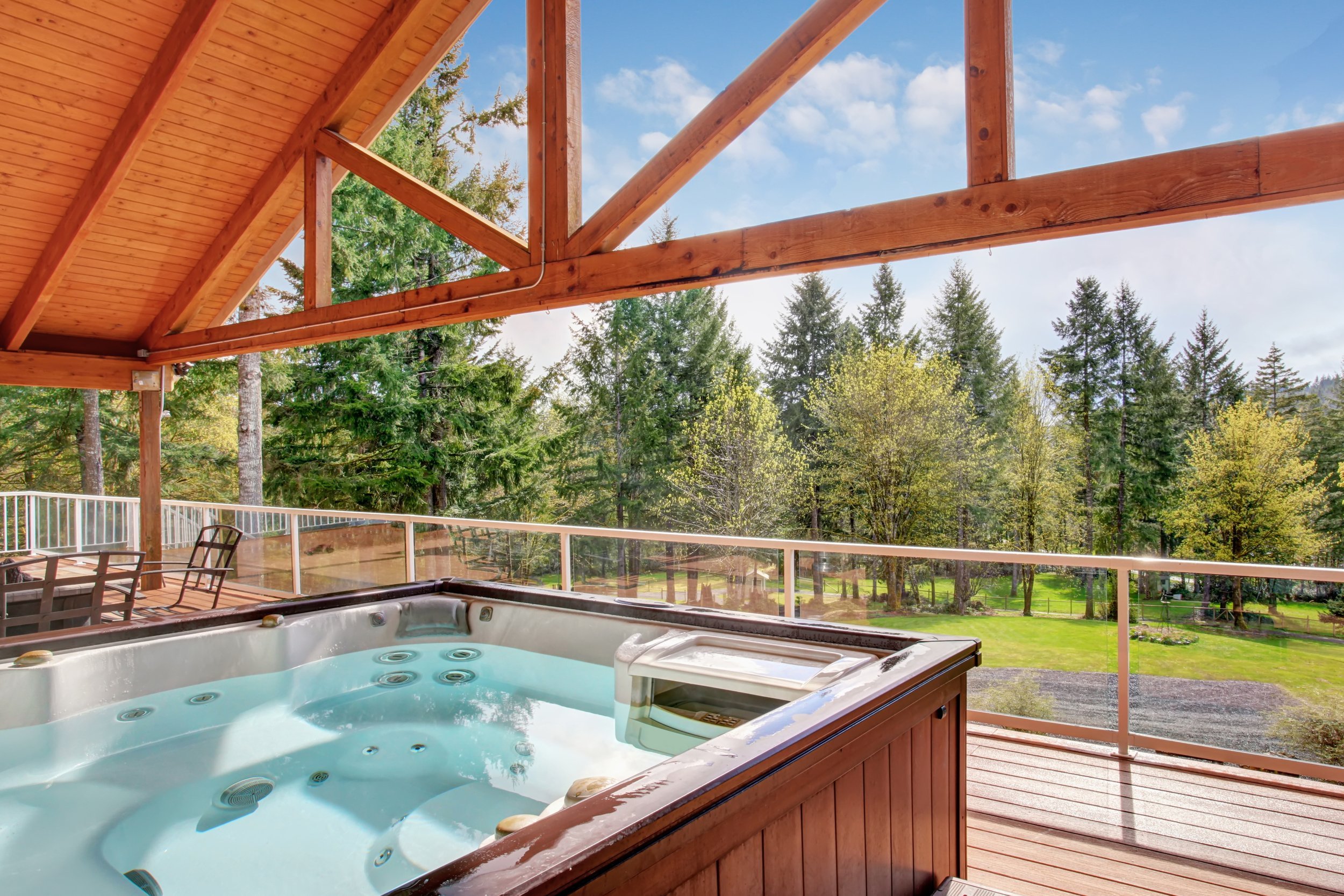
Short answer: Easy. Ten minutes a week and a good cover.
Real answer: Test the water before you soak and keep the sanitizer and pH in range. Rinse the filter every two weeks. Drain and refill about every three to four months. It’s a habit, not a skill.
Hot tub planner
Your hot tub schedule, weight and running cost
Pick what you’re doing and the size of the tub. You get a dated care calendar for the next four months, when to change the water, what the water weighs on your deck and the yearly idle-power floor on your electric rate. Nothing you enter leaves this page.
Your next 17 weeks
Your short list
A planning aid, not engineering. Water change: gallons ÷ 3 ÷ average daily users (CDC), at least every 4 months (Jacuzzi). Users per day: a few times a month 0.3, weekends 0.6, most days 1.5, daily for two 2.5, rental guests 3. Weight: 8.34 lb per gallon, water only, over the footprint you enter; Seattle designs decks for 60 lb per sq ft live load (SDCI). Idle floor: the most a new portable tub may draw idling with the cover on, 3.75 × gallons to the 2/3 power + 40 W (California Title 20, adopted by RCW 19.260.040), all year, at City Light $0.1338 (Seattle) or $0.1464 (Burien, Shoreline, SeaTac) or PSE’s $0.2061 average per kWh. Real bills run higher in winter and with every soak. Preset sizes are typical; use your tub’s spec sheet.
In Seattle, a hot tub isn’t just a luxury. It’s how we cope with the gray. Skip the upkeep, though, and a peaceful soak turns into a cloudy, smelly mess fast.
Same thing, other names: hot tub care, spa maintenance, jacuzzi maintenance, hot tub maintenance schedule. Jacuzzi is a brand; the care is the same.
Weekly
The 10-minute weekly routine
Test before you soak
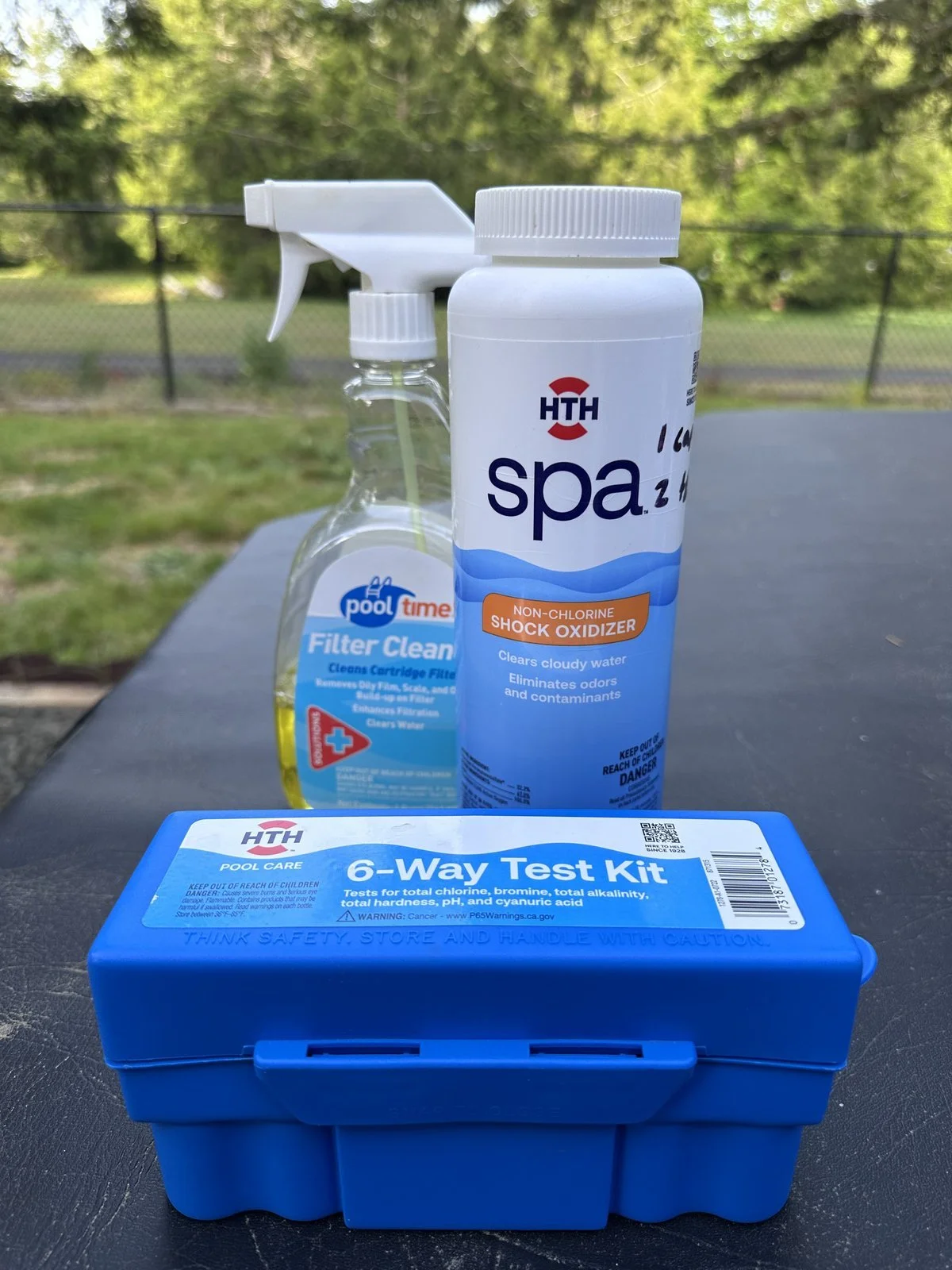
Test before each soak. Test strips take a minute; a drop kit takes two. CDC says a hot tub needs at least 3 ppm free chlorine.
Most of the time, a quick test and a small dose is the whole job.
Chlorine or bromine: the numbers
Chlorine: 3 to 10 ppm (CDC’s hot tub range). Bromine: 4 to 8 ppm (CDC). pH: 7.0 to 7.8 for either.
CDC also recommends against stabilized chlorine (dichlor or trichlor, which contain cyanuric acid) in hot tubs. Check the label before you buy.
After rain, wind and parties
Seattle’s rain, leaves and wind throw the balance off. So do a few friends on a Saturday. Test again after a storm or a party, and shock the water.
Filters and cover
Filters, the cover and a clean shell
Rinse every two weeks, deep clean monthly
Timeframe Rinse every 2 weeks, deep clean monthly
Your filter works 24/7. Rinse it every couple of weeks and give it a deeper clean once a month.
A clean filter keeps the water looking and smelling fresh, and it takes load off the pump.
- Week 1Filter A in the tubFilter B dries on a rack in the garage.
- Week 2SwapPull A, drop in dry B. Hose A from the top down.
- MonthlyDeep cleanSoak or spray with filter cleaner, rinse twice, dry fully.
Keep the cover on
Keep the cover on and locked whenever nobody is in the tub. It keeps out rain and leaves, holds the heat and keeps kids out.
Vacuum the floor
Debris settles on the floor and seats. A spa vacuum lifts it out in a few minutes, no draining needed.
Drain and refill
How often to drain a hot tub, and where the water goes in Seattle
The gallons-divided-by-3 rule
Timeframe Every 3 to 4 months for most tubs; sooner with heavy use
Water wears out. Dissolved solids build up until chemicals stop working. The rule pros use: gallons ÷ 3 ÷ average daily users = days between water changes (CDC).
For most families that lands at three to four months, which is also what Jacuzzi suggests. Lightly used tubs still get fresh water by then.
Where the water goes
In Seattle, send it to the sanitary sewer: a laundry sink, a floor drain or the sewer cleanout in the yard. A sump pump with a hose makes it quick.
Street drains go straight to creeks and the lake. A storm drain is allowed only at 0.1 ppm chlorine or bromine or less, and pH 6.5 to 8.5 (Seattle Stormwater Manual). Never drain to a septic system.
Filling it back up
When you refill, keep the hose end above the water. A hose sitting in a hot tub is a cross-connection, and water systems police them under WAC 246-290-490.
Smart monitors
Smart monitors and hot tubs you don’t visit often
What a monitor does
A floating monitor reads the water around the clock and sends it to your phone. The app tells you what to add, and exactly how much.
If someone else cleans it
That turns hot tub care into a task anyone can do: a cleaner, a house sitter or a guest who stays a week.
Hot tub · 102°F
Running cost
What a hot tub costs to run in Seattle
The idle limit
Washington sets an energy standard for new portable hot tubs (RCW 19.260.040). It caps the power a tub may use while it sits idle with the cover on.
The cap grows with size: 3.75 × gallons to the 2/3 power, plus 40 watts (California Title 20, which Washington adopts). A 425-gallon tub is capped at about 250 watts.
Seattle rates
Rates set the rest. City Light charges 13.38¢ per kWh in Seattle and 14.64¢ in Burien, Shoreline and SeaTac. PSE averages about 20.6¢.
That idle number is a floor, not a forecast. Seattle winters are colder than the lab test, and every soak adds heating time. A tight, dry cover saves the most.
Adding a hot tub
Adding a hot tub: power, permits and what it sits on
Electrical permit and the 5-foot disconnect
Seattle requires an electrical permit any time wiring is installed, extended or connected. An owner who lives in the house may do the work; most hire a licensed electrician.
Washington puts the maintenance disconnect at least 5 feet from the tub (WAC 296-46B-680). The circuit needs ground-fault (GFCI) protection (IAEI).
Plug-and-play or 240 volts
Some smaller tubs plug into a regular outlet. Most full-size tubs need a 240-volt circuit. Read the spec sheet before you buy, not after.
Weight: pad, deck or balcony
Water weighs about 62.4 pounds per cubic foot (USGS), or 8.34 pounds a gallon. A 425-gallon tub holds roughly 3,500 pounds of water before the tub or anyone gets in.
Seattle designs decks for 60 pounds per square foot (SDCI). Most filled tubs exceed that. Use a level pad, or have an engineer check the deck first. Decks over 18 inches need a permit.
Where it can go on the lot
In a setback, Seattle allows a hot tub only if it sits 18 inches or less above the ground. That usually means sunk into a deck or patio. Details are in my setbacks guide. To hide it from the neighbors, see backyard privacy.
Condo balcony? Read the declaration and talk to the board before you shop. Weight, water and noise all land on the neighbors below.
The look
Make it look like a spa, not a soggy afterthought
Wood, light and plants
Even a small tub can shine. Add wood trim, warm lights and plants, and it starts to feel like the Pacific Northwest version of a spa.
A roof, or half of one
A roof over the tub keeps the rain off and the cover dry. Buyers notice outdoor spaces that feel calm and private.
Safety
Hot tub safety: heat, kids and covers
104°F is the ceiling
CPSC says hot tub water should stay at 104°F or below. Check it with a thermometer now and then.
Lock the cover
Use a locking safety cover every time, and keep young kids out unless an adult is right there.
Drains, hair and alcohol
Long hair and loose drain covers don’t mix; replace any cracked cover. And skip the alcohol in the tub. CPSC links it to drownings.
Selling
Selling a home with a hot tub
Does the hot tub stay?
Washington’s standard purchase agreement has a hot tub box. Check it, and the tub goes with the house (NWMLS Form 21, Specific Term 5). If it stays, make sure the box says so.
Once it’s included, the seller must keep it working until the buyer gets possession, the same as the furnace (Form 21, General Term f).
5. Included Items
- stove/range
- refrigerator
- washer
- dryer
- dishwasher
- microwave
- fireplace insert
- wood stove
- satellite dish
- security system
- hot tub
- attached cameras
- attached speakers
- attached TVs
- generator
Illustrative. Based on NWMLS Form 21, Rev. 2/26, Specific Term 5. Checked = it stays.
Service it, leave the manual
Get it serviced and cleaned before the photos, and leave the manual, the remote and the spare chemicals for the buyer. A clean tub shows well; a cloudy one does the opposite.
Permits and inspectors
Washington doesn’t require home inspectors to inspect hot tubs (WAC 308-408C-030), so buyers may bring a spa technician.
Work done without a permit can surface mid-sale. In 2025, an anonymous complaint to the city named the hot tub at a home my clients were buying. See unpermitted work.
Taking an old tub out
Pulling an old tub? Look hard at the deck it sat on. A deck built around a tub may need repair once the tub is gone.
Buying
Buying a home with a hot tub
Four questions to ask
Is the hot tub box checked? How old are the tub and the cover? Are there service records and a manual? Who has wired or repaired it? Then check my buyer touring checks.
Get it looked at
Your inspector may skip it. A spa technician can test the heater, pumps, jets and controls. Also find the disconnect and test the GFCI. See what an inspection covers.
Ask
- Is the hot tub box checked?
- How old are the tub and the cover?
- Service records and the manual?
- Was the wiring permitted?
Check
- Disconnect at least 5 ft away
- GFCI trips and resets
- Cover: dry, not waterlogged, locks
- Deck or pad under it: level and solid
FAQ
Frequently asked questions about hot tub maintenance
Is hot tub maintenance hard?
No. Test before you soak and dose when it’s low. Rinse the filter every two weeks, and change the water every few months.
How often should you change hot tub water?
Divide the gallons by 3, then by the average number of daily users. Most tubs land at three to four months.
Chlorine or bromine?
Either works. Keep chlorine at 3 to 10 ppm or bromine at 4 to 8 ppm, with pH 7.0 to 7.8. CDC says skip stabilized chlorine in hot tubs.
How often should I test hot tub water?
Before each soak, and again after heavy rain or a crowd. A floating smart monitor can do it for you.
Do I need a permit for a hot tub in Seattle?
You need an electrical permit for the wiring. A deck over 18 inches needs its own permit, and a heavy tub may need an engineer’s check.
How close to the property line can a hot tub go in Seattle?
Only if it sits 18 inches or less above the ground, like a tub sunk into a deck. Otherwise it follows the setback rules.
Where do I drain a hot tub in Seattle?
To the sanitary sewer through a laundry sink, floor drain or cleanout. Not the street drain, unless the water is fully dechlorinated.
Can I put a hot tub on my deck?
Only if the deck is built for it. Water alone often tops Seattle’s 60 pounds per square foot design load.
How much does a hot tub cost to run?
It depends on size, cover and your rate. The tool above estimates the idle floor for your tub with City Light or PSE.
What temperature should a hot tub be?
No hotter than 104°F, per CPSC. Many people are comfortable around 100°F.
Does a hot tub stay with the house when it sells?
On Washington’s standard purchase form, it’s included when the hot tub box is checked. If it should stay, make sure the box says so.
Do home inspectors check hot tubs?
Washington doesn’t require it. Hire a spa technician if the tub matters to you.
Does a hot tub add value?
A clean, working tub helps a home show. A neglected one does the opposite. I don’t promise value either way.
The bottom line
A hot tub is easy to own if the routine is easy. Test, dose, rinse the filter, and change the water on schedule.
Get the wiring permitted, put it on a base that can hold it, and keep the cover locked. Then it’s simply the best seat in the house on a gray Tuesday.
Selling soon? Prep and the 2-week countdown are on how to get your house ready to sell. Sellers can find more in my seller guide.
Sources
- Home Pool and Hot Tub Water Treatment and Testing, CDC
- What You Can Do to Stay Healthy in Hot Tubs, CDC
- Controlling Legionella in Hot Tubs, CDC
- How Often to Change Hot Tub Water, Jacuzzi
- Stormwater Manual Vol. 4, BMP 35: Pools, Spas and Hot Tubs (July 2026), City of Seattle
- Stormwater flyer: exterior property maintenance, Seattle Public Utilities
- WAC 246-290-490, cross-connection control, Washington State Legislature
- Electrical Permit, Seattle SDCI
- WAC 296-46B-680, swimming pools, spas and hot tubs, Washington State Legislature
- Installations and Inspections of Spas and Hot Tubs at Dwellings, IAEI Magazine
- Decks, Seattle SDCI
- Water Density, USGS
- RCW 19.260.040, appliance efficiency standards, Washington State Legislature
- Portable electric spa standby power table, California Energy Commission
- Residential rates, Seattle City Light
- Rate change notice, residential rates effective May 1, 2026, Puget Sound Energy
- CPSC Issues Warning for Pools, Spas and Hot Tubs, U.S. CPSC
- Form 21 Residential Purchase and Sale Agreement, Rev. 2/26 (sample), NWMLS
- WAC 308-408C-030, home inspection exclusions (amended 2026), Washington State Legislature