
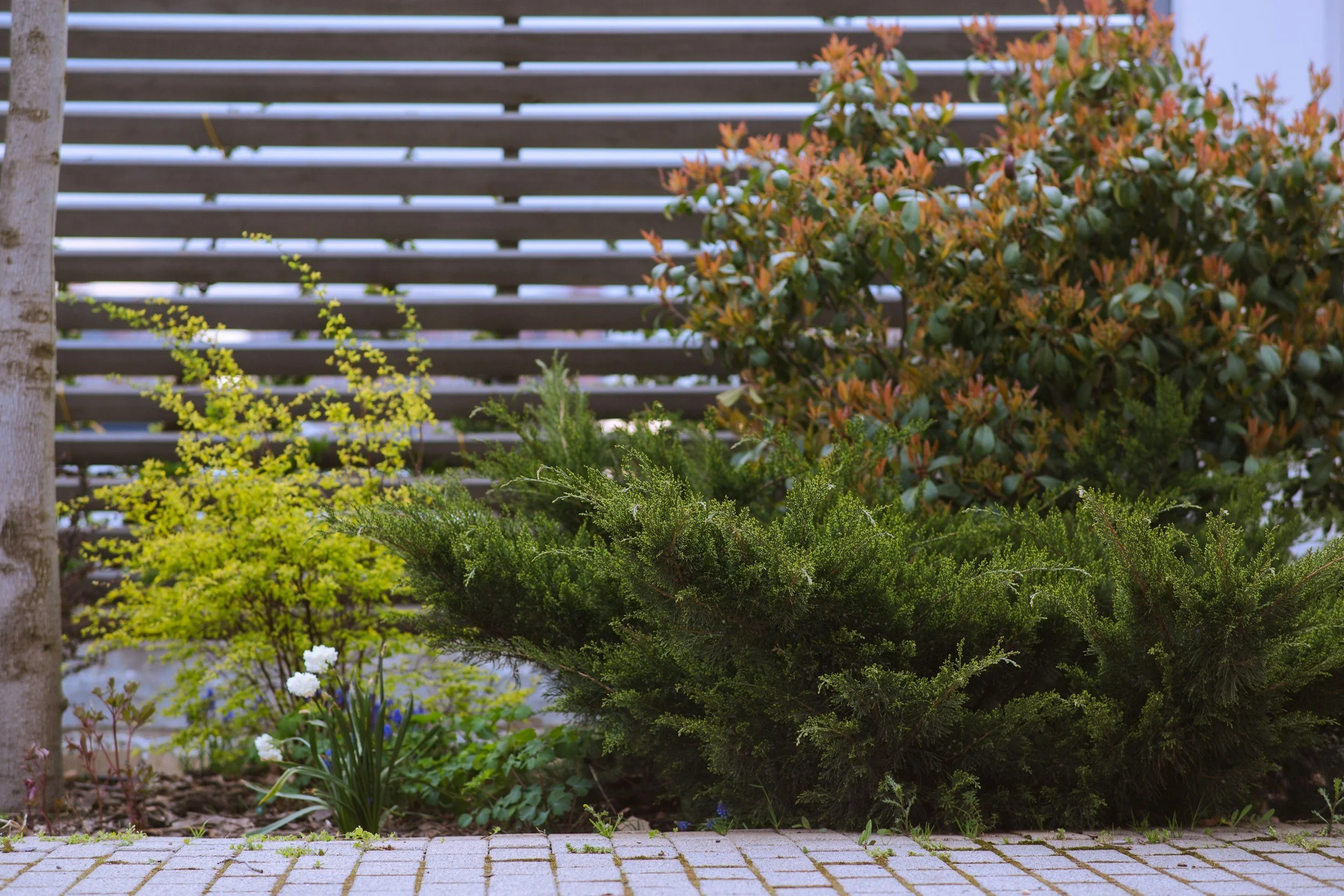
The fastest way to backyard privacy in Seattle is to block the one sightline that bothers you, not to wall in the whole yard. A fence can be 6 feet on side and back lines, plus a 2-foot trellis on top, and only 4 feet in the front setback. When the view comes from a second-story window, no legal fence reaches high enough at the property line: move the screen closer to where you sit, plant taller evergreens, or cover overhead.
Privacy sightline planner
How tall your screen has to be, and where it should go
Tap where you sit and where they look from, then pace off two distances. The planner draws the sightline to scale and tells you what blocks it under Seattle’s rules. Nothing you enter leaves this page.
Your next steps
A planning aid. Eye heights assume about 4.5 ft seated and 6 ft standing for you, and about 5.5 ft above each floor for them (first floor 8 ft, second story 17 ft, third floor 26 ft above their ground). Fence limits from Seattle’s zoning code for neighborhood residential lots (SMC 23.44) and SDCI; HOA rules and other zones can be stricter. Check the property line and the tree rules before you build or cut.
The default answer is a fence. Tall. Beige. Emotionally unavailable. Most of the time the problem is one window and one chair, and the fix is smaller, cheaper and better looking than a wall. I’ve walked plenty of yards with a client holding a broom handle at the fence line while I sat in their patio chair. Ten minutes of that beats a summer of guessing.
Same thing, other names: privacy screening, a living screen or living fence, privacy landscaping, a privacy hedge, or simply blocking the neighbor’s view.
- 1Row of shrubs: Tallest, if you can wait
- 2Privacy fence: 6 ft plus a 2 ft trellis on top
- 3Arbor: Frames a gate or path
- 4Pergola: Covers you from above
- 5Trellis: A vine wall by the seat
The geometry
Start with the sightline, not the fence
Privacy is geometry. Draw a straight line from the neighbor’s eyes to your head. Anything that crosses that line, at the right height, blocks the view. The closer the screen sits to you, the shorter it can be.
That’s why a 6-foot fence hides you from a neighbor standing in the next yard, and does almost nothing about the neighbor in a second-floor window. Their line drops steeply, and by the time it reaches your fence it’s far above the top board.
- 1At the line: Has to reach the sightline where it crosses the fence
- 2Near your seat: Shorter, because the line is lower there
- 3Overhead: A canopy or pergola blocks a steep view from above
Washington State University’s Master Gardeners suggest the same test I use: stand where you sit, have someone hold a stake or stand on a ladder where the screen would go, and see what it hides before you buy a single plant.
- 1Row of shrubs: Along the back line
- 2Privacy fence: Side and back lines
- 3Trellis: Beside the seat
- 4Pergola: Over the patio
- 5Arbor: At the gate
Seattle rules
What Seattle lets you build for privacy
Seattle’s zoning code caps fences at 6 feet in side and rear setbacks, with up to 2 more feet of arbor or trellis on top. In the front setback, and in a street-side setback on a corner lot, the limit is 4 feet, with no topper. On a sloping site, the 6 feet is averaged between posts, up to 8 feet at the low end. My set-backs guide has the distances and a checker for every structure on the lot.
A fence under 8 feet with no concrete or masonry above 6 feet needs no building permit, and neither does an arbor or other open-framed landscape structure up to 120 square feet. A bigger pergola, or one attached to the house, is a permit conversation with SDCI.
Know where the line is before you build on it. Finding the property line covers surveys, shared fences and what a neighbor owes when your fence encloses their yard too.
One old rule still on the books: Washington lets a court order a structure removed if it was built maliciously to spite or annoy the neighbor (RCW 7.40.030). Build for your privacy, not to make a point.
Planting
Hedges and trees: the tallest privacy, if you can wait
Plants are how you get above 8 feet. The zoning code’s fence limits are written for fences and walls; the only hedges it mentions are screens it requires around parking. What limits a hedge is space, sun, the neighbor’s patience and how long you can wait.
Pick by mature width as much as height. A row that ends up 6 feet wide in a 4-foot side yard becomes a pruning chore and a neighbor dispute. The chart shows typical mature heights for evergreens WSU lists for privacy screens.
Typical mature height, evergreen privacy plants
Big plants cost real money and take years to grow. When a seller of mine priced 9 to 10-foot Emerald Green arborvitae in 2023, the quote was about $400 each installed. A nursery needs 5 to 7 years to grow one that tall, so supply is thin. I told him three trees at 9 feet would cover the nuisance spots, and that a trellis screen on the deck would cost about the same and do the job the same week.
Plant them right or lose them. That same row later browned out. His arborist found root rot from three planting mistakes: trees set too deep, burlap left on the root ball, and too much topsoil piled on. A row of one kind can fail all at once; mixing two or three kinds keeps one problem from opening gaps everywhere.
Two plants to skip or contain. King County lists English (cherry) laurel as a weed of concern: legal to sell, but new plantings are discouraged because it spreads into Seattle’s parks and forests. And running bamboo travels by underground rhizomes; plant a clumping bamboo such as Fargesia, or contain a runner with a 30 to 40 mil plastic barrier 22 to 30 inches deep.
Trees
Seattle’s tree rules before you cut or plant
Privacy projects often start with a tree in the way, or end with one planted too close. Seattle regulates trees 6 inches or more in diameter, measured 4.5 feet above the ground.
On a developed lot in a neighborhood residential zone, with no construction planned, you can remove no more than two Tier 4 trees (6 to just under 12 inches) in any three years without SDCI review. Anything 12 inches or larger needs SDCI review and approval, and usually replacement. Hire a company on SDCI’s Tree Service Provider Registry; it posts a public notice six full business days before it removes a regulated tree.
Routine hedge maintenance and fruit-tree pruning aren’t reportable work. If the tree is the neighbor’s, or straddles the line, read the property lines guide first: Washington’s tree trespass law triples the damages.
Out front, the planting strip is public right of way. SDOT’s guidelines cap plants there at 3 feet tall, and at 30 inches within 30 feet of an intersection or 10 feet of a driveway. No privacy hedges by the curb.
From above
Screens, trellises and pergolas for a second-story neighbor
When the view comes from above, bring the screen to you. A freestanding screen beside the seating area, a trellis panel on the deck rail, or a pergola with a climbing vine blocks the steep line that no fence can.
A pergola or arbor up to 120 square feet needs no building permit in Seattle, and it can sit right over the table where you actually spend time. Add a shade sail, outdoor curtains or a market umbrella for the hours the vine is bare.
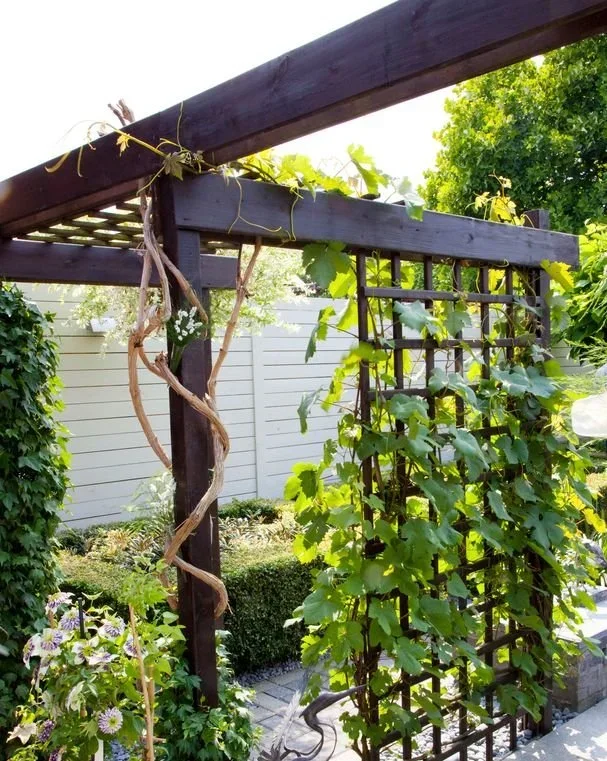
When a West Seattle client asked what to do about a new building going up next door, my advice was simple: trellis on the fence and the side walls, in vinyl or metal so it doesn’t rot, with star jasmine or clematis. On a deck, a privacy screen along the neighbor side of the deck and stairs leaves the good views open and filters the rest.
Laser-cut metal panels work on decks and rooftops where planting is hard, and they look like art at dusk.
Freestanding screen
NowPanels set by the seat; no digging into the line
Trellis + vine
1 to 3 seasonsStar jasmine or clematis on vinyl or metal
Pergola up to 120 sq ft
Now, vine laterNo building permit; covers steep views
Shade sail or umbrella
NowMoves with the sun and the season
Sound and glass
Sound and windows: the privacy people forget
Privacy is also what you can hear. A fountain or a small waterfall near the patio masks street noise and the next yard’s conversation, so yours stays yours. Dense evergreens soften sound a little; a fountain does more for the price.
Inside, frosted window film or obscure glass handles a bathroom or a stair window that faces the neighbor. For a living room, sheer shades or top-down blinds keep the light and hide you from the street.
Selling and buying
Selling or buying: privacy shows up in showings
Sellers: buyers notice who can see the patio. When that seller’s arborvitae row browned out right before listing, he asked whether to replace it with shorter trees. Here’s how I scored it:
Brown privacy row before listing: three choices
Even brown, the row still screened the neighbor, and buyers read it as a fixable problem. A shorter row breaks the line and puts the neighbor’s windows back in every listing photo. Getting a house ready to sell covers what else to fix and what to skip.
Skip new window film before listing, too. When a seller asked whether to re-install it, I said no: the next owner will want their own style and the option to look out.
Buyers: sit in the yard during the showing, then look up. Since June 30, 2025, Seattle allows four homes on every neighborhood residential lot and six near major transit, so the house next door can become several, taller ones. When a buyer of mine wanted a more private patio this year, distance to the neighbors mattered more than whether the patio was in front or back. The buyer guide’s touring checks (clients) has the full list.
FAQ
Frequently asked questions about backyard privacy
How tall can a privacy fence be in Seattle?
6 feet in side and rear setbacks, plus up to 2 feet of arbor or trellis on top. 4 feet in the front setback and a corner lot’s street-side setback. A fence under 8 feet with no masonry above 6 feet needs no building permit.
How do I block a neighbor’s view from a second-story window?
Move the screen close to where you sit, or cover overhead. At the property line the sightline is usually far above any legal fence; a pergola, umbrella or a screen beside the seat blocks it at a fraction of the height.
What’s the cheapest way to get privacy in a backyard?
Block the one sightline that bothers you instead of the whole yard: a freestanding screen or a trellis panel with a vine by the seating area. Big trees and long fences cost the most.
What is the best privacy hedge for Seattle?
For a native evergreen, Pacific wax myrtle; for a narrow row, Emerald Green arborvitae planted at the right depth; for a lower native, evergreen huckleberry. Skip English laurel, a King County weed of concern.
What can I plant for immediate privacy?
Nothing grows instantly; buy larger plants or pair small ones with a screen. Large arborvitae ran about $400 each installed in 2023, and a 9-foot tree takes a nursery 5 to 7 years to grow.
Is there a height limit for hedges in Seattle?
The zoning code’s fence limits are written for fences and walls, not backyard plants. Planting strips are different: SDOT caps plants there at 3 feet, and 30 inches near intersections and driveways.
Can I cut down a tree for privacy or a view in Seattle?
On most house lots, up to two trees 6 to 12 inches in diameter in any three years without review. Trees 12 inches and up need SDCI approval. Use a registered tree service provider.
Can my neighbor build a fence just to block my view?
Within the height limits, yes. Washington law lets a court order removal of a structure built maliciously to spite a neighbor (RCW 7.40.030). For a real dispute, talk to a real estate attorney.
Is bamboo a good privacy screen?
Clumping bamboo such as Fargesia, yes. Running bamboo spreads underground; contain it with a 30 to 40 mil barrier 22 to 30 inches deep, or skip it.
Does a pergola need a permit in Seattle?
An arbor or other open-framed landscape structure up to 120 square feet doesn’t. Larger or attached structures can, so check with SDCI first.
Does privacy add value when I sell?
It shows up in showings: buyers notice who can see the patio. I wouldn’t replace a privacy row with something shorter before listing; it puts the neighbor back in the photos.
The bottom line
Backyard privacy in Seattle comes down to one sightline. Find it with a stake and a chair, then pick the smallest thing that crosses it: a 6-foot fence with a 2-foot trellis for a neighbor at ground level, evergreens for more height, and a screen by the seat or a pergola for anyone looking down from a window.
Check the tree rules before you cut, the property line before you build, and the plant tag before you plant laurel.
Related: set-backs and fence heights, property lines, what grows in a Seattle yard, getting a house ready to sell.
Sources
- Fences, Seattle Department of Construction and Inspections
- Council Bill 120993 (SMC 23.44, Neighborhood Residential), signed legislation, City of Seattle
- Do You Need a Permit?, Seattle Department of Construction and Inspections
- Tip 242B, Tree Removal on Private Property (updated October 1, 2025), SDCI
- Trees and Codes (Tree Service Provider Registry, public notice), SDCI
- Gardening in the Planting Strip, Seattle Department of Transportation
- Cherry laurel identification and control, King County Noxious Weed Control Program
- Living Privacy Screens, WSU Extension, Skagit County Master Gardeners
- Bamboo: integrated pest management, Missouri Botanical Garden
- RCW 7.40.030, malicious erection of structure, Washington State Legislature
- ADUs and Middle Housing (effective June 30, 2025), SDCI Building Connections
- Client conversations, 2023 to 2026 (prices, planting failures, scoring), Brian Huie, Compass