
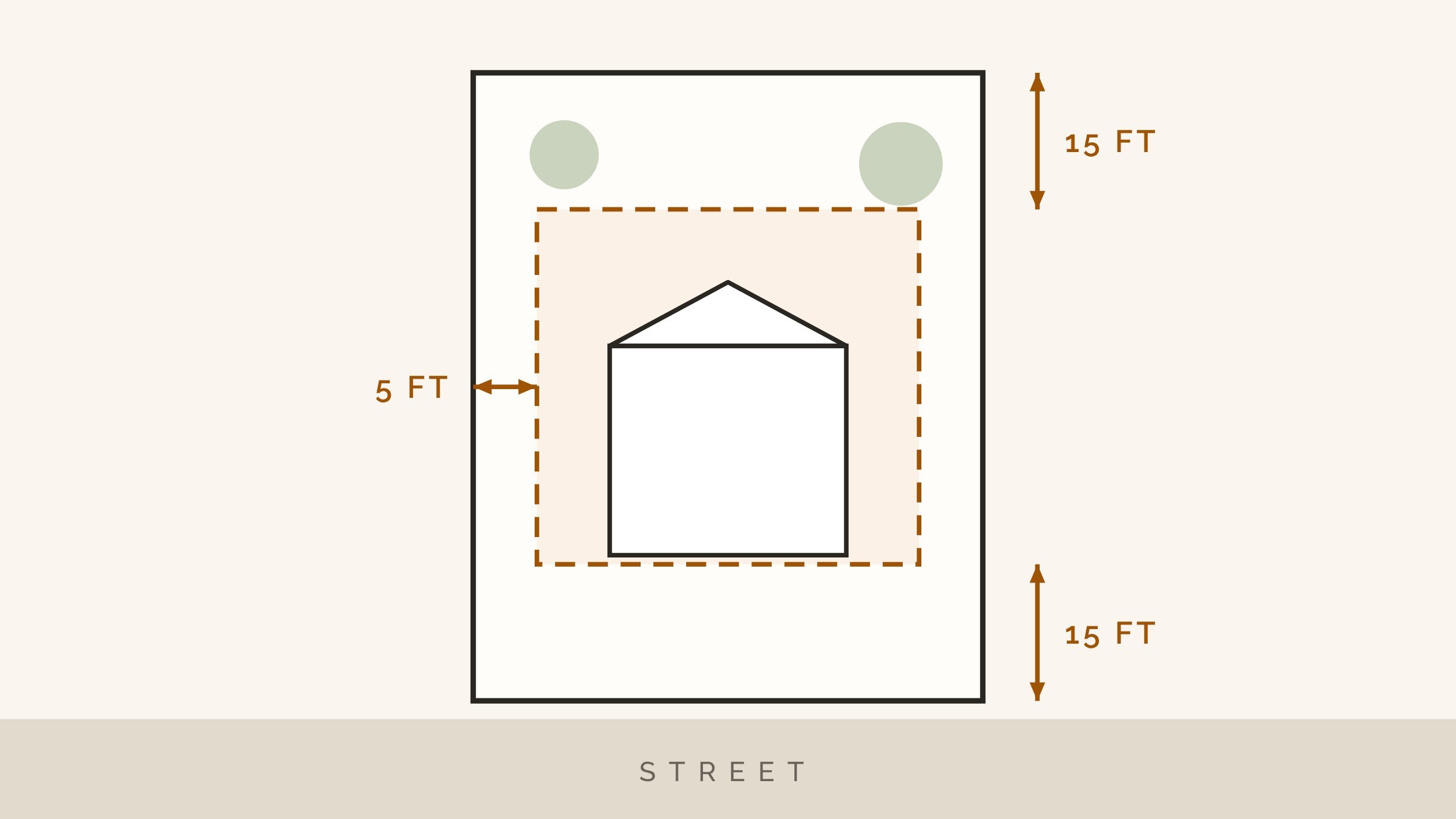
A property setback is the minimum distance your city requires between a property line and what you build. On most Seattle house lots in 2026, that's 15 feet from the front lot line, 5 feet on average from each side (never under 3) and 15 feet from the back, or nothing at all if the back of the lot meets an alley. Pick your project below to see where it can go on your lot, what it can poke into, and whether you need a permit.
Setback checker
Where can your project go on the lot?
When a buyer asks me whether they could add a garage, an office or a backyard cottage, my honest first answer is: assume you can't until the measurements say you can. A typical garage is 12 feet wide; with a 5-foot side setback and a roof overhang, you need close to 20 feet of clear side yard before the conversation even starts. Setbacks decide more about what a lot can become than most people expect.
The basics
What a property setback is, in plain terms
A setback is a strip of your own land, measured in from a property line, where the zoning code keeps buildings out. The front setback runs along the street, the rear setback along the back line, and the side setbacks between you and the neighbors. Together they leave light, air, room for trees and a buffer between houses.
Three things people mix up with setbacks:
- It isn't your property line. The line is where your land ends; the setback is a distance measured from it. If you don’t know exactly where the line is, nothing else here works. Start with how to find your property line.
- It isn't empty space. Fences, low decks, patios, play sets and heat pumps are allowed in setbacks, within limits. The rules below spell them out.
- It isn't the only limit. Lot coverage, height, easements and any covenants on your lot apply on top. In Seattle's Neighborhood Residential zones, structures can cover up to 50 percent of the lot.
Seattle, 2026
Seattle setback requirements in 2026
Seattle rewrote its house-lot zoning to meet the state’s middle housing law. The permanent rules took effect January 21, 2026, and they apply to the city's Neighborhood Residential zones (NR1, NR2 and NR3), the zones that used to be called single-family.
| 1 or 2 homes on the lot | 3 or more homes on the lot | |
|---|---|---|
| Front | 15 ft | 10 ft |
| Rear, no alley | 15 ft | 10 ft |
| Rear, on an alley | 0 ft | 0 ft |
| Side | 5 ft average, 3 ft minimum | 5 ft average, 3 ft minimum |
| Backyard cottage (ADU), rear | 5 ft, or 0 on an alley | 5 ft, or 0 on an alley |
| Lot under 5,000 sq ft near frequent transit | Rear 5 ft, side 3 ft | Rear 5 ft, side 3 ft |
| Between buildings on the lot | 5 ft | 5 ft |
What changed. Before the update, a typical Seattle house needed up to 20 feet in front and up to 25 feet in back. Older articles, and plenty of agents (me included, in emails from a few years ago), still quote those numbers. Lots on the Queen Anne Boulevard keep a larger front setback, and a through lot has a front setback on each street.
Exceptions
What can go in a setback
Setbacks keep out buildings, not everything. In Seattle's Neighborhood Residential zones, the code allows:
- Eaves, gutters and chimneys. Up to 2 feet into a setback, as long as they stay at least 3 feet from any lot line.
- Bay windows. Up to 2 feet into the front and rear setbacks, at least 5 feet from any lot line and no more than 10 feet wide.
- Low decks, patios, pools and hot tubs. Anything unenclosed that's no more than 18 inches above the ground is allowed in any setback.
- Front porches and steps. Unenclosed and no higher than 4 feet, they can reach within 5 feet of the street lot line and 3 feet of a side line. A roof over them has to stay 5 feet from every lot line, top out at 15 feet and cover no more than 60 square feet in the setback.
- Fences. Up to 6 feet in any setback, but only 4 feet in the front setback and along a street-side setback.
- Heat pumps and EV chargers. Allowed in setbacks if they're at least 3 feet from every lot line.
- Sheds, studios and garages in the back. In the rear setback, if they're at least 5 feet from a rear line that isn't an alley, no taller than 12 feet and 3 feet from the house, eave to eave. A backyard cottage you live in follows the ADU rule instead.
- Play sets, arbors and bike racks. Up to 6 feet tall anywhere, leaving a 2.5-foot path through a side setback, and no taller than 4 feet within 5 feet of the front lot line.
Don’t mix them up
Setback, property line, easement or covenant?
They overlap on the ground, but they come from different places, and you check each one differently.
| What it is | Who sets it | Where you find it | |
|---|---|---|---|
| Property line | Where your land ends | Your deed and the recorded plat | A licensed surveyor (more) |
| Setback | How far in from the line buildings must stay | Your city's zoning code | The city code; in Seattle, SDCI |
| Easement | Someone else's right to use part of your land: a utility, a driveway, drainage | A recorded document | Your title report, in the list of exceptions |
| Covenant or plat line | A private or plat rule, often stricter than the city | The developer, the plat or the HOA | Your title report and HOA documents |
I once had buyers on the Eastside who wanted to add an office off the back of the house. The city's setbacks were fine. Their neighborhood's original covenants weren't: 25 feet in back, 35 in front and 10 on each side. Covenants like that don't expire on their own, and the stricter rule wins.
Older homes
When your house is already too close: grandfathered homes
Plenty of older Seattle houses sit closer to a line than today's code allows. If the house was built legally, it can stay. What gets harder is changing it.
- Like-for-like repairs are the easy part. A bigger change to the outside of the house generally has to meet current code where it's being changed.
- Seattle's side-addition rule. An addition can extend into a side setback where the house already does, if the too-close part is at least 60 percent of that wall's width, the addition stays at least 3 feet from the side line, and it gets no closer than the house already is.
- Check the permit history first. What counts as legally built is what the permits say. A porch enclosed without one is a different story (unpermitted work), and old plans are easier to find than you’d think (records for your house).
Neighbors
Building in a side or rear setback with your neighbor's OK
Seattle lets a shed, studio, garage or other accessory building that isn't a home sit in a side or rear setback that backs onto a neighbor's side or rear setback, if both owners sign an agreement and record it with the King County Recorder's Office. SDCI calls this a setback agreement, and may ask for one on a shed or garage permit.
- It's recorded. It goes on title, so it binds future owners on both sides.
- It doesn't cover homes. A backyard cottage you live in can't use it; it follows the ADU setbacks.
- A handshake isn't enough. An unrecorded verbal OK protects nobody when either house sells.
Step by step
How to find the setbacks for your property
- Confirm who your city is. Your mailing address can say Seattle when the property is in unincorporated King County or another city. King County’s Parcel Viewer shows the jurisdiction and zoning.
- Look up the zone's numbers. In Seattle, start with SDCI’s Neighborhood Residential code page or the checker above. Elsewhere, the city’s zoning code or setback page (Bellevue’s is a good example). Unincorporated King County: King County property research.
- Pull your title report. Recorded easements and covenants are listed as exceptions. They're often stricter than the city.
- Know where the line is. Parcel maps and apps are close, not exact. For a fence, a garage or an addition, hire a licensed surveyor (how).
- Ask before you design. Seattle's SDCI and most cities answer zoning questions online or in a coaching appointment, before you pay for drawings.
Many Washington cities rewrote their house-lot rules in 2025 and 2026 for the state's middle housing law, so setback numbers in older articles, listings and neighbor lore may be out of date. Check the code in force today.
From my files
Why I tell sellers to find their survey
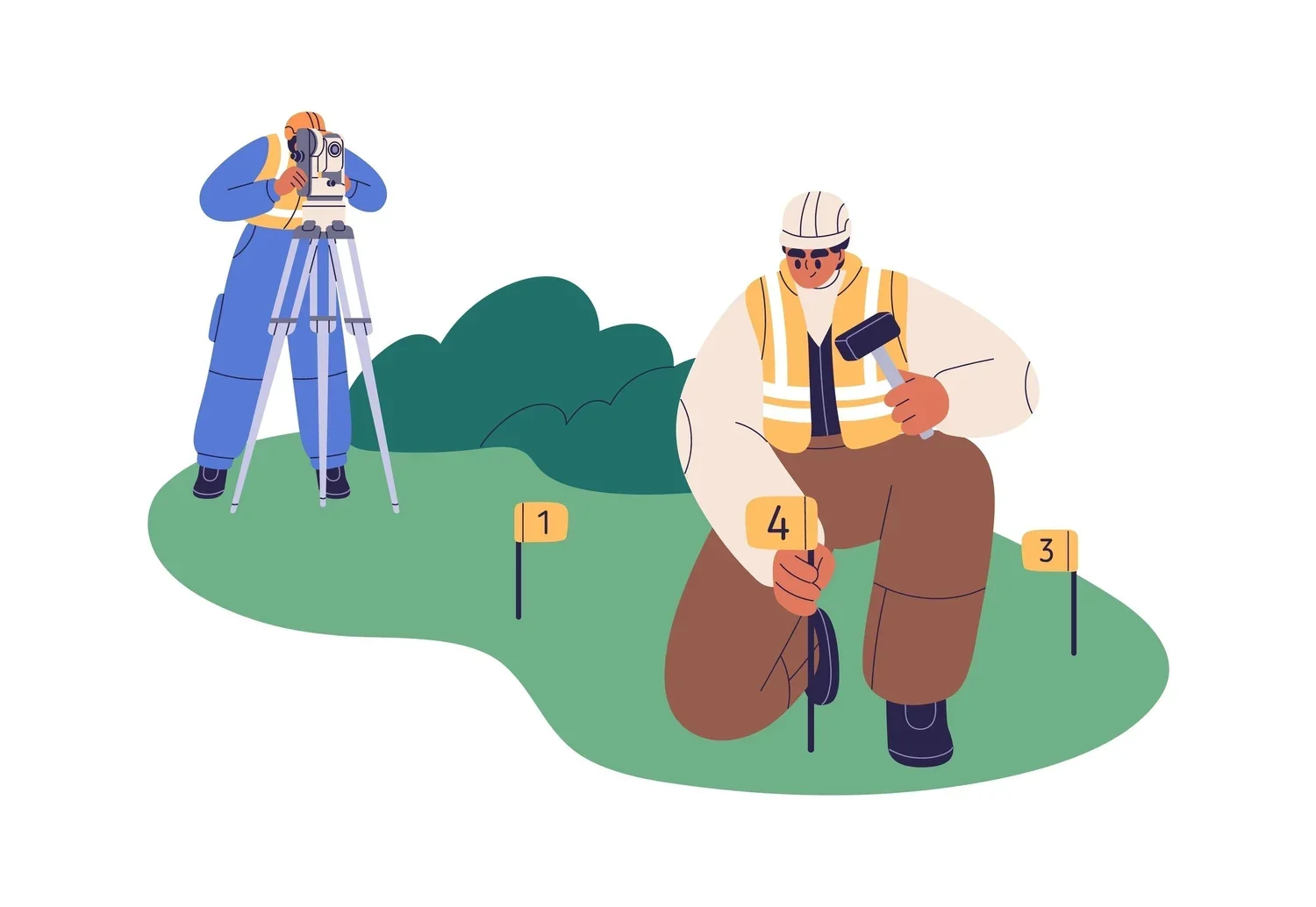
Getting one of my own Seattle listings ready, the question was whether the parking pad was really on the lot. The builder's old survey turned up in a kitchen cabinet: the line was 8 feet past the deck, and the pad sat on the lot except for about a foot of gravel. We had the landscapers pull the gravel back a foot or two so nothing spilled over.
Small, but buyers and their brokers notice exactly that, and they ask. A survey in hand turns a question into an answer.
FAQ
Frequently asked questions about property setbacks
What is a property setback?
It's the minimum distance between a property line and a building, set by your city's zoning code. The strip inside that distance is the setback, and most buildings have to stay out of it.
How far from the property line can I build in Seattle?
On most Seattle house lots: 15 feet from the front line and 15 feet from the rear line with one or two homes on the lot (10 feet with three or more), 5 feet on average from each side with a 3-foot minimum, and no rear setback where the lot backs onto an alley.
What does a 20-foot setback mean?
That buildings have to stay at least 20 feet back from that property line. Seattle's front setback used to be up to 20 feet; since January 21, 2026 it's 15 feet on most house lots, though some cities and the Queen Anne Boulevard still use 20.
How are setbacks measured?
From the property line straight in to the building. Parts like eaves and gutters can reach up to 2 feet into a Seattle setback but must stay 3 feet from any lot line, which is why a roof overhang matters when you're fitting a garage or addition.
How close to the property line can I put a shed in Seattle?
Not in the front setback, and not in a side setback unless your neighbor signs a recorded agreement. In the back, at least 5 feet from a rear line that isn’t an alley, no taller than 12 feet and 3 feet from the house. Sheds up to 120 square feet that meet SDCI’s criteria don’t need a permit.
Can a fence go right on the property line?
Seattle allows fences up to 6 feet in side and rear setbacks and 4 feet in the front setback, so the setback doesn’t push a fence off the line. The fence still has to be on your land, so confirm the line first (how).
How close to the property line can I build an ADU in Seattle?
A backyard cottage needs 5 feet from the rear line, or none on an alley, plus the regular front and side setbacks and 5 feet from other buildings. More on what ADUs mean for ownership: ADU condos.
Did Seattle's setbacks change in 2026?
Yes. Under rules effective January 21, 2026, the front setback on most house lots dropped to 15 feet (10 with three or more homes), the rear to 15 or 10 feet, and the side became 5 feet on average with a 3-foot minimum.
Is a setback the same as an easement?
No. A setback is a zoning distance from the line. An easement is a recorded right for someone else to use part of your land, like a utility line or shared driveway, and it shows up in your title report. Both can limit where you build.
What if my house is already inside the setback?
A house built legally can stay. Changes are where the limits show up: Seattle allows some side additions that line up with an existing too-close wall, and bigger exterior changes generally have to meet current code.
Can I build in the setback if my neighbor agrees?
In Seattle, for a shed, garage or other accessory building that isn't a home, yes, in a side or rear setback that backs onto the neighbor's side or rear setback, once you both sign and record an agreement with King County.
Do setbacks matter when I buy a house?
If you might add a garage, an addition or a backyard cottage, yes. Measure the side and rear yards, check the title report for easements and covenants, and ask whether there’s a survey. What I check with buyers before an offer is in my buyer guide.
The bottom line
Setbacks decide what your lot can become. In Seattle, the 2026 rules are smaller than they used to be: 15 feet in front, 5 on the sides on average and 15 in back on most house lots, less on an alley. Know where your line is, check your title report for anything stricter, and run the project past the city before you pay for drawings.
Sources
- Ordinance 127376 (Council Bill 120993): SMC 23.44.090 Setbacks and 23.44.100 Separations, City of Seattle
- Seattle's Neighborhood Residential Zone, zoning summary, Seattle Department of Construction and Inspections
- Summary of Updated Rules in Neighborhood Residential Zones, January 2026, Seattle Office of Planning and Community Development
- One Seattle Plan (effective date of the new rules), Seattle Office of Planning and Community Development
- Seattle Planning Commission minutes, January 23, 2025 (previous 20-foot front and 25-foot rear setbacks), City of Seattle
- Fences, SDCI
- Sheds, SDCI
- Decks, SDCI
- Garages, SDCI
- Accessory Dwelling Unit, SDCI
- RCW 19.122.030, Excavator duties before excavation (811), Washington State Legislature
- Parcel Viewer, King County
- Property research, King County Department of Local Services
- Building setbacks, City of Bellevue