
A lot more than people expect. Seattle sits in USDA zone 9a with about 240 frost-free days a year, so figs, kiwiberries, grapes, goji, blueberries, Italian prune plums, salad greens and tomatoes all grow here. The catch is heat, not cold: give fruit your sunniest, warmest spot, pick varieties bred for cool summers, and plant fall vegetables in midsummer.
Seattle garden planner
What will grow in your space, and what to do this month
Pick your space, your sun and what you want to eat. Everything updates as you tap; nothing leaves this page.
Your crops
HarvestSow or plantOutlined: the month you picked
Before you plant
General gardening information from WSU, Oregon State and Utah State Extension, plus what has worked in my own yard. Harvest months for grapes and goji are from my garden; yours will shift with your sun and the year. City rules from SDOT and Seattle Public Utilities.
One of the quiet perks of owning a home here is eating from it. At my place, October is peak harvest: in the first week of October 2025 I picked Pinot Noir and Concord grapes, goji berries, kiwiberries and figs from three varieties, and the plum tree had its turn in September. I spent several years finding varieties that handle our mild summers and soft winters. Half the trick is the variety; the other half is letting Seattle do what it does best.
Same thing, other names: PNW gardening, growing food in Seattle, an edible garden, a backyard food garden. This post covers fruit you plant once and vegetables you plant each year, for houses, townhomes and condos with outdoor space.
Climate
Seattle’s climate is better for food than its reputation
Winter barely gets in the way. The USDA’s 2023 hardiness map moved the Seattle area from zone 8b to 9a, meaning the average coldest night lands between 20°F and 25°F. That’s mild enough for figs, kiwiberries and grapes to spend the winter outside.
Summer heat is the real limit. WSU’s weather station at the UW Center for Urban Horticulture has logged the last spring frost as early as February 23 and as late as March 30, and the first fall frost between October 25 and December 6, for about 240 frost-free days. Long season, mild temperatures: crops that need a hot July struggle, and crops that like it cool thrive.
Feb 23–Mar 30
Oct 25–Dec 6
Frost window since 2012Frost-free growing season
Spots across Puget Sound differ with water, elevation and pavement. For your own yard, WSU’s AgWeatherNet posts station data, including soil temperature, which matters most for heat-loving crops like tomatoes.
Sun
Sun decides what grows: find your south side
WSU’s Master Gardeners put it simply: most vegetable crops need 5 to 6 hours of direct sun a day. Fruit wants even more, and it wants warmth. Grapes, figs, goji and blueberries all belong in full sun.
At our latitude the noon sun stands about 66 degrees high in late June and only about 19 degrees in late December. A tree or a house to your south throws a long shadow most of the year. When I look at a yard with someone, the first thing I check is what stands to the south, and where the grass gives way to moss and bare dirt. That pattern is the yard telling you where the light doesn’t reach.
June noon sun, about 66°: shadow about 13 ftDecember noon sun, about 19°: shadow about 87 ft30-ft tree on the south side
- Watch a full day.Note when each bed gets direct sun, morning to evening. Six hours counts as full sun.
- South, southwest and west are the warm sides.WSU’s grape guide names them as the best heat producers. A south wall stores heat too, which is why figs are often planted against one.
- Under 4 hours?Skip fruit there. Look at your planting strip, containers on the sunniest side, or a Seattle P-Patch plot.
My yard
What I harvested in October, and what each crop asks of you
Here is my October lineup with the one thing each crop needs that a lot of people miss. All of them are in my yard; the notes come from WSU and Oregon State trials so they hold up beyond one garden.

Figs
Count on the early summer crop. The fig tree sets a crop on last year’s wood that ripens early, called the breba, and a second crop on new wood that the Puget Sound is usually too cool to finish. Mine finished in early October 2025; treat that as a bonus from a hot spot. WSU’s test garden grows ‘Desert King’.
The research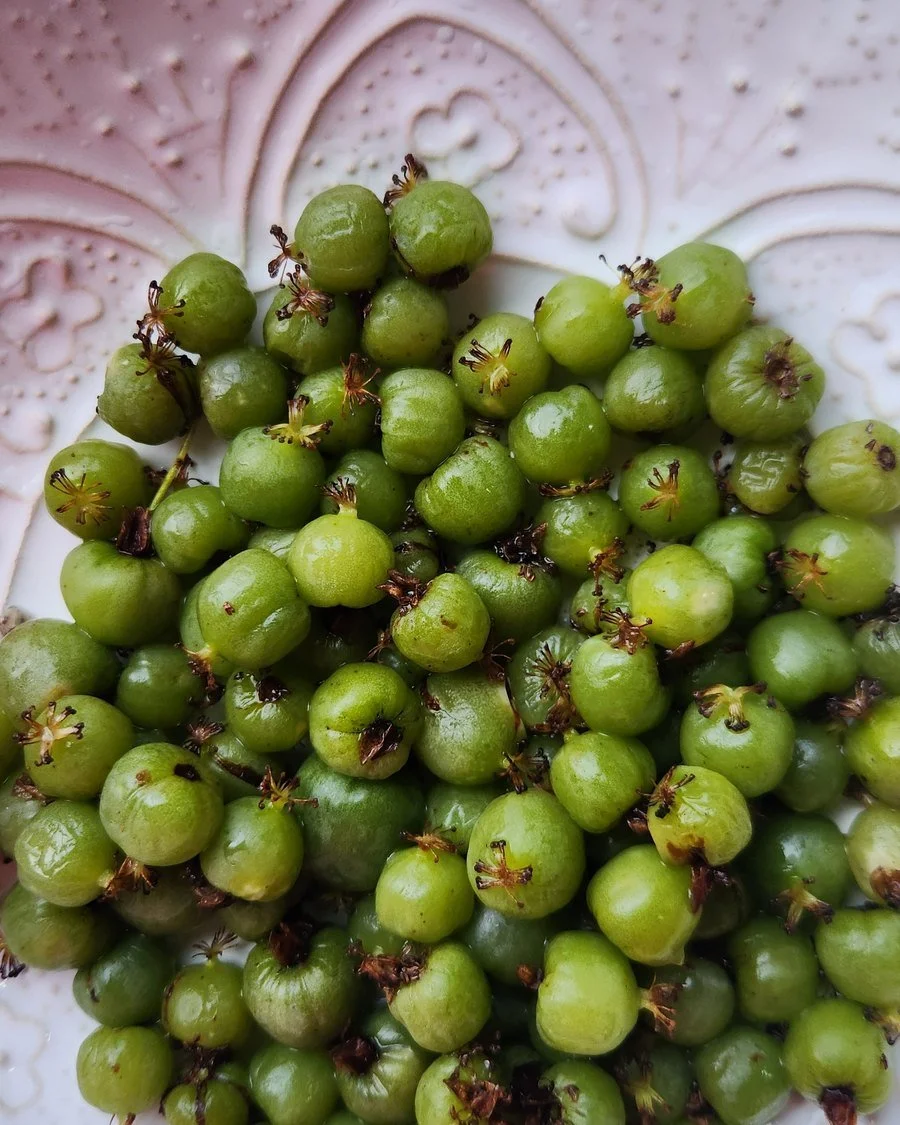
Kiwiberries
You need a male vine for about every six to ten females, unless you plant self-fertile ‘Issai’. The vines are winter hardy, but new shoots burn at 30°F for 30 minutes in spring, and they need a strong trellis. Harvest runs September into October.
The research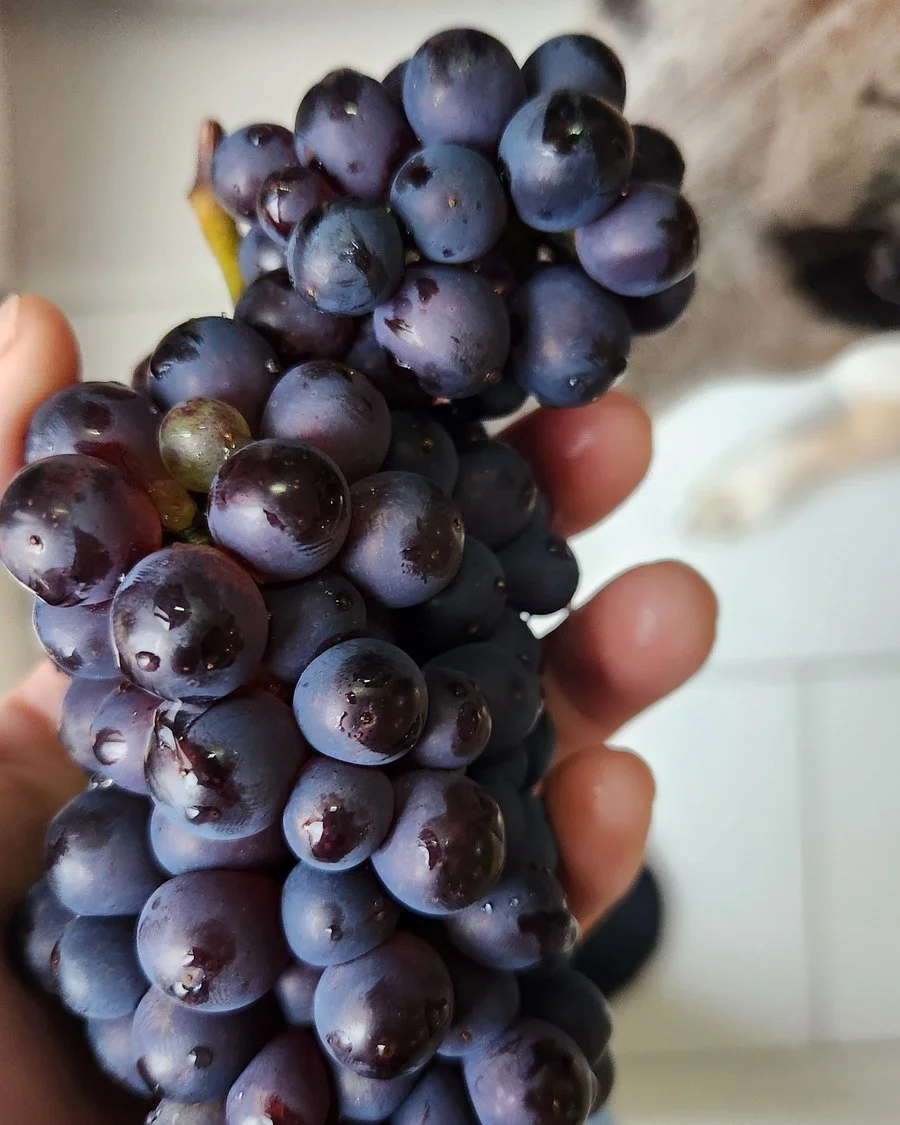
Concord grapes
Give them your warmest wall. Concord needs heat to ripen: Skagit County Master Gardeners grow it in sunny spots and suggest ‘Lynden Blue’ for cool-summer yards without enough heat for true Concord.
The researchPinot Noir grapes
Technically they want to be wine; we eat them. Any grapevine you buy should be certified stock: Washington has strict grapevine quarantines. Expect a first crop in two to three years and full production in five to six.
The research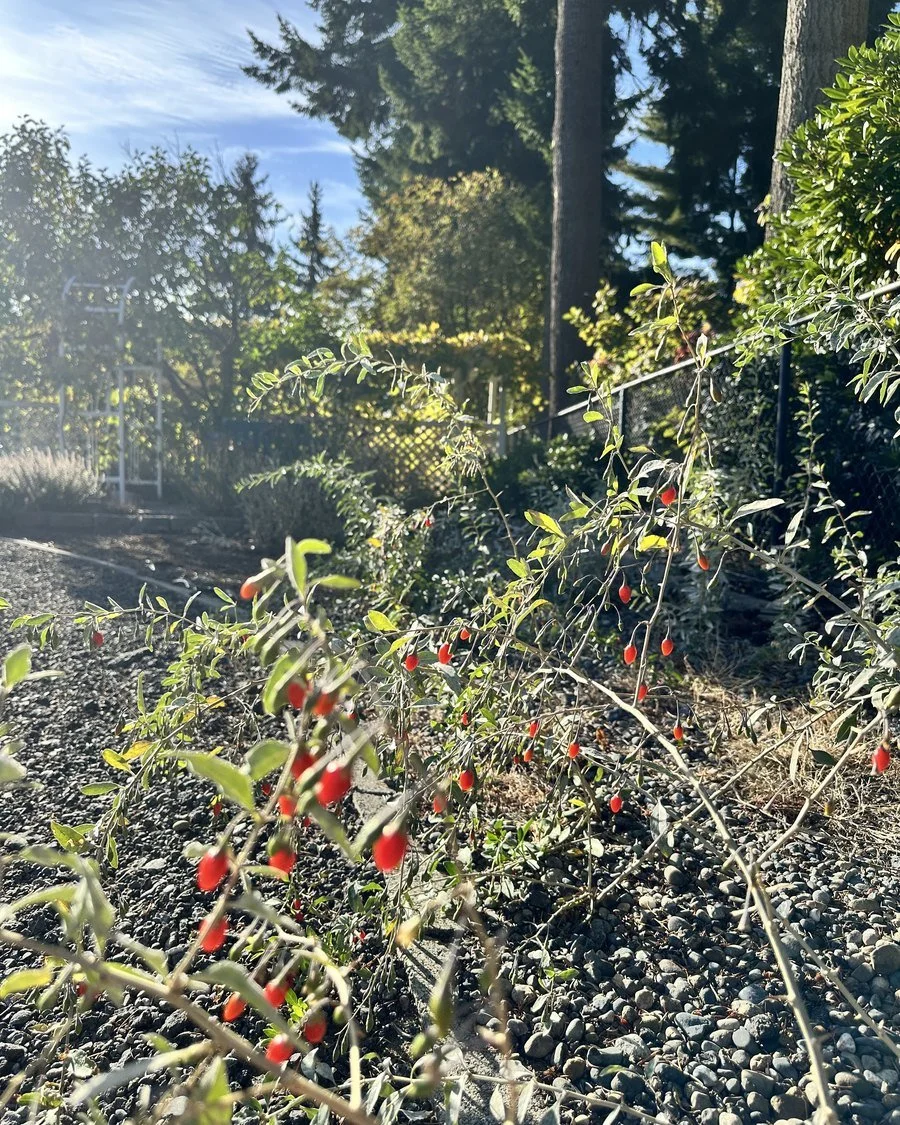
Goji berries
Full sun, little fuss. Goji starts bearing one to two years after planting and reaches full production in three to five. Each plant sets a lot of berries; I freeze them for smoothies. It spreads by suckers, so give it room or an edge.
The research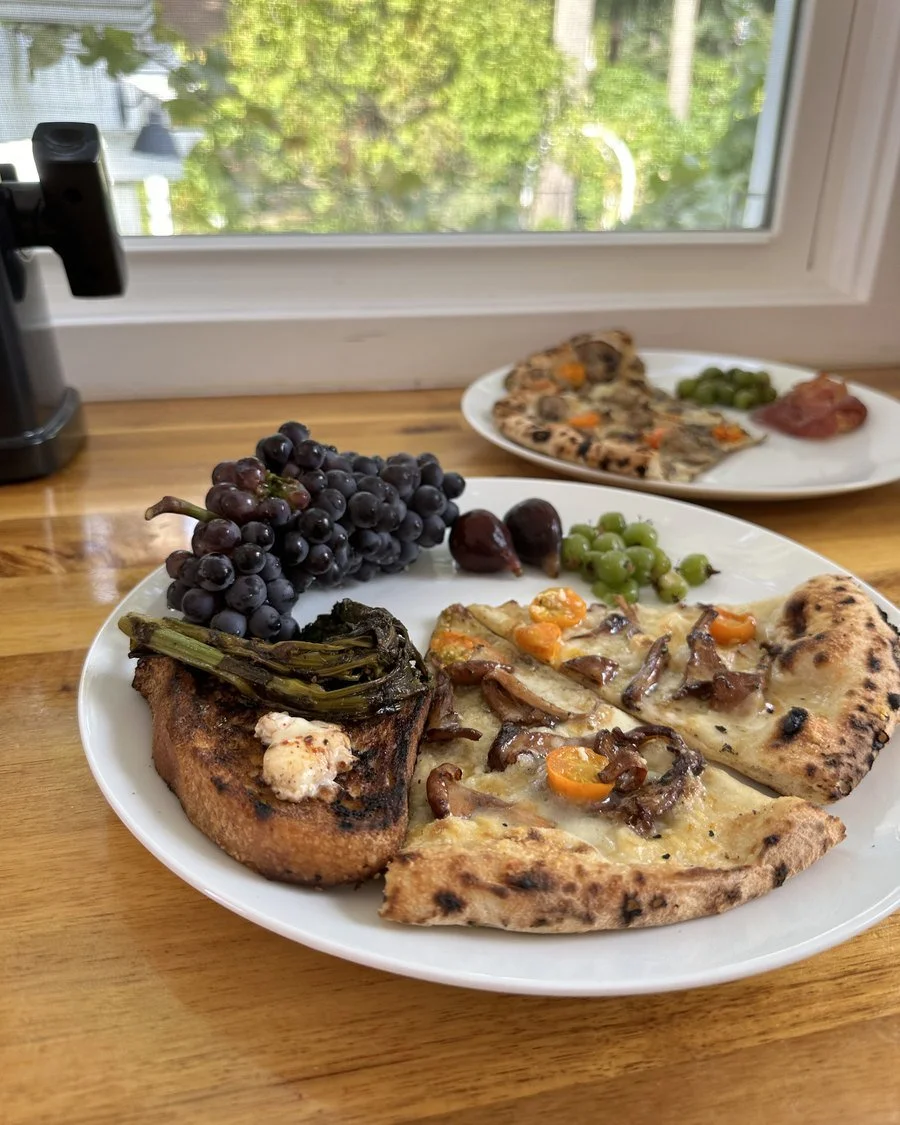
A harvest lunch
Grapes, figs and kiwiberries from the yard on the same plate, early October 2025.
Figs
Figs: plan for the summer crop, enjoy the fall one
Figs are the most Mediterranean thing you can grow without leaving King County, and they do better here than their reputation. WSU’s Skagit County Master Gardeners grow ‘Desert King’ at the NW Fruit Garden in Mount Vernon and are trialing ‘Lattarula’, ‘Olympian’, ‘Brown Turkey’, ‘Nordland’, ‘Little Ruby’ and more.
The breba crop is the reason. It forms the year before, so it ripens in early summer. The main crop starts that summer and usually runs out of warm weather. Plant against a south wall, water through the first summers (WSU’s test garden waters its figs weekly), and cover the tree if a cold snap heads below 10°F.
GrowingRipeRipens only in a warm year or a hot spot
Patience
How long until you eat: years to the first harvest
Fruit is a slow start and a long payoff. Grapevines can live 50 to 100 years; blueberry bushes bear for more than 50. Plant the slow ones first, then fill in with vegetables while you wait.
Years to the first cropYears to full production
Easy wins
Blueberries and plums: the easy wins
Blueberries are a classic Northwest crop. Oregon State recommends at least two cultivars for bigger berries and larger crops, a soil pH of 4.5 to 5.5, and full sun. Raised beds or containers with an acidic potting mix work when native soil won’t cooperate.
Mix early, middle and late cultivars and you pick for months. In Oregon State’s Willamette Valley trials, ‘Duke’ and ‘Spartan’ ripen late June into July, ‘Bluecrop’ and ‘Liberty’ in July and August, and ‘Darrow’ in August and September.
Plums are the other low-drama tree. WSU’s Fruit Handbook for Western Washington says most Italian prune types do well here; ‘Early Italian’ ripens mid to late August. Mine had a good year in 2025, and I finally picked on time. Yes, a prune is a plum.
Vegetables
Vegetables: two seasons, not one
Seattle gardeners get a second spring. WSU’s King County Master Gardeners note that carrots, beets, salad greens and kale planted in midsummer harvest into fall and winter, even without covers. Cloches and cold frames stretch the season further.
For heat lovers, buy starts. Tomatoes, peppers and eggplant need warmth to germinate, so starts make more sense than seed, and they go out after the last frost once the soil warms. Root crops are the opposite: they don’t transplant well, so sow them where they’ll grow.
Sow or plantHarvest
Rules and soil
Before you dig: soil, the planting strip and water
Three checks save a lot of regret. None of them take long.
- Test the soil, especially in south King County.The Tacoma Smelter Plume left arsenic and lead in soils across about 1,000 square miles. King County lists West Seattle, Burien, Normandy Park, Des Moines, SeaTac, Tukwila, parts of Kent and Federal Way, and Vashon-Maury Island as most affected. Look up your address on the Dirt Alert map. Ecology’s advice for gardens: raised beds with clean soil, and scrub or peel what you grow. Most King County residents can also get a free soil test through the King Conservation District.
- The planting strip is fair game, with a free permit.Seattle’s transportation department now requires a free Street Use permit for planting-strip gardens. Plants stay at or under 3 feet, or 30 inches within 30 feet of an intersection or 10 feet of a driveway. Seattle Public Utilities notes that fruit trees aren’t allowed there, since fallen fruit is a slip hazard. Call 811 before you dig.
- Raised beds in the strip have their own rules.The strip must be at least 6 feet wide. Beds max out at 18 inches tall and 40 feet long, sit 1 foot from the sidewalk, 3 feet from the curb and 5 feet from poles and hydrants, with 3 feet between beds. No creosote-treated wood.
- Drip on a timer, with the right valve.Seattle Public Utilities treats an irrigation system on your drinking water as a low hazard that still needs an approved backflow assembly, tested every year by a state-certified tester. A hose-end timer is the simple start; a built-in system is a plumbing project.
Building an arbor, a greenhouse or a big raised bed near the lot line? Check Seattle setbacks and where your property line is first. On a slope, read geotechnical inspections before you terrace.
Townhomes and condos
Townhomes, condos and HOAs: grow up, and grow in pots
A small yard still feeds you. Containers, a trellis on a sunny fence and one raised bed cover a lot of ground. Blueberries grow well in containers with acidic mix, and salad greens don’t care where they live as long as they get their hours.
Read the rules first. Condo declarations and HOA rules can limit what goes on a balcony or a fence. I helped a family where the community didn’t allow homemade trellises, so the plan became a row of matching planters with automatic drip irrigation: tidy enough for the HOA, easy enough to keep alive.
Balcony
Containers, salad greens, herbs, blueberries in acidic mix. Check weight and drainage rules.
Townhome patio
Planters on the sunniest side, a trellis if the rules allow it, drip on a timer.
House
Fruit along the south side, raised beds in the open, the planting strip with a free permit.
Selling and buying
Selling or buying a home with a garden
When you sell, what’s in the ground usually stays. Washington’s standard purchase contract, NWMLS Form 21, lists “shrubs, plants and trees planted in the ground” and “irrigation fixtures” as included items. Pots go with you. If you want to take the fig tree, say so in writing before an offer, and talk with your broker about how. My seller guide covers getting a yard ready for photos.
When you buy, look for the sun before you fall for the kitchen. Check what stands to the south, where moss and bare dirt replace lawn, and the satellite view for big trees next door. In south King County, look the address up on the Dirt Alert map; Ecology suggests buyers and sellers in the plume area check it. My buyer guide has the rest of the walkthrough checks.
Selling
- Plants, trees and irrigation in the ground stay with the sale under Form 21.
- Potted plants are personal property.
- Want to keep a plant? Put it in writing before an offer.
- A tidy, harvested garden photographs as a feature, not a chore.
Buying
- Check the south side: trees, tall neighbors, hills.
- Moss and bare dirt where lawn should be mean low light.
- South King County: look up the Dirt Alert map.
- Ask what the fruit trees are and how old they are.
FAQ
Frequently asked questions about what grows well in Seattle
What grows well in Seattle?
Figs, kiwiberries, grapes on a warm wall, goji, blueberries, Italian prune plums, salad greens, kale, carrots, beets and, with a warm spot, tomatoes. Seattle’s long, mild season favors crops that don’t need a hot summer.
What fruit grows best in the Pacific Northwest?
Blueberries, Italian prune plums, goji and hardy kiwi are reliable. Figs and grapes need your warmest, sunniest spot and the right variety, such as ‘Desert King’ fig or ‘Lynden Blue’ grape.
Can fig trees grow in Seattle?
Yes. Plant against a south wall and count on the early summer breba crop; WSU says the Puget Sound is usually too cool to ripen the main crop, though it can finish in a hot spot or a warm year.
Can you grow grapes in Seattle?
Yes, in full sun on your warmest side. Concord needs heat, so give it a south or west wall, or pick a cool-summer Concord-style grape like ‘Lynden Blue’. Washington’s grapevine quarantine means buying certified vines.
Do I need a male kiwi plant?
For most kiwiberries, yes: about one male for every six to ten females. ‘Issai’ is self-fertile, though Oregon State notes cross-pollination still increases fruit size.
What growing zone is Seattle?
Zone 9a on the USDA’s 2023 Plant Hardiness Zone Map, up from 8b in 2012. That means an average coldest night of 20°F to 25°F. Check your ZIP code on the USDA map.
When is the last frost in Seattle?
At WSU’s Center for Urban Horticulture station, the last spring frost has come as early as February 23 and as late as March 30 since 2012. Colder spots run later: WSU’s Woodinville station has seen it as late as May 1.
What can I plant in Seattle in late summer or fall?
Carrots, beets, salad greens and kale planted in midsummer harvest into fall and winter. Fall is also a good time to plan fruit for next year.
Can I plant vegetables in my parking strip in Seattle?
Yes, with a free Street Use permit from SDOT. Plants stay at 3 feet or under (30 inches near intersections and driveways), and fruit trees aren’t allowed.
Is my soil safe for a vegetable garden?
In much of south King County and West Seattle, check the Dirt Alert map for the Tacoma Smelter Plume. Raised beds with clean soil and washing or peeling produce are Ecology’s standard advice. A soil test answers it for your yard.
How long until a fruit plant produces?
Goji and blueberries in one to two years, grapes in two to three, kiwiberries in three or more. Full production takes three to eight years depending on the plant.
Do plants stay with the house when I sell?
Under NWMLS Form 21, shrubs, plants and trees planted in the ground, and irrigation fixtures, are included in the sale unless the contract says otherwise. Potted plants aren’t.
The bottom line
Seattle is a better food garden than its gray reputation suggests. Find your sunniest, warmest spot, pick varieties built for cool summers, plant the slow fruit first and sow vegetables twice a year. Check the soil and the strip rules before you dig. Then let the drizzle do its job.
If you want to be home in the truest sense, growing a little of your own food is an easy place to start.
Sources
- Master Gardeners of King County, Puget Sound Gardening Tip Sheet #5: Edible Gardening, WSU Extension, Jan. 14, 2024
- Get Growing: Welcome to Zone 9a, Seattle!, Madison Park Times, Nov. 29, 2023
- USDA Plant Hardiness Zone Map, USDA ARS, 2023
- AgWeatherNet, Washington State University
- The Fig Tree: A Horticultural Challenge, Skagit County WSU Extension Master Gardeners, Sept. 20, 2024
- Growing Grapes in Western Washington, Skagit County WSU Extension Master Gardeners, Oct. 17, 2024
- Growing kiwifruit, PNW 507, Oregon State University Extension, revised March 2021, reviewed 2025
- Goji in the Garden, Utah State University Extension
- Growing blueberries in your home garden, EC 1304, Oregon State University Extension, revised May 2025
- Fruit Handbook for Western Washington, EB0937, WSU Mount Vernon NWREC
- Gardening in the Planting Strip, Seattle Department of Transportation
- Growing Food in Planting Strips, Seattle Public Utilities
- Requirements and types of backflow prevention, Seattle Public Utilities
- Dirt Alert, Public Health, Seattle & King County
- Living in the Tacoma Smelter Plume, Publication 25-09-109, Washington Department of Ecology, June 2025
- Healthy soil and soil testing, King Conservation District
- NWMLS Form 21, Residential Purchase and Sale Agreement, General Terms c (Included Items), Rev. 2/26, Northwest Multiple Listing Service