
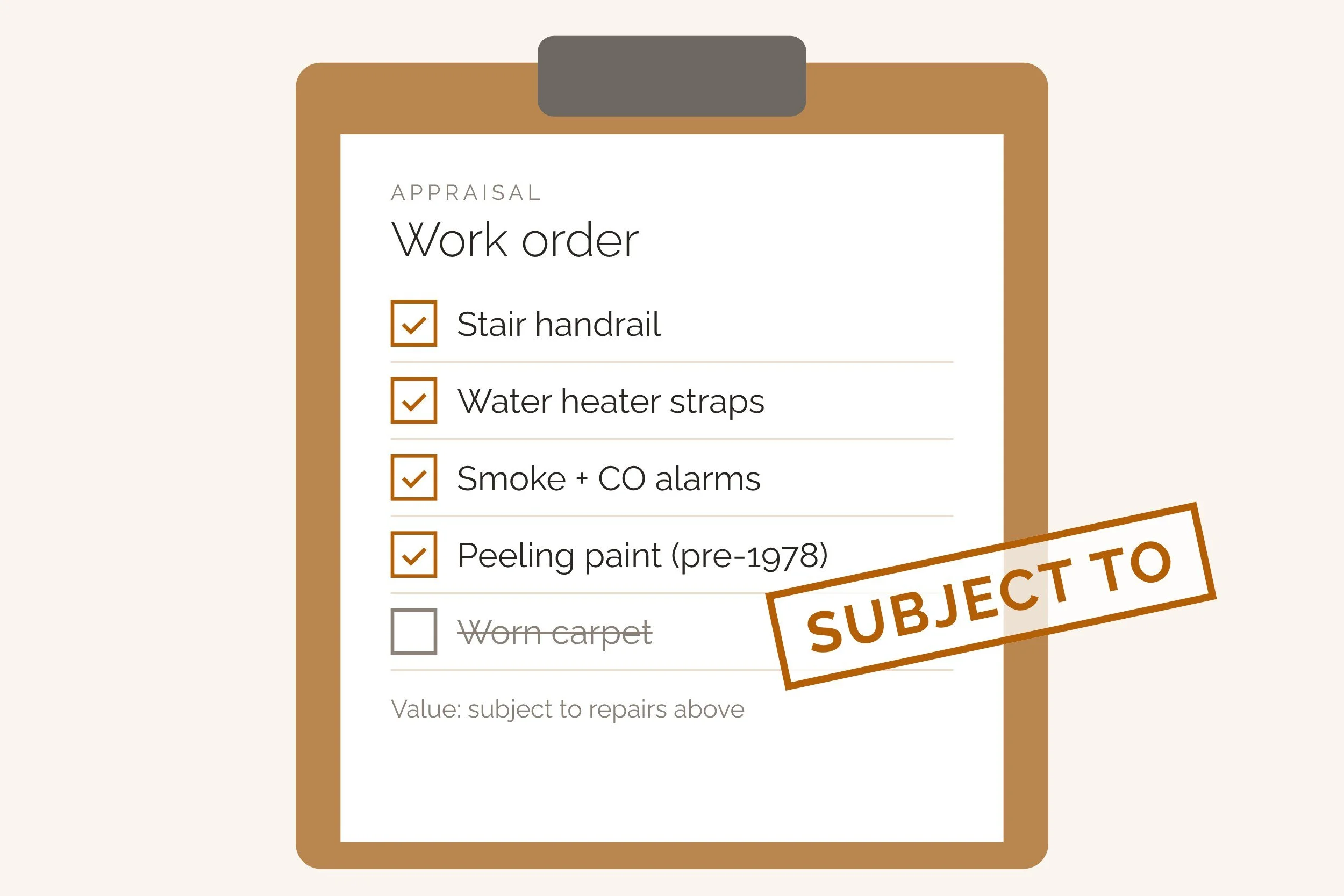
Short answer: Safety, soundness and water. Not worn carpet.
Real answer: A lender can require repairs before closing when the appraiser finds a problem with safety, soundness or structure. FHA and VA loans are the strictest. In Seattle the usual list is handrails, water heater straps, smoke and CO alarms, peeling paint and roof leaks. Cosmetic wear gets noted, not required.
Appraisal repair checker
Would a lender make you fix it? Check your list
Pick your loan, the home and what an appraiser might see. You get a likely verdict per item, the rule behind it and a checklist for your side. Nothing you enter leaves this page.
Your checklist
A planning aid, not a lender decision. Rules: HUD Handbook 4000.1 (FHA), VA Lender’s Handbook Chapter 12 for appraisals ordered after May 1, 2026, Fannie Mae Selling Guide B4-1.3-06 (conventional), NWMLS Form 22A (Rev. 2/26), RCW 43.44.110 and 19.27.530, WAC 51-56-0500. Each lender reads the appraisal and can add its own rules. “Not sure” on year built is treated as before 1978.
I’ve watched a $5 strap hold up a closing. I’ve also watched a seller pick a cash offer over a VA offer, partly to dodge a winter paint job. Most lender repairs are small. They just show up late, when time is short.
Same thing, other names: appraisal required repairs, appraisal repairs, “subject to” repairs, appraisal work order, appraisal conditions, minimum property requirements (MPR), and sometimes “appraisal inspection”. An appraisal is not a home inspection; this post is about the repairs a lender can require.
The rules
What a lender can make you fix, and what it can’t
“As is” or “subject to”
The appraiser visits for the lender. The report says the value is “as is” or “subject to” repairs. “Subject to” means the loan waits until the work is done.
Safe, sound and secure
Every loan program uses the same three tests: is the home safe, sound and secure? Water getting in fails. A missing stair rail can fail. Worn carpet passes.
Fix before closing
Likely required
- Roof leaks or a worn-out roof
- Peeling paint on a pre-1978 home (FHA, VA)
- Exposed wiring
- Active leaks or water damage
- Rot, termites, settling
- Heat that doesn’t work
Depends
Lender’s call
- Missing stair handrail
- Water heater with no straps
- Smoke or CO alarms missing
- Heavy roof moss
- Wet or blocked crawl space
Fine as is
Usually just noted
- Worn floors or carpet
- Dripping faucet
- Cracked window glass (FHA)
- Interior peeling paint, 1978 or newer
- Old but working systems
The lender decides
The appraiser flags it. The lender decides which items are required. So two lenders can read the same report a little differently.
Cosmetic items still count
Cosmetic items still show up in the report. They can nudge the value and the condition rating. They just don’t hold up the loan.
Seattle
The Seattle short list: what I see flagged most
Six items, mostly cheap
Six items come up again and again in my files. Most are cheap. All are easier before the appraiser arrives than after.
- 1Stair handrail. 4+ risers need one in Seattle
- 2Water heater straps. Top and bottom third
- 3Smoke alarm. Required at sale in WA
- 4CO alarm. Required at sale in WA
- 5Peeling paint. Pre-1978: FHA and VA fix
- 6Roof leak or moss. Leak: fix. Moss: maybe
- 7Furnace. Must run safely
Handrails
Basement and porch stairs are the usual misses. Seattle requires one on any stair with four or more risers.
Water heater straps
Washington requires two, one in the top third and one in the bottom third. Straps run about $5 each at the hardware store.
Smoke and CO alarms
In 2025 an underwriter asked for photos of the CO alarms before funding. We sent photos, and it funded the next day.
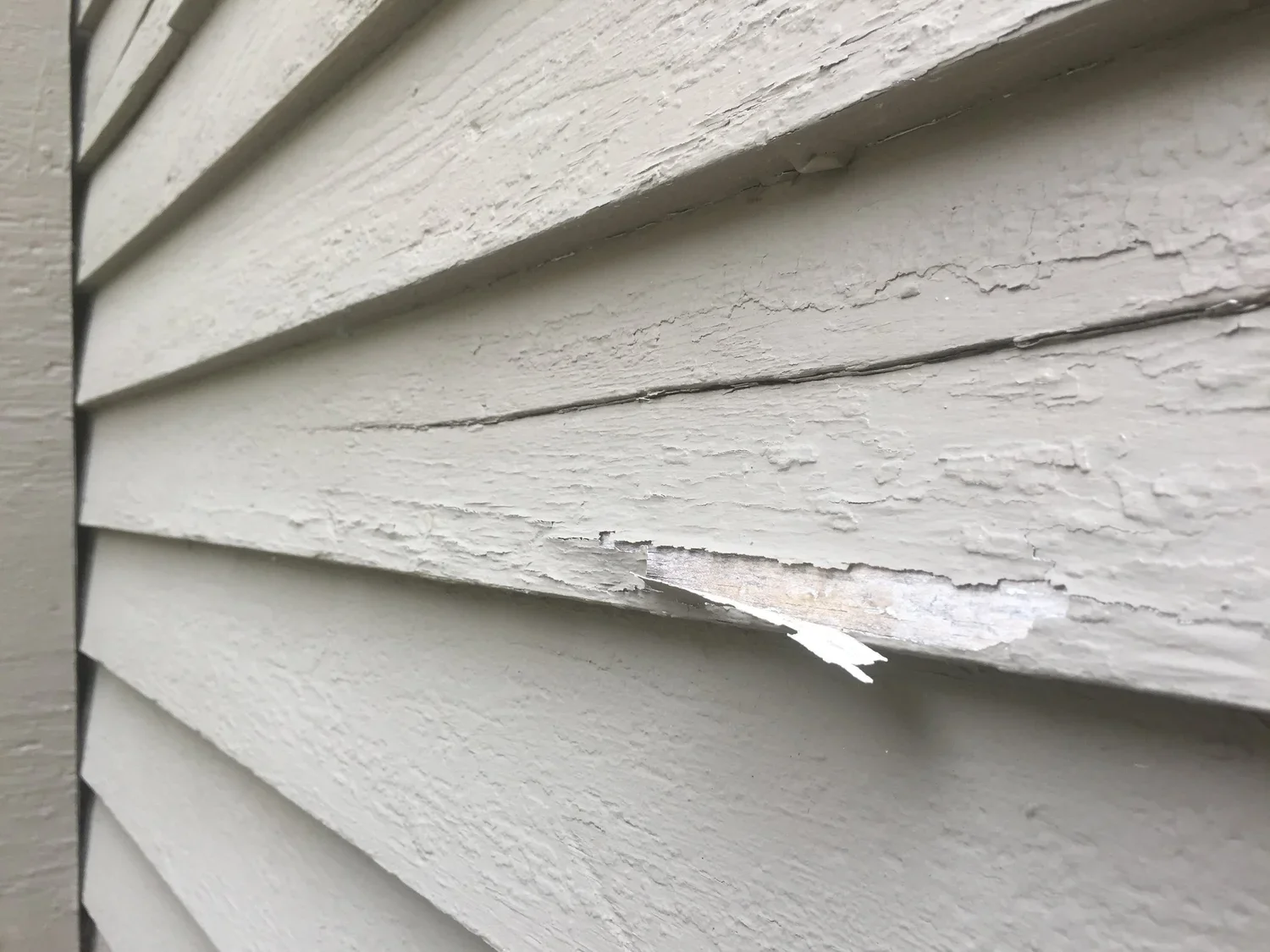
Peeling paint
On a home built before 1978, FHA and VA treat it as lead and require a fix. Scraping and painting waits on dry weather here.
Roofs and moss
A leak is a hard stop. Heavy moss is the appraiser’s call, and the fix means someone on the roof.
Heat
A furnace that won’t run is a safety item, not a comfort item. In January 2026 that one took a licensed tech and a holdback.
January 2026, an estate sale in SeaTac. The appraisal came in at value, with notes: no seismic straps, no smoke or CO alarms, and a dead furnace. I bought the straps and installed them myself. I was there until about 8 p.m. on one strap where hands don’t fit. The alarms went in the same week. The furnace needed a holdback, below.
Loan types
FHA, VA and conventional: how strict each loan is
Loan type sets the rules
Loan type sets the rule book. Cash has none. Conventional is the most forgiving. FHA and VA are the strictest, and both care a lot about paint.
FHA
Strict. All defective paint before 1978, inside and out.VA
Strict. Lead paint presumed before 1978; termite rules by area.Conventional
Safety, soundness and structure only.Cash
No lender conditions at all.FHA
On a home built before 1978, the appraiser must require repair of all defective paint, inside and out, sheds and fences included. On newer homes, FHA requires exterior paint repair only where bare wood is open to the weather. HUD lists a missing handrail as cosmetic when it isn’t a safety threat.
VA
Before 1978, VA presumes lead paint and any defective paint must be fixed. From 1978 on, peeling paint is normally cosmetic. For appraisals ordered after May 1, 2026, VA dropped five rules, including radon and detached buildings.
Conventional
Fannie Mae lets minor items stay “as is”. Anything that affects safety, soundness or structure gets fixed before the loan is sold. Many lenders follow the same lines.
Cash
No lender, no appraisal conditions. The buyer can still ask for repairs after the inspection.
Changes ahead
HUD asked for public comment on modernizing FHA’s property rules in May 2026. Nothing has changed yet. I’ll update this post when it does.
| Item | FHA | VA | Conventional |
|---|---|---|---|
| Peeling paint, pre-1978 | Required | Required | Lender’s call |
| Peeling exterior paint, 1978+ | Required if bare wood shows | Usually cosmetic | Lender’s call |
| Missing handrail | Cosmetic unless unsafe | Lender’s call | Lender’s call |
| Roof leak | Required | Required | Required |
| Termites or rot | Pest inspection + fix | WDI inspection + fix | Lender’s call |
| Worn floors, dripping faucet | Noted only | Noted only | Noted only |
Washington
Washington rules that apply anyway
Rules beyond the loan
Some items aren’t really lender items at all. Washington law or code already asks for them, loan or no loan.
Smoke alarms
A seller must provide at least one before the buyer moves in (RCW 43.44.110).
CO alarms
A seller must equip the home with them before the buyer moves in (RCW 19.27.530). Where to put them is on my PSE post.
Water heater straps
The state plumbing code requires them on every water heater, top third and bottom third (WAC 51-56-0500).
Handrails
Seattle’s residential code wants a rail on stairs with four or more risers, 34 to 38 inches high (SDCI Tip 319).
Code vs. the appraiser
Code rules mostly apply to new work. But an appraiser who sees no straps on a Seattle water heater rarely lets it slide.
Homeowners
Owners: refinances and condos
Refinances
Homeowners see this too. A refinance with a full appraisal follows the same property rules for that loan type.
Before a refinance
If a refinance is on your calendar, walk the short list first. Straps, alarms and a handrail are an afternoon.
Refinancing
- Ask your lender which loan rules apply
- Walk the short list before the visit
- Clear attic, crawl space and panel access
- Keep photos and receipts of fixes
In a condo
- Your unit is yours; common areas are the HOA’s
- Pre-1978 + FHA: common-area paint counts
- Ask the HOA about planned paint or roof work
- Get the HOA’s answer in writing
Condos
Condos add a twist. On an FHA loan for a pre-1978 condo, the appraiser looks at the unit, the common areas and the exterior.
Common areas
You can’t paint a hallway you don’t own. Ask the HOA early, and ask your lender how it handles common areas.
Lead-safe paint work
Paint work in a pre-1978 home has its own rule. Anyone paid to disturb it must be lead-safe certified (EPA RRP, run in Washington by Commerce).
Sellers
Sellers: get ahead of it before you list
Timeframe Stay staged from listing until the appraisal is done
Fix before anyone asks
The best time to fix a lender item is before anyone asks. After mutual, every small fix runs on a clock.
Inspect early
I like a pre-listing inspection early in prep. It catches the lender-sensitive items while there’s time to fix them calmly.
- Prep
Inspect, fix the short list - List
Staged and photographed - Mutual
Under contract - Appraisal
Stay staged until it’s done - Closing
Move out after
Cheap safety items first
Then do the cheap safety items: straps, alarms, handrails, loose wiring covers. Getting a house ready to sell has the rest of the prep list.
Easy access
Make the appraiser’s visit easy. Clear the attic hatch, the crawl space door and the electrical panel. Leave the heat on.
Strategy
Which buyer and which loan to favor is strategy, not a public post. My clients get that in the seller guide (offers).
The process
After a “subject to” appraisal: the steps
Timeframe 3 days for the buyer to send the work order (Form 22A)
How it runs
Here is how it runs in Washington when the appraisal comes back with repairs.
The 3-day notice
NWMLS Form 22A calls the list an Appraisal Work Order. The buyer must send it to the seller, with a copy, within 3 days of getting it.
- Step 1ReportAppraisal comes back “subject to”
- Step 2NoticeBuyer sends the work order within 3 days
- Step 3AgreeWho does it, who pays, by when
- Step 4FixLicensed crew where needed; keep photos
- Step 5VerifyCompletion report or lender proof, then funding
Completion report
Then the work gets done and verified. The appraiser often comes back and signs a completion report, Fannie Mae’s Form 1004D. Some lenders accept photos, invoices or a pro’s letter instead.
Re-inspection fee
The re-inspection usually carries its own fee. Ask your lender who pays it before the work starts.
Buyer work before closing
A buyer doing work on a home they don’t own yet needs the seller’s written permission first. Insurance and access both need answers.
Money
Who pays, holdbacks, and what if it isn’t fixed
Who pays
Form 22A doesn’t make the seller pay. The seller has to allow the appraisal and inspections. Who pays for repairs is up to the parties.
Hot vs. slow markets
In a hot market, buyers sometimes do the work with the seller’s written OK. In a slower one, sellers often handle it. Either way, it gets agreed in writing.
If it isn’t done
If the work isn’t done and the buyer can’t get the loan by closing, the buyer can terminate. The earnest money goes back if the buyer didn’t waive Paragraph 5.
Holdbacks
Some lenders allow a holdback: money held in escrow until the work is done after closing. FHA allows a repair escrow when work truly can’t finish first. Fannie Mae won’t escrow safety items on an existing home.
Value is separate
Value problems are a different story. If the number comes in short, see low appraisals. Strategy on who pays sits in the seller guide and buyer guide.
FAQ
Frequently asked questions about lender required repairs
What are examples of lender required repairs?
Roof leaks, peeling paint on a pre-1978 home (FHA and VA), exposed wiring, active leaks, rot or termites, and heat that won’t run. In Seattle add handrails, water heater straps, and smoke and CO alarms.
What happens if an appraisal requires repairs?
The report is marked “subject to” the repairs. The buyer sends the work order to the seller within 3 days (Form 22A). The work gets done, then verified, then the loan funds.
Who pays for repairs required by the appraisal?
Nothing in Form 22A makes the seller pay. Buyer and seller agree in writing. In practice sellers often pay, and buyers sometimes do the work with written permission.
Is an appraisal the same as a home inspection?
No. The appraiser values the home for the lender and checks basic safety. A home inspection is a detailed look for the buyer. Lenders don’t require one.
Does an FHA appraisal require handrails?
HUD calls a missing handrail cosmetic when it isn’t a safety threat. The appraiser judges that. Seattle code wants one on stairs with four or more risers, so I just install it.
Do I need seismic straps on my water heater in Washington?
Yes. The state plumbing code requires two straps, one in the top third and one in the bottom third. Appraisers here often flag a heater without them.
What is a 1004D?
Fannie Mae’s Appraisal Update and/or Completion Report. The appraiser uses it to confirm the required repairs are done. Some lenders accept photos or invoices instead.
Can a buyer make repairs before closing?
Only with the seller’s written permission. The buyer doesn’t own the home yet, so access, insurance and liens all need answers first.
What changed for VA appraisals in 2026?
For appraisals ordered after May 1, 2026, VA removed five property rules, including radon and detached buildings. Pre-1978 lead paint rules stayed.
Are FHA property rules changing?
HUD asked for comments on modernizing them in May 2026. As of this review, the current rules still apply.
Can repairs be held back in escrow after closing?
Sometimes. The lender has to approve it, and escrow holds part of the bid. In a 2026 sale I closed, escrow held 150% of the bid.
What is an “appraisal inspection”?
People use it two ways: the appraiser’s visit, or the repair list that comes out of it. This post covers the repair list.
The bottom line
Lenders require what makes a home unsafe, unsound or leaky. FHA and VA add paint on older homes. Fix the Seattle short list before anyone asks, and a “subject to” appraisal turns into a non-event.
Next: what happens after your offer is accepted, what to do about a low appraisal and what common repairs cost in Seattle.
Sources
- NWMLS Form 22A, Financing Addendum, Rev. 2/26, paragraph 5(d) Appraisal Work Order, NWMLS sample forms
- FHA Single Family Housing Policy Handbook 4000.1, HUD
- Request for Information Regarding Single Family Minimum Property Requirements, HUD, Federal Register, May 29, 2026
- VA Lender’s Handbook, Chapter 12 Minimum Property Requirements, effective after May 1, 2026 (Change 46), VA
- Selling Guide B4-1.3-06, Property Condition and Quality of Construction, Fannie Mae
- Selling Guide B4-1.2-05, Verifying Completion and Postponed Improvements, Fannie Mae
- RCW 43.44.110, Smoke detection devices, Washington Legislature
- RCW 19.27.530, Carbon monoxide alarms, Washington Legislature
- WAC 51-56-0500, Water heaters (UPC 507.2 seismic provisions), Washington Legislature
- Tip 319, Getting a Grip on Handrails, Seattle SDCI
- Lead Renovation, Repair and Painting Program, EPA
- Lead-based paint program, Washington State Department of Commerce
- Brian Huie’s transaction emails, 2023 to 2026 (no names or addresses), Brian Huie