
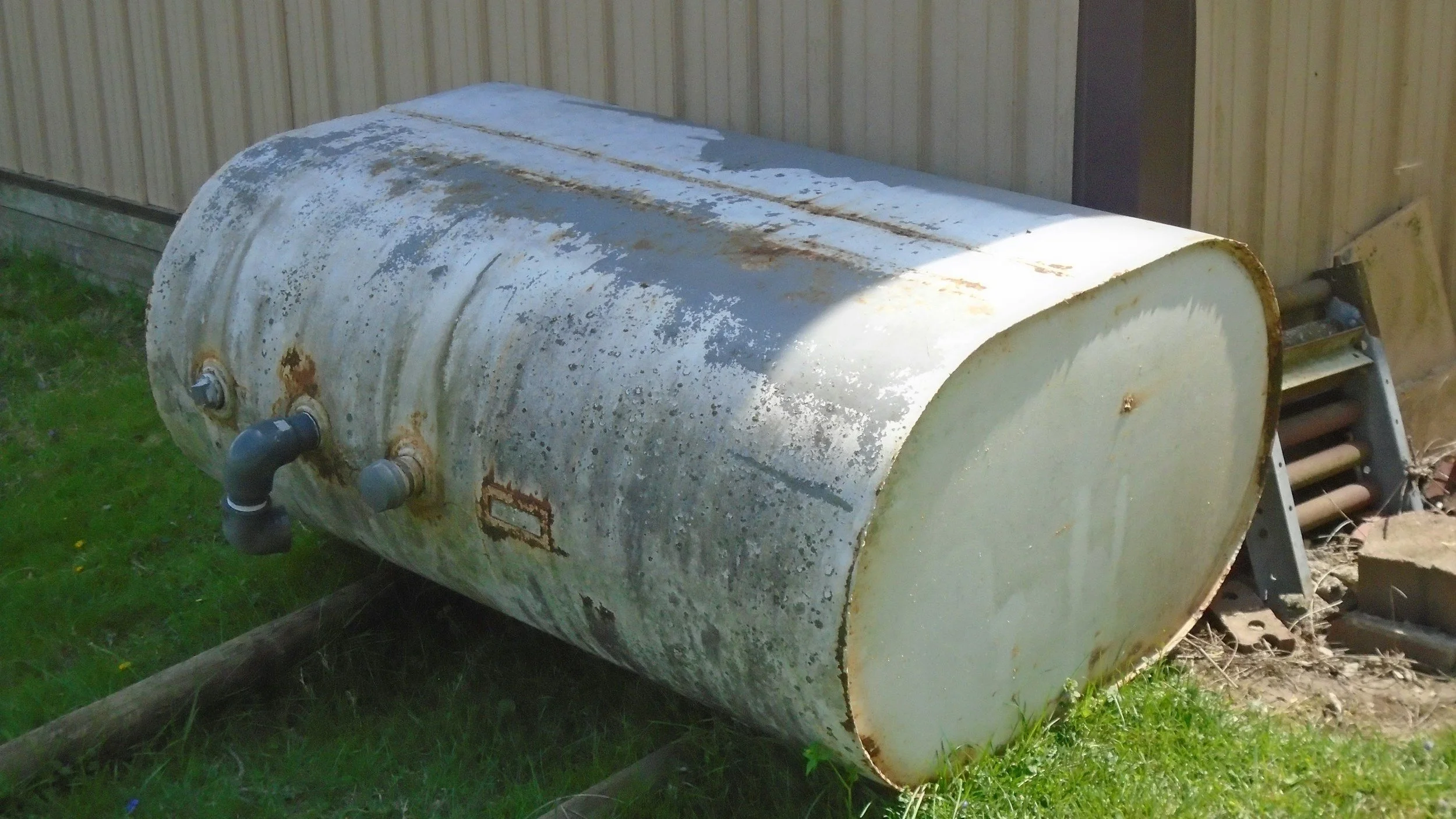
Short answer: Assume there was one until the papers say no.
Real answer: Many Seattle houses built before about 1970 heated with oil from a buried tank. If a tank sat unused a year or more, Seattle requires it be filled or removed, with a permit. Check the City’s records, sweep the yard if there’s no record, and keep every paper.
Oil tank checker
Is there an oil tank, and what should you do about it?
Pick your role, the heat and what you’ve seen. An example is loaded. The checker runs on this page.
Seattle records lookup
Searches the Seattle Fire Department’s decommissioning permits since 1996, on the City’s open data site. Only the address you type is sent.
Your checklist
Rules: Seattle Fire Department CAM 5962 and Permit 6103; PLIA; Seattle Clean Heat; NWMLS Form 35. Costs: national guides (Angi, HomeAdvisor) and my notes from local tank companies, January 2026. General information, not legal or environmental advice.
Seattle has a lot of old homes, and old homes love to keep secrets. A buried oil tank is one of the most expensive. The checker above sorts out where you stand. The rest of this post is how tanks are found, retired and documented here.
Same thing, other names: heating oil tank, home heating oil tank, underground storage tank (UST) or buried oil tank. Finding one is a tank sweep, tank scan or tank locate. Retiring one is decommissioning, which means filling it in place or removing it. A septic tank is something else entirely; the sewer line has its own post.
Background
Why so many older Seattle homes have buried oil tanks
The oil heat era
Before gas lines reached most neighborhoods, many Seattle houses burned heating oil stored in a buried tank in the yard.
When owners switched to gas or electric, many tanks stayed in the ground. The City counted about 18,000 oil-heated homes when its program began, and fewer than 10,000 now.
What the City’s records show
I downloaded the Seattle Fire Department’s decommissioning permits: 50,342 records from 1996 through November 13, 2026.
About 70% of those tanks were filled in place. About 1 in 4 were dug up. Most held about 300 gallons.
North Seattle leads the count: 98115, 98117 and 98103 top the list. The City still logs about 1,000 a year.
Finding a tank
How to find out if a house has an oil tank
Clues you can see
The classic clue is a pipe sticking a few inches out of the lawn or flower bed near the foundation. That’s the fill pipe; a vent pipe often sits nearby.
Inside, look for capped copper lines through the basement wall, an old oil furnace or boiler, or a patched hole where lines once ran.
No pipe doesn’t mean no tank. Fill pipes get cut off, paved over and planted around.
Check the records
In Seattle, search the Fire Department’s permits by address with the lookup above, or on the City’s open data site.
Ask the seller for the permit stamped “Approved to Proceed” and the decommissioning report. Those two papers are the gold standard.
A tank sweep
A tank sweep is a pro walking the yard with metal detectors. It finds buried steel; the sweep report says what it found and where.
On one purchase, the inspector found a fill spout, the City had no record and the seller had no knowledge. The listing agent tracked down the tank company that did the work decades ago. They still had the paperwork.
Records
What “no record” can mean
Four meanings
When a seller says there is no record, it can mean four very different things.
No tank ever existed. The tank was decommissioned with permits. It was decommissioned without permits. Or it was never decommissioned at all.
Only one of those answers is stress free.
The 1996 line
Seattle’s permit records start in 1996. A tank filled before then may have no City record, even if the work was done right.
Sometimes the tank company still has the old paperwork. It’s worth a call if the seller knows who did the work.
Decommissioning
Oil tank decommissioning in Seattle: fill it or remove it
The rule
Seattle Fire Code requires decommissioning a heating oil tank that has been out of service for a year or more (SFD CAM 5962).
Each tank needs its own Fire Department permit, code 6103, which costs $184 (permit application). Work can’t start until the permit says “Approved to Proceed.”
Two methods
Abandon in place: the oil is pumped out and the tank is triple rinsed. Then it’s filled with sand, concrete slurry or foam, and the fill pipe is cut and capped.
Removal: the tank comes out of the ground, the hole is filled and the tank is hauled away.
A tank suspected of leaking should be removed, not filled. The Fire Department also warns it can’t predict whether a filled tank may need removal someday.
| Fill in place | Remove | |
|---|---|---|
| Share of Seattle permits | About 70% | About 27% |
| Digging | A small hole at the fill pipe | Excavate the whole tank |
| Yard | Mostly untouched | Plants, paving or fences may go |
| Leaking tank | Not recommended | The right call |
| Later | Could need removal someday | Done for good |
The paperwork
An ICC-certified underground storage tank decommissioner must do or supervise the work, start to finish.
Within 30 days, that person files the decommissioning report with the Fire Department and gives you a copy.
Keep the stamped permit, the report, photos and receipts. Buyers ask for them.
Cost
What oil tank work costs
Typical prices
Prices depend on the tank’s size, where it sits and whether it leaked. Here’s a fair range for a typical 300-gallon tank.
The wild card
Soil testing is the wild card. A clean test is a few hundred dollars. A leak can turn a weekend job into months of cleanup.
Leaks
If the tank leaked: reporting, cleanup and state help
Report it
If you discover or suspect a leak, report it within 24 hours to 1-800-OILS-911 and stop oil deliveries (City of Seattle).
Washington also asks owners to report a heating oil release to PLIA within 90 days (WAC 374-45-030).
- Within 24 hoursReport1-800-OILS-911; stop deliveries.
- Within 90 daysTell PLIAOr apply to its program.
- TestSoil samplingPLIA’s $7,000 assessment grant.
- FinishClean upGrant up to $60,000; aim for a No Further Action letter.
PLIA’s grants
PLIA’s free heating oil insurance ended on July 1, 2025 (PLIA). Claims for leaks that started earlier closed July 31, 2025.
Now PLIA runs a Heating Oil Loan and Grant program. It offers up to $75,000 per owner, including a $7,000 site assessment and up to $60,000 for cleanup.
Grants don’t depend on income and don’t get paid back. PLIA says most full cleanups cost more than $60,000, and work must be approved before it starts.
Who regulates what
The state Department of Ecology doesn’t regulate home heating oil tanks. PLIA is the state agency for them.
A finished cleanup can earn a No Further Action letter. That letter is what future buyers and lenders want to see.
Oil heat
Still heating with oil? The switch and the rebates
Rebates
Seattle’s Clean Heat program offers a $2,000 instant rebate to switch from oil to a qualifying heat pump.
Moderate-income households can add a $4,000 bonus for installs finished by May 30, 2027. Lower-income households may qualify for a free conversion.
The City says households typically cut heating bills by about half. What a heat pump install costs is in my mini-split post.
Then decommission the tank. Gas questions live in my natural gas post.
Buying and selling
Selling or buying a house with an oil tank
Sellers
Form 17, Item 7E, asks whether there are fuel or chemical storage tanks on the property (RCW 64.06.020). Answer what you know and attach the papers.
No papers? A records search and a sweep before you list beat a surprise during inspection. My pre-listing inspection post covers timing.
Where an oil tank shows up in a Washington sale
- Form 17, Item 7E: fuel storage tanks?
- Form 35, para 8: inspection checks only whether a tank exists
- Form 35, para 7: seller may remove or decommission
- City record, sweep report, papers
NWMLS Forms Rev. 2/26 and RCW 64.06.020. Illustrative.
Buyers
On NWMLS Form 35, an oil tank inspection only checks whether a tank is there, unless both sides agree to more (NWMLS forms).
If a seller agrees to fix a tank, the form lets the seller choose removal or decommissioning, done under a professional’s direction.
Lenders and insurers can ask about tanks too. For the rest of the inspection, see what a home inspection covers.
FAQ
Frequently asked questions about oil tanks
How do I find out if a house in Seattle had an oil tank decommissioned?
Search the Seattle Fire Department’s permits by address with the lookup above or on data.seattle.gov. Records start in 1996.
How much does it cost to decommission an oil tank in Seattle?
Plan on about $750 to $3,000 for a typical 300-gallon tank, plus the $184 City permit. Soil testing and any cleanup are extra.
Is it better to fill an oil tank or remove it?
Filling in place is the most common choice in Seattle and usually cheaper. Removal ends the question for good. A leaking tank should come out.
Can you sell a house with a buried oil tank?
Yes. Disclose it on Form 17, show any papers, and expect buyers to ask for a sweep or decommissioning.
Should I buy a house with a buried oil tank?
Many buyers do. Find out its status first: in use, decommissioned with papers, or unknown. Unknown is the one to price in.
Are underground oil tanks illegal in Washington?
No. In Seattle, an unused tank must be decommissioned after a year out of service. Tanks still heating a home are allowed.
What is a tank sweep?
A pro scans the yard with metal detectors to find buried steel, then reports what was found and where.
Does PLIA still insure heating oil tanks?
No. The insurance ended July 1, 2025. PLIA now offers cleanup grants up to $60,000 and loans through its Heating Oil Loan and Grant program.
Who do I call if my oil tank leaks?
Report it within 24 hours to 1-800-OILS-911, stop oil deliveries, and call a certified tank pro. Report to PLIA within 90 days.
Can I decommission an oil tank myself?
Not in Seattle, unless you’re ICC certified. Permits are issued to the certified person doing or supervising the work.
The bottom line
In an older Seattle house, assume there was a tank until the papers say no. Search the records, sweep if needed and decommission an unused tank.
Then keep every paper. Around here, the goal is simple: fewer surprises, cleaner paperwork and a faster path to be home.
Buying or selling an older house? My buyer’s guide covers what to check before you offer, and my seller’s guide covers prep. The other buried line to check is the side sewer.
Sources
- Seattle Fire Department, CAM 5962, Decommissioning of Residential Heating Oil Tanks (updated March 2024), one-year rule, permit before work, two methods, ICC certification, 30-day report
- SFD Permit Code 6103 application, $184 per tank
- Seattle Open Data, Underground Storage Tank Records, Residential (downloaded Nov 15, 2026), 50,342 permits, 1996 to Nov 13, 2026; my own count of methods, sizes and ZIP codes
- City of Seattle, Decommissioning Residential Heating Oil Tanks flyer (Nov 2025), report a leak within 24 hours to 1-800-OILS-911
- Seattle Clean Heat Program, $2,000 rebate, $4,000 moderate-income bonus through May 30, 2027; oil-heated homes left
- PLIA, Heating Oil Loan and Grant Program, up to $75,000; $7,000 assessment; up to $60,000 cleanup grant
- PLIA, Heating Oil Insurance Program Transition, insurance ended July 1, 2025
- WAC 374-45-030, report a heating oil release to PLIA within 90 days
- Washington Department of Ecology, UST program, Ecology does not regulate home heating oil tanks
- RCW 64.06.020, seller disclosure Item 7E, fuel storage tanks
- NWMLS Forms Rev. 2/26 (sample packet), Form 35 paragraphs 7 and 8
- Angi, Oil Tank Removal Cost, underground removal $1,500 to $3,000; soil testing and cleanup ranges
- HomeAdvisor, Oil Tank Removal Cost, abandonment or decommissioning $1,000 to $3,000
- My notes from local tank companies, January 2026, about $300 to locate a tank; about $750 to clean and fill one