
Short answer: no. Keep it, use it, and replace it with gas when it wears out.
Real answer: If your Seattle home has natural gas, you can keep it and use it. You can replace a worn-out gas furnace, water heater or range with a new gas one. No Washington or Seattle rule makes an existing home give up gas. What’s changing is new construction. The energy code steers new homes to heat pumps, and PSE no longer pays toward new gas lines. On September 17, 2026 the state Supreme Court struck down Initiative 2066, the 2024 measure meant to slow that shift.
Gas home planner
Keep gas, replace it or switch?
Tap your situation, your electric company and the gas appliances you have. The answer updates as you tap. Nothing you pick leaves this page.
What one therm of heat costs you
At posted rates effective Oct. 1, 2026, before base charges and taxes. Heat pump at 3 units of heat per unit of electricity.
Your checklist
General homeowner information as of November 2026, not legal, tax or engineering advice. Rebates and rates change; check each program before you sign.
Clients ask me this more than you’d think, usually right after a headline about a “gas ban.” Here’s what the rules actually say for a home that already has gas, and what a new one costs to run. Then what to check when you buy or sell. Start with the planner above: tap your situation and it lays out your options, costs and safety basics.
Same question, other names: the Washington gas ban, the natural gas phase-out, electrification, “going all-electric,” Initiative 2066 (I-2066) and HB 1589. They all come back to one question for a homeowner: can I keep my gas?
The short answer
Is natural gas being phased out in Washington? Not for homes that already have it
Washington’s rules aim at what gets built next, not at the furnace in your basement. The state energy code sets the bar for new buildings and big remodels. A 2024 law (HB 1589) tells Puget Sound Energy to plan its shift toward electric heat. PSE’s own summary of that law says it “does not include a ban on natural gas.” It says existing customers keep service the “same as you do now.”
Initiative 2066
Voters approved Initiative 2066 in November 2024 to stop that shift. King County Superior Court threw it out. On September 17, 2026 the Washington Supreme Court agreed, six justices to three. It held that the measure packed “four constitutionally distinct subjects” into one and was “unconstitutional in its entirety.” The builders’ group that wrote it said it has no plans to appeal. Net effect for an owner with gas today: nothing changes in your house.
- 2021SeattleNew commercial and 4-plus-story apartment buildings must heat with electricity. Houses and townhomes aren’t covered.
- Mar 15, 2024State energy codeThe 2021 Washington State Energy Code takes effect: new homes earn more credits for heat pumps than gas furnaces.
- Mar 28, 2024HB 1589PSE must plan its move toward electric heat. No ban on gas, and no removal for existing homes.
- Nov 5, 2024I-2066 passesVoters approve a measure to block those rules. Climate groups, King County and the City of Seattle sue.
- Jan 1, 2025PSE tariffPSE’s allowance toward the cost of a new gas line reaches $0.
- Sept 17, 2026I-2066 struck downAfter King County Superior Court threw it out, the state Supreme Court agrees: unconstitutional in its entirety.
- May 3, 2027 (proposed)2024 energy codeProposed next code: new gas appliances come with electric-ready wiring. Not final yet.
Who the rules reach
What the gas rules actually cover in Seattle
Think of it in three lanes. Your existing home is in the first one. Nothing in the second or third lane reaches it unless you build new or take on a project big enough to trigger the energy code.
Existing homes
Keep gas
- Keep and use every gas appliance
- Replace gas with gas (permit required for a furnace in Seattle)
- Switch to electric any time you like
New houses and townhomes
Gas allowed, heat pumps favored
- State energy code credits favor heat pumps
- New gas line: you pay PSE’s full cost
- Proposed 2027 code: electric-ready wiring with gas
New 4-plus-story and commercial (Seattle)
Electric heat
- Space and water heating must be electric
- Gas cooking was still allowed in 2021
- Seattle energy code since 2021
Seattle can’t set a stricter energy code for houses (state law reserves that). The city’s own energy code page sends single-family homes, duplexes and townhouses to the state’s residential rules. Seattle’s all-electric heating requirement from 2021 covers new commercial buildings, and apartment and condo buildings four stories and taller. When it passed, gas cooking was still allowed.
New construction
Why most new Seattle homes are all-electric
The old version of this post called it right: builders can still install gas, but the rules make all-electric the simpler path. The 2021 state energy code gives more credits to a heat pump than a gas furnace. So a builder who picks gas has to make up the difference with more insulation, better windows or other upgrades.
The gas line itself
Then there’s the gas line itself. PSE used to pay part of the cost of running gas to a new home. That allowance stepped down every six months and hit zero on January 1, 2025. So the buyer of the lot or the builder now pays PSE’s full quote. The 2024 law also told big combined gas-and-electric utilities to stop offering rebates on residential gas appliances, and PSE ended its own in 2025.
Western Washington also has a long electric streak. Hydropower kept power cheap for decades, so plenty of Seattle houses were built with electric baseboards and never had gas at all. If you’re house hunting and seeing fewer gas homes in new construction, townhomes and condos, that’s why. Older neighborhoods still have plenty.
Room by room
Your gas appliances: keep, replace or switch
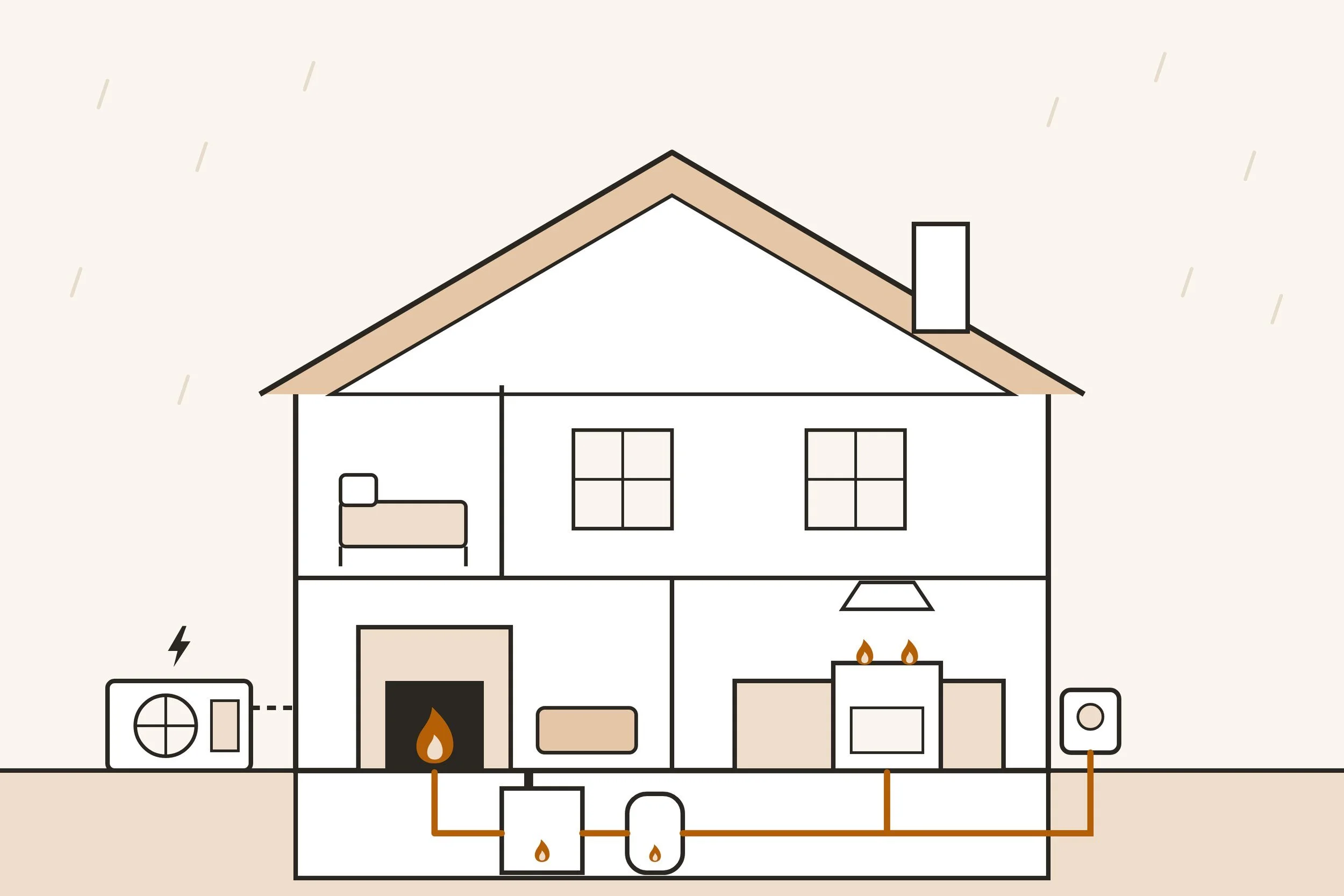
Here’s every common gas appliance in a Seattle house and what you can do with each. “Like for like” means a new gas unit where the old one stood. Seattle requires a permit for any furnace replacement, so ask your installer to pull it. A contractor on my team has seen a low-cost installer skip the permit unless asked.
- 1Gas meter, with the shutoff valve on the pipe
- 2Furnace
- 3Water heater
- 4Range or cooktop
- 5Fireplace
- 6A heat pump outside, the usual electric alternative
| Appliance | Keep it? | Replace with gas? | Electric option |
|---|---|---|---|
| Furnace | Yes | Yes, with a permit in Seattle | Heat pump, ducted or mini-splits |
| Water heater | Yes | Yes | Heat pump water heater (needs room and a drain) |
| Range or cooktop | Yes | Yes | Induction |
| Fireplace or insert | Yes | Yes | Electric fireplace, or just leave it |
| Dryer | Yes | Yes | Electric or heat pump dryer (needs its own circuit) |
What I tell past clients
When my past clients ask whether to replace a tired gas furnace with another one or go heat pump, I tell them to price both. A heat pump also cools, and in my experience most Seattle houses built before about 2015 have no central air. My rough 2025 numbers for clients: about $20,000 for a whole-house heat pump with an air handler in place of a furnace. Mini-splits in the bedrooms run about $15,000. More on costs in my mini-split guide.
I run a hybrid heat pump water heater in my own Seattle home and love it. It needs a closet or garage with some air around it and a drain for condensate, so it isn’t a fit for every condo.
Running costs
Is natural gas cheaper than electricity in Seattle?
It depends on who sells you electricity, and that surprises people. Most of Seattle buys power from Seattle City Light, which is cheap. Much of the Eastside and South King County buys it from PSE, which costs more per kilowatt-hour. Gas comes from PSE either way.
The chart prices the same amount of heat, one therm’s worth (100,000 BTU), at posted 2026 rates. With City Light power, a heat pump beats a gas furnace. With PSE power, a new gas furnace is still cheaper per unit of heat than a heat pump, and electric baseboards cost the most everywhere.
A real-world bill
For a real-world number: one North Seattle house that heats, cooks and heats water with gas paid PSE about $1,030 for all of 2025. Rates keep moving: PSE has proposed raising gas about 13% and electric about 18% in 2027, and regulators haven’t ruled yet. For trimming the bill you already have, see my energy-saving checklist.
Money for switching
Rebates and credits for switching, late 2026
The money for switching shrank this year. The federal 30% tax credit for heat pumps (25C) ended for anything placed in service after December 31, 2025. What’s left is mostly local and depends on your electric utility and income.
Seattle City Light
Heat pump: $300 to $600 instant discount through a contractor. Heat pump water heater: $750.
Program pagePSE gas customers, income-qualified
$4,000 to replace a gas furnace with a heat pump (Efficiency Boost; the furnace must come out).
Program pagePSE electric customers
Heat pump water heater: $1,000, or $1,100 income-qualified, installed in 2026. The general gas-to-heat-pump rebate ended July 31, 2024.
Program pageWashington HEAR
State money for households at or below 150% of area median income, run by local programs including King County and the City of Seattle.
Program pageSafety
Gas safety every Seattle owner should know
Most gas homes run for decades without drama. These are the few things worth knowing cold.
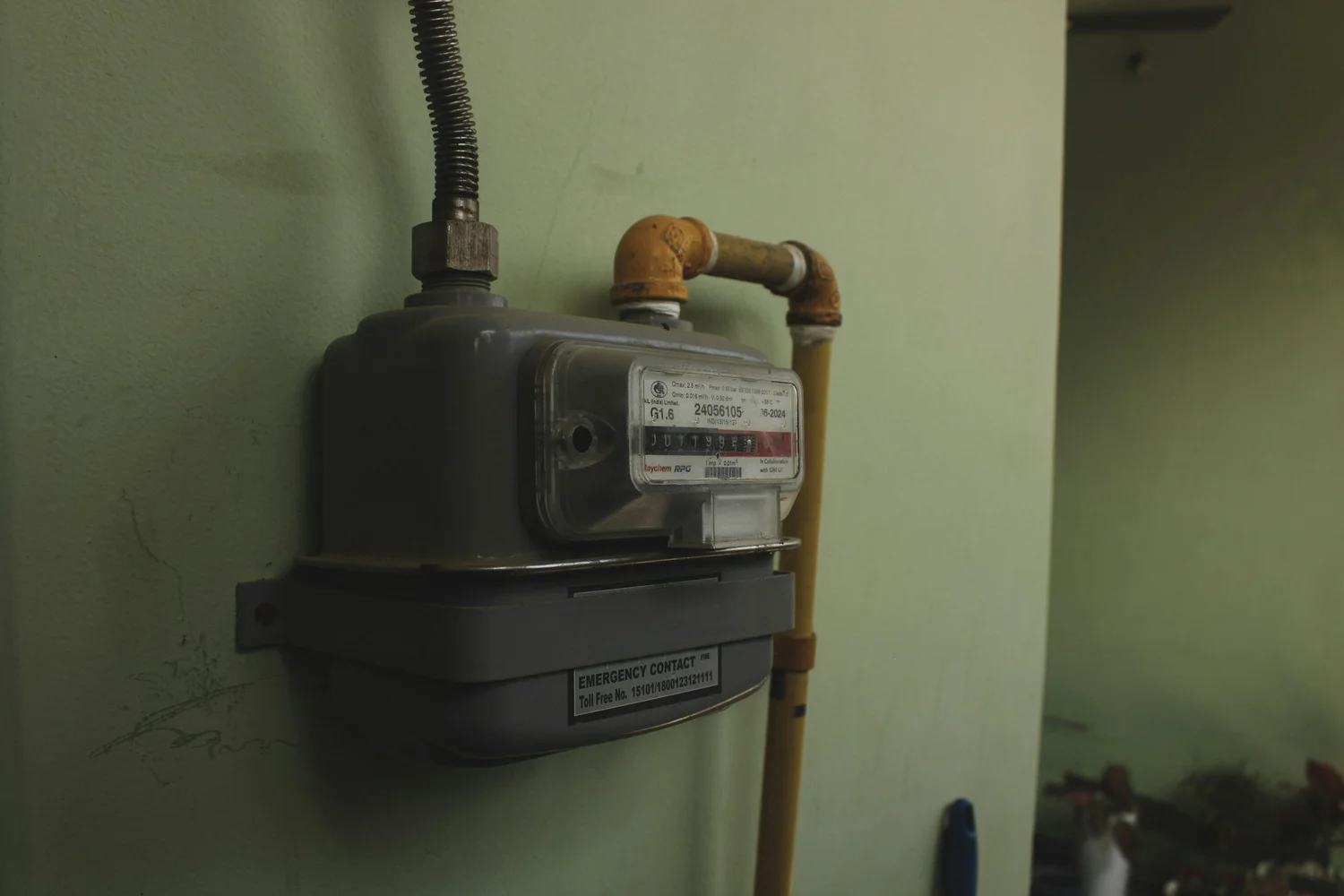
- 1If you smell gas, leave. Get everyone out, don’t flip switches or start a car, and call 911 or PSE at 1-888-225-5773 from outside. PSE checks leaks at no charge.
- 2Carbon monoxide alarms. PSE says to put them by bedroom entrances, in common areas and near fuel-burning appliances, with at least one per level. If you suspect CO exposure, call 911.
- 3Know your meter valve, but leave it alone. PSE says there’s typically no reason to shut off gas at the meter unless you smell, see or hear a leak. If you do, turn the valve a quarter turn with a wrench so it sits crosswise to the pipe, and let PSE turn it back on.
- 4Earthquake shutoff valves are optional. They go on your side of the meter; PSE doesn’t install them but will reset one that trips. One of my buyers added a gas shutoff for a few hundred dollars. I put safety high, so I’d have it done while a plumber is already there; small jobs often hit a minimum charge.
- 5Have gas appliances checked. PSE offers a free gas appliance safety check for its customers.
A story from a listing this summer: I smelled sulfur in a condo stairwell, the rotten-egg smell added to natural gas. PSE came out at no charge, checked the garage, stairs and roof vents, and found no gas. The tech pointed us to a faint sewer smell instead. Call PSE first. It costs nothing, and you’ll know.
Indoor air
Gas stoves and indoor air: run the hood
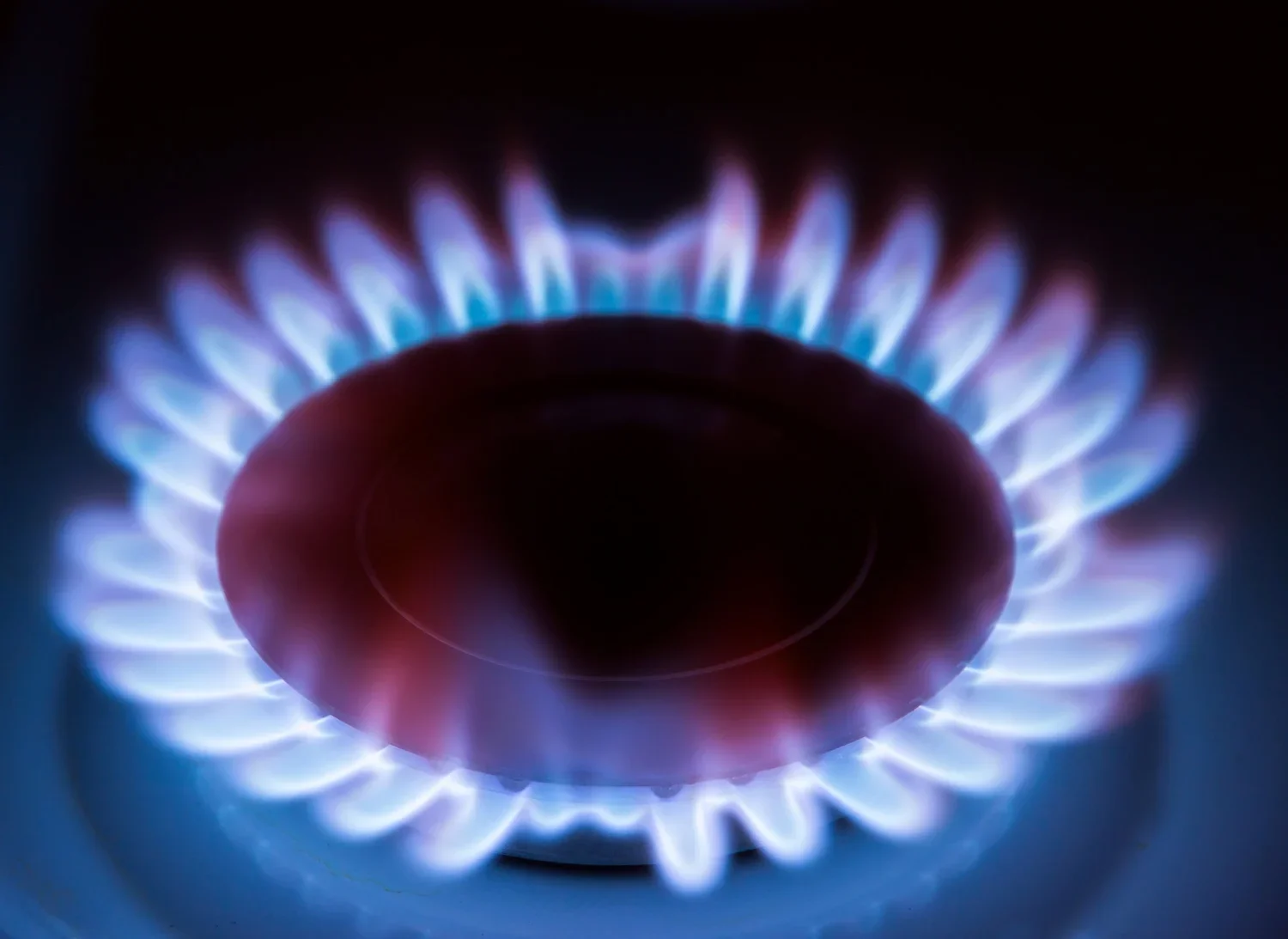
Washington’s Department of Health says gas stoves produce nitrogen dioxide, a lung irritant that can worsen asthma in children. Homes with gas stoves can have 1.5 to 4 times more of it indoors. Its fix is simple: use a range hood vented outdoors every time you cook, on high, and favor the back burners. No hood? Open a window.
If you love cooking and gas feels non-negotiable, I get it. Many serious cooks who switch to induction end up preferring it: fast, precise, and no flame. Here’s my induction rundown.
Buying or selling
Buying or selling a home with gas
Gas doesn’t hurt a sale, and plenty of buyers still look for it. A little paperwork makes it smoother on both sides.
Selling a gas home
- Carbon monoxide alarm on every levelRequired before the buyer occupies
- Service records for the furnace and water heaterBuyers ask
- 12 months of gas and electric billsBuyers ask
- PSE gas listed on Form 22KSo escrow closes your account
Buying a gas home
- Confirm gas service with PSEListings often skip it
- Look for vents and gas linesFurnace and water heater
- Ask for 12 months of billsAnd service records
- Check the CO alarmsOne per level
Carbon monoxide alarms are the law at sale. Under RCW 19.27.530, a seller must equip the home with CO alarms before the buyer moves in. A basic one runs about $30, so put one on every level before your listing photos.
Utilities on Form 22K. NWMLS Form 22K (Identification of Utilities) lets escrow pay off and close each utility. Make sure PSE gas is on it. I’ve seen a buyer’s new gas account start with the seller’s old balance because gas was left off the form.
Don’t assume gas. Listings often skip utilities, and some homes run on propane. The tell: a gas furnace or water heater has a vent pipe on top and a gas line running to it. When in doubt, call PSE with the address.
Which upgrades to make before listing and what to ask for after an inspection are strategy. I cover them with clients in the seller guide and buyer guide.
FAQ
Frequently asked questions about natural gas in Washington homes
Is Washington banning natural gas?
No. No state or Seattle rule makes an existing home remove gas, and gas cooking is allowed everywhere. The rules steer new construction toward electric heat.
What happened to Initiative 2066?
Voters passed it in November 2024. The Washington Supreme Court struck it down on September 17, 2026, finding it covered more than one subject. Its backers said they won’t appeal.
Can I replace my gas furnace with a new gas furnace?
Yes. Like-for-like replacement is allowed. In Seattle you need a permit for any furnace replacement, so ask your installer to pull one.
Can a new house in Seattle have gas?
Yes, but the 2021 state energy code favors heat pumps. And since January 1, 2025 PSE gives no allowance toward a new gas line, so most builders go all-electric.
Does HB 1589 ban natural gas?
No. PSE’s own summary says the 2024 law doesn’t include a ban and doesn’t force anyone to electrify. It requires PSE to plan its shift toward electric heat.
Is gas cheaper than electricity in Seattle?
With Seattle City Light power, a heat pump costs less to run than a gas furnace at 2026 rates. With PSE power, a new gas furnace is cheaper to run than a heat pump. Electric baseboard costs the most.
Are there rebates to switch from gas to a heat pump?
Some. Seattle City Light offers $300 to $600 off a heat pump and $750 on a heat pump water heater. Income-qualified PSE gas customers can get $4,000. The federal 25C tax credit ended after 2025.
Do I have to install carbon monoxide alarms to sell my house?
Yes. Washington requires the seller to equip the home with CO alarms before the buyer moves in (RCW 19.27.530).
Should I install an earthquake gas shutoff valve?
It’s optional, not required in Seattle. It goes on your side of the meter; PSE won’t install one but will reset it after it trips. I like them.
What should I do if I smell gas?
Leave right away, don’t switch anything on or off, and call 911 or PSE at 1-888-225-5773 from outside. PSE checks for leaks at no charge.
How do I know if a house has natural gas?
Look for a gas meter outside and vent pipes and gas lines at the furnace and water heater, or call PSE with the address. Some homes use propane instead.
Will PSE stop gas service to existing homes?
Nothing in current law ends service to existing customers. PSE is writing its first long-range plan under the 2024 law, due to regulators by April 1, 2027.
The bottom line
Keep your gas if it works for you. You can replace it with gas when it wears out, and no rule in Washington or Seattle will make you pull it. Price a heat pump at the same time, especially if City Light sells you power.
Keep the safety basics current, run the range hood, and if you’re selling, put a CO alarm on every level. More homeowner how-tos live in my home care advice library.
Sources
- Climate Solutions v. State of Washington, No. 104240-0 (Sept. 17, 2026), Washington Supreme Court
- Natural gas initiative ruled unconstitutional by Washington state Supreme Court (Sept. 18, 2026), OPB / KUOW
- Washington Supreme Court invalidates natural gas initiative (Sept. 23, 2026), Beveridge & Diamond
- HB 1589, chapter 351, Laws of 2024, Washington State Legislature
- Facts about HB 1589, Puget Sound Energy
- PSE clean energy and integrated system planning, Puget Sound Energy
- Washington State Energy Code (2021 edition, effective March 15, 2024), Washington State Building Code Council
- WSR 26-14-101, proposed 2024 energy code, residential, Washington State Register
- 2024 code adoption cycle, Washington State Building Code Council
- Energy Code, Seattle Department of Construction and Inspections
- Seattle bans natural gas in new buildings (Feb. 2, 2021), KUOW
- Furnace and refrigeration permits and inspections FAQ, Seattle Department of Construction and Inspections
- Gas tariff Rule 6, line extension allowances, Puget Sound Energy
- Gas summary sheet, effective Oct. 1, 2026, Puget Sound Energy
- Electric summary sheet, effective Oct. 1, 2026, Puget Sound Energy
- September 2026 rate notice, Puget Sound Energy
- Public comment hearing notice, general rate case (May 2026), Washington Utilities and Transportation Commission
- Residential rates, Seattle City Light
- Home energy solutions and rebates, Seattle City Light
- Efficiency Boost heat pump rebate, Puget Sound Energy
- Electric home rebates (gas-to-heat-pump rebate retired), Puget Sound Energy
- Heat pump water heater rebate, Puget Sound Energy
- Home Electrification and Appliance Rebates (HEAR), Washington State Department of Commerce
- IRA Home Energy Rebates, Washington State Department of Commerce
- Energy Efficient Home Improvement Credit, IRS
- RCW 19.27.530, carbon monoxide alarms, Washington State Legislature
- Carbon monoxide safety, Puget Sound Energy
- Detect a natural gas leak, Puget Sound Energy
- Natural gas shut-off, Puget Sound Energy
- Earthquake preparedness, Puget Sound Energy
- Ventilation while cooking, Washington State Department of Health
- Nitrogen dioxide’s impact on indoor air quality, U.S. EPA
- NWMLS forms, Rev. 2/26 samples (Form 22K), NWMLS, via a broker’s public sample packet