
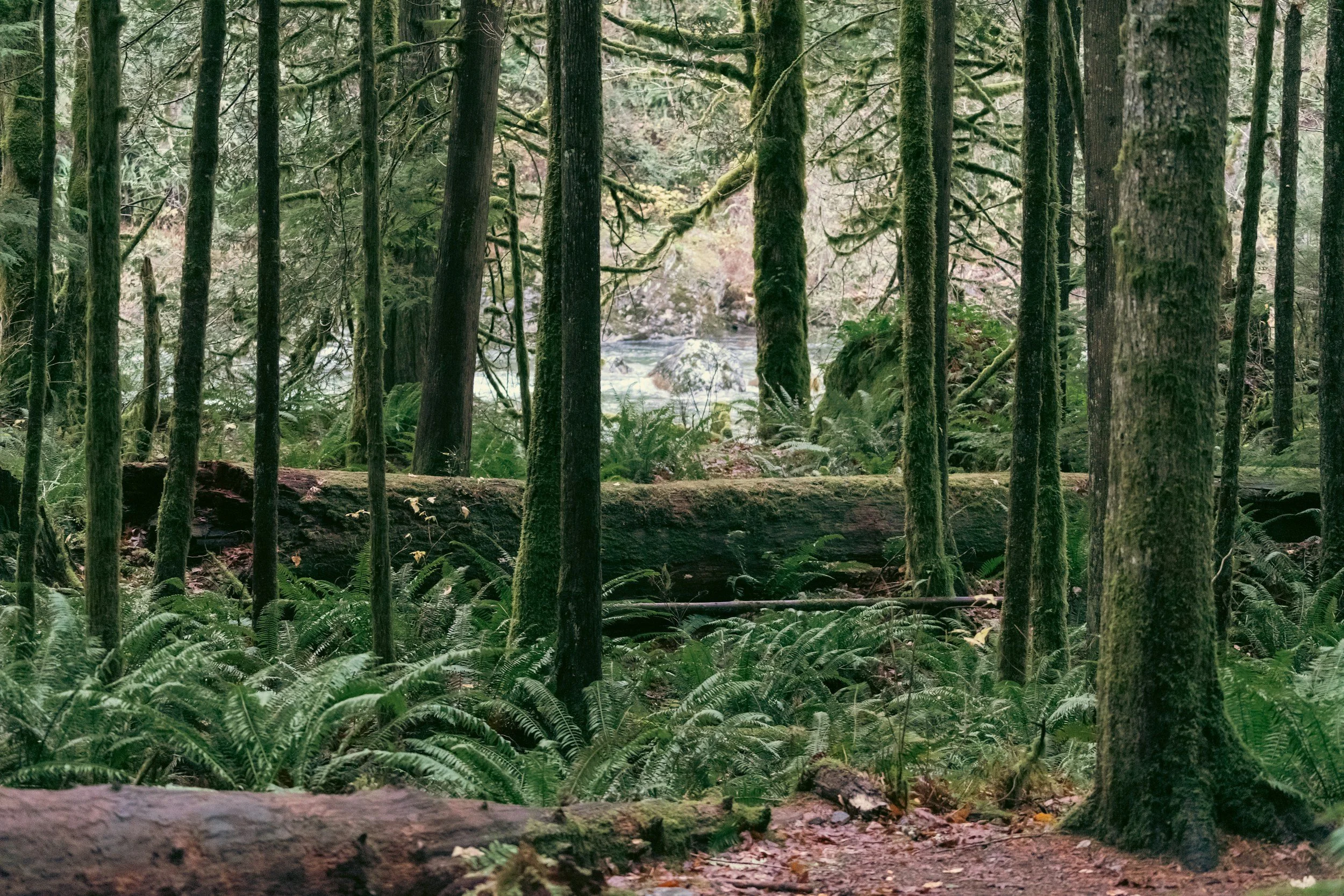
Licton Springs is the north Seattle neighborhood between Aurora Avenue and I-5, from N 85th Street up to Northgate Way. It is named for the iron-red spring in Licton Springs Park, a Duwamish healing place that in 2019 became Seattle’s first Native cultural landmark. In 2 to 4 miles on foot you can see the spring, a backyard duck pond with a famous past, restored murals, college wetlands and the bridge to Northgate light rail. Here is how to walk it, the story behind each stop, and what living here is like.
Walk planner
Plan your Licton Springs walk
When I listed a townhome a few blocks from the park in 2025, most of the people I met at open houses had never heard of Licton Springs. The ones I walked past the playground and into the woods, to the red spring, understood the neighborhood right away. That is the walk below.
History
How a Duwamish healing spring became a neighborhood
Licton Springs is a small neighborhood with a long memory. Native people came for the water long before settlers arrived, and almost everything that followed, from a pioneer cabin and a spa to a duck pond and a city park, grew around the same red spring. The freeway, the college and light rail shaped the rest.
- Before 1850sDuwamish and other Coast Salish people use the iron-red springs, líq’təd, for healing and gatherings.
- 1870Pioneer David Denny buys 160 acres, springs included, for $1.25 an acre and builds a summer cabin.
- 1907–1909The Olmsted Brothers sketch a park subdivision around the springs; it is platted as Licton Springs Park, and the Pilling dairy arrives.
- 1910–1939The Seattle-Everett interurban runs through to downtown, with stops at N 94th and N 103rd; the last car runs February 21, 1939.
- 1935Edward A. Jensen opens the only spa ever built at the springs, with thermal baths and bottled mineral water.
- 1954On January 1, the Licton Springs area becomes part of Seattle.
- 1961–1975The city buys the 6.3-acre spa site in 1961 and finishes Licton Springs Park in 1975. North Seattle College opens in 1970.
- 2017–2021The rebuilt Wilson-Pacific campus opens with the Morrison murals (2017); Northgate Station and the John Lewis Bridge open (2021).
- 2019–2025The spring becomes Seattle’s first Native cultural landmark (2019); the City Council sets its protections in December 2025.
The 11 stops
Licton Springs landmarks, stop by stop
Numbered as they appear on the map above, starting at the spring. All are free to see from outside.
1. líq’təd, the red spring
Licton Springs Park, 9536 Ashworth Ave N · Seattle landmark since 2019
For thousands of years Duwamish and other Coast Salish people came to these mineral springs to heal and to gather. Their Lushootseed name, líq’təd, means red paint, for the iron-red ochre that still seeps from the ground here, and it became the English “Licton.” Settler David Denny bought the land in 1870, a spa sold thermal baths here from 1935, and the city bought the 6.3 acres in 1961 and finished the park in 1975. In October 2019 the Landmarks Preservation Board made the spring and park Seattle’s first Native cultural landmark, and the City Council set its protections in December 2025: the red flow may not be interrupted.
Tip: Head past the playground to the northwest corner of the park; the red seep sits in the trees, with interpretive signs nearby. It is a sacred site, so look, don’t dig or take the mud. Park hours are 4 AM to 11:30 PM.

2. The Olmsted curve and the creek woods
Woodlawn Ave N at N 95th St · Planned 1907, platted 1909
In 1907 the Olmsted Brothers, the firm behind Seattle’s park system, drew a residential subdivision here with a wooded park around 2 mineral springs. It was never fully built, but the bend where Woodlawn Avenue swings into N 95th Street survives from that plan. The springs once fed a creek to Green Lake; the water was piped there in 1920 and diverted to storm drains in 1931. Inside the park, a creek path still runs south through the trees.
Tip: Follow the creek path through the woods between the spring and this corner; it is the quietest few minutes of the walk.
3. Pilling’s Pond
1612 N 90th St · Dug in the 1920s
The Pilling family brought dairy cows here in 1909. In the 1920s their young son Charles dug a small pond to care for 3 injured mallards, and spent the rest of his life breeding waterfowl beside it. In 1955 he became the first to successfully breed hooded mergansers, then buffleheads (1964) and harlequin ducks (1977). Charles Pilling died in 2001; a neighbor bought the property in 2005, and the Pilling’s Pond Preservation Society still cares for the birds.
Tip: It is private property. Watch from the sidewalk viewing area on N 90th Street, and please don’t feed the birds.
4. Robert Eagle Staff campus and the Andrew Morrison murals
1330 N 90th St · New campus opened 2017
For decades the old Wilson-Pacific school here housed Native American education programs, and Apache and Haida artist Andrew Morrison painted large murals on its walls. When Seattle Public Schools rebuilt the site, the murals were taken down, stored and reinstalled on the new buildings. Robert Eagle Staff Middle School and Cascadia Elementary opened here in fall 2017; Eagle Staff was the district’s first building named for a contemporary Native American leader. The turf fields and walking track also serve community athletics.
Tip: It is a working school, so see the murals from the sidewalk, ideally after school hours or on weekends.
5. Licton Springs P-Patch
College Way N and N 92nd St · Gardening since 2014
A community garden on the south end of the North Seattle College campus: 67 plots on about 15,000 square feet, with accessible raised beds, honeybees and a giving garden. Students pushed for it, the college provided the land, and the first season was 2014.
Tip: The paths are open to look around; the plots belong to gardeners. The wait for a plot runs 1 to 2 years.
6. North Seattle College wetlands
9600 College Way N (east side of campus) · College opened 1970
The college opened in 1970 on land that had held a greenhouse business. Its 62-acre campus includes more than 11 acres of wetlands, the headwaters of the south fork of Thornton Creek, home to Pacific Northwest birds, amphibians and plants. Foot trails loop through the greenbelt along the east edge of campus, next to I-5.
Tip: Visitors are welcome on the foot trails; stay on them, since parts of the wetland are restored habitat.
7. John Lewis Memorial Bridge
From College Way N and N 100th St to Northgate Station · Opened October 2, 2021
Since the 1960s, I-5 has split Licton Springs and the college from Northgate. This 1,900-foot walking and biking bridge opened the same day as Northgate Station and turned a roundabout walk of up to 30 minutes into a straight shot over 10 lanes of freeway. It is named for civil rights leader and Congressman John Lewis.
Tip: Stop in the middle for the view down I-5 toward downtown, then keep going east to the station.
8. Northgate Station
1st Ave NE at NE 103rd St · Opened October 2, 2021
Light rail reached Northgate on October 2, 2021, along with new stations at Roosevelt and the U District. For Licton Springs, the bridge made it the neighborhood station: Link trains run south to the U District, downtown and Sea-Tac Airport.
Tip: Start or end the walk here: the station is at the east end of the bridge.
9. Kraken Community Iceplex
10601 5th Ave NE · Opened September 10, 2021
The Seattle Kraken’s practice home took over the middle of the old Northgate Mall: 3 sheets of ice used for the team’s practices, youth and adult hockey, figure skating, curling and public skating.
Tip: Public skate times change day to day; check the Iceplex schedule before you bring the kids.
10. Mineral Springs Park
Northgate Way between N 105th and N 107th St · Named in 2001
Licton Springs’ second park sits on land once covered by homes and small farms. Its 4 acres hold one of Seattle’s 2 disc golf courses, laid out among big old trees. The city renamed it Mineral Springs Park in 2001; before that it was known as North Seattle Park.
Tip: Open 6 AM to 10 PM. Bring a disc and watch for players before you cut across a fairway.
11. Aurora Avenue at N 103rd
Aurora Ave N and N 103rd St · Paved with brick in 1913
The west edge began as the Morrow Road, a wagon road north, paved with brick in 1913 and named Aurora Avenue in the early 1930s. As U.S. Highway 99 it filled with auto camps and then motels. Early shops clustered at N 90th, 103rd and 105th streets, and a block west, on Evanston Avenue, the Seattle-Everett interurban stopped at N 103rd until its last run on February 21, 1939.
Tip: Aurora is busy. Cross at signals, and use the RapidRide E Line stops at N 95th and N 100th streets.
Plan your visit
Plan your visit: hours and good-to-knows
| Place | When | What to know |
|---|---|---|
| Licton Springs Park | 4 AM to 11:30 PM daily | The red spring is at the north end, past the playground. The restroom burned in 2021; its replacement is under construction from October 2026 into spring 2027. Project page |
| Pilling’s Pond | Daylight | Private. View the birds from the N 90th Street sidewalk; please don’t feed them. |
| North Seattle College wetlands | Daylight is best | Foot trails loop the east greenbelt. Nature around NSC |
| Mineral Springs Park | 6 AM to 10 PM daily | Disc golf among the trees along Northgate Way. Seattle Parks |
| Kraken Community Iceplex | Public skating most days | Session times change; check the Iceplex schedule first. |
| Robert Eagle Staff murals | After school hours or weekends | A working school campus; the murals are visible from the sidewalk. |
Getting there
Getting there and parking
- Light railRide Link to Northgate Station and walk west over the John Lewis Memorial Bridge; North Seattle College is on the other side, and the park is about a 20-minute walk from the station.
- BusThe RapidRide E Line runs on Aurora Avenue, with stops every few blocks, including N 95th and N 100th streets. The N 95th stop is about a quarter mile west of the park.
- From Green LakeWalk north from the north end of Green Lake on Wallingford Ave N or Densmore Ave N; N 85th Street is the line where Licton Springs begins.
- CarStreet parking on the residential blocks around Licton Springs Park. Mineral Springs Park and North Seattle College are both close to I-5 via Northgate Way and N 85th Street.
Living here
What it’s like to live in Licton Springs
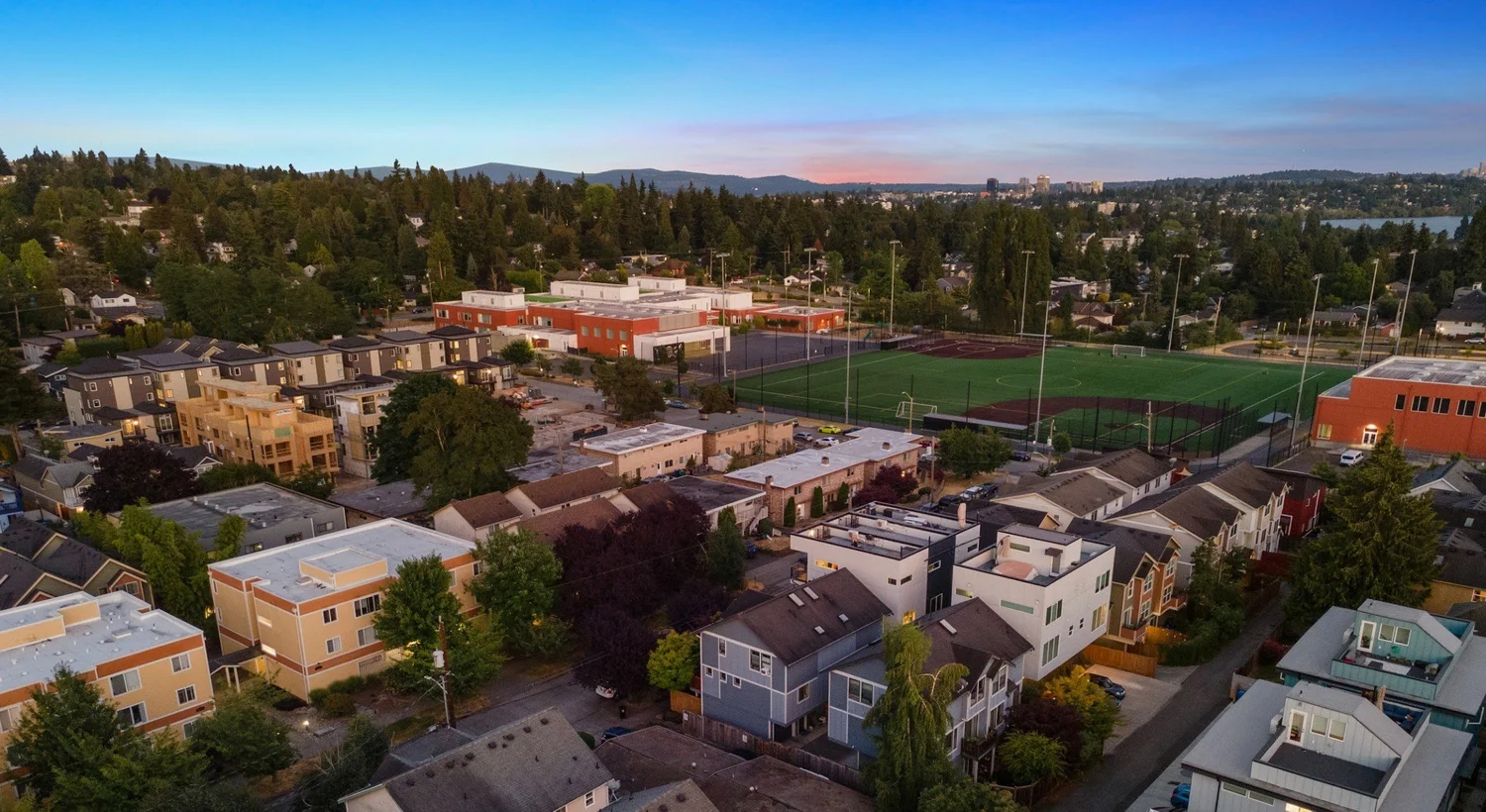
Licton Springs mixes 1920s Craftsman and mid-century houses with a growing number of newer townhomes, some apartments along Aurora and College Way, and 2 parks, a college and a light rail station within walking distance. Green Lake is a short walk south, and Northgate’s shops and clinics are over the bridge.
For the numbers people ask me about, like demographics, drive times and crime maps, see my Licton Springs neighborhood page. Prices right now are on my Seattle market page, and the 10-year month-by-month trends are here on the blog.
- It goes by several namesListing sites may call it Licton Springs, North College Park, Northgate or even Green Lake. If you’re searching for homes here, search all of them.
- Freehold townhomesMany newer townhomes here are fee simple, with no HOA dues, but they often share a driveway, walls or utility lines. Read the recorded maintenance agreement before you buy.
- New vs. older townhomesNew construction usually costs more but needs less work. If you buy new, have your own inspector check it before the builder walkthrough and again before the one-year warranty ends; my new construction warranty guide has the timeline.
- The edges sound differentBlocks near Aurora Avenue on the west and I-5 on the east hear the traffic. The middle blocks around the park are noticeably quieter, which is why I always walk people through them.
- Transit by bridgeSince 2021 the John Lewis Bridge puts much of the neighborhood within walking distance of light rail, and the E Line runs along Aurora.
- Schools go by addressSchool assignment follows the exact address, not the neighborhood name. Check any address with Seattle Public Schools’ lookup before you count on a school.
How I check a house before an offer, from the sewer line to the attic, is in my buyer guide for clients.
Neighbors
Licton Springs vs. Green Lake vs. Northgate
Licton Springs sits between Green Lake to the south and Northgate across I-5. Here is how the 3 feel different.
| Licton Springs | Green Lake | Northgate | |
|---|---|---|---|
| Known for | The red spring, Pilling’s Pond and North Seattle College | The lake and its 2.8-mile loop | The mall site, the Kraken Iceplex and the transit hub |
| Parks | Licton Springs Park, Mineral Springs Park, the college wetlands | Green Lake Park | Northgate Park and Thornton Creek greenbelts |
| Light rail | Northgate Station, over the John Lewis Bridge | Roosevelt Station, east of I-5 | Northgate Station |
| Homes | Craftsman and mid-century houses, newer townhomes | Older houses and condos near the lake | Apartments and condos near the station, houses beyond |
Nearby: my Green Lake neighborhood page. More neighborhood walks: Wallingford, Fremont, Belltown and First Hill’s architecture.
FAQ
Frequently asked questions about Licton Springs
Where is Licton Springs in Seattle?
In north Seattle, between Aurora Avenue N (west) and I-5 (east), from N 85th Street (south) up to N Northgate Way (north). Green Lake is just south, Greenwood west, Maple Leaf and Northgate east, and Haller Lake north.
Why is it called Licton Springs?
From líq’təd, the Lushootseed word for red paint, after the iron-red ochre that seeps up at the spring in Licton Springs Park. “Licton” is the English version of that word.
Can you still see the spring in Licton Springs Park?
Yes. It is at the north end of the park, past the playground, where red iron-oxide mud stains the ground. It is a sacred site and a city landmark, so look but don’t disturb it. The park is at 9536 Ashworth Ave N and is open 4 AM to 11:30 PM (Seattle Parks).
Is Licton Springs Park a Seattle landmark?
Yes. The Landmarks Preservation Board designated it in October 2019, the first Native cultural site to become a Seattle landmark, and the City Council passed the ordinance setting its protections in December 2025 (Ordinance 127371).
Is Licton Springs the same as North College Park or Northgate?
The city’s neighborhood atlas calls the area North College Park, after North Seattle College, and it is usually counted as part of the larger Northgate district. Most neighbors and the community council call it Licton Springs.
Is Licton Springs K-8 in Licton Springs?
Not anymore. The school, which focuses on Native cultures and social justice, shared the Robert Eagle Staff building on N 90th Street from 2017 and moved to the renovated Webster School building in Ballard, 3015 NW 68th Street, in spring 2021 (Seattle Public Schools).
What schools are in Licton Springs?
Robert Eagle Staff Middle School and Cascadia Elementary share the campus at 1330 N 90th Street, and North Seattle College is at 9600 College Way N. Public school assignment goes by address, so check yours with the district lookup.
Is Licton Springs safe?
It depends on the block, like any city neighborhood; the blocks along Aurora and I-5 feel different from the streets around the park. Walk it at different hours before you decide, and see my Licton Springs page for crime maps and the numbers.
Does Licton Springs Park have a restroom?
Not right now. The restroom was destroyed by arson in 2021. Seattle Parks began building a $1.1 million replacement in October 2026, with completion expected in spring 2027 (project page).
How do you walk from Licton Springs to Northgate Station?
Take the John Lewis Memorial Bridge, which starts on the North Seattle College campus near College Way N and N 100th Street and crosses I-5 to the station. It opened in October 2021 (SDOT).
Can you visit Pilling’s Pond?
You can see it. The pond is private property at 1612 N 90th Street, but there is a viewing area on the N 90th Street sidewalk. Please don’t feed the birds.
What ZIP code is Licton Springs?
Mostly 98103: Licton Springs Park and the Eagle Staff campus both have 98103 addresses. Check the exact address for homes near Northgate Way.
The bottom line
Licton Springs keeps its best parts just out of sight: a sacred red spring behind a playground, a famous duck pond behind a bamboo hedge, and wetlands at the edge of a college campus. Start at the spring, walk to the pond and finish over the bridge at Northgate Station. If you’re thinking about living here, come back on a weekday evening and a Saturday morning; the walk tells you most of what you need to know.
Sources
- Seattle Neighborhoods: Licton Springs, Thumbnail History, HistoryLink
- Licton Springs Park, Seattle Parks and Recreation
- Licton Springs Public Restroom (updated Oct. 6, 2026), Seattle Parks and Recreation
- Ordinance 127371: líq’təd, Licton Springs Park landmark controls, Seattle City Clerk
- Controls and Incentives Agreement, líq’təd, Licton Springs Park (2025), Seattle Department of Neighborhoods
- Guide to Seattle Municipal Archives resources for Council District 5, Seattle Municipal Archives
- New signage at Licton Springs, South Seattle Emerald
- Licton Springs, Seattle, Wikipedia
- Licton Springs Park, The Cultural Landscape Foundation
- Seattle Now & Then: Licton Springs, Paul Dorpat
- Pilling’s Pond, Wikipedia
- Robert Eagle Staff Middle School, Seattle Public Schools
- Building for Learning: Eagle Staff, Seattle Public Schools
- Seattle Public Schools: Webster School (Licton Springs K-8), HistoryLink
- Licton Springs P-Patch, Seattle Department of Neighborhoods
- Licton Springs P-Patch, North Seattle College
- Nature around NSC, North Seattle College
- North Seattle College, Wikipedia
- Northgate Pedestrian and Bicycle Bridge (John Lewis Memorial Bridge), Seattle Department of Transportation
- John Lewis Memorial Bridge opens in Seattle, The Architect’s Newspaper
- Kraken Community Iceplex, Wikipedia
- Mineral Springs Park, Seattle Parks and Recreation
- History of Licton Springs, Licton Springs Community Council
- Find your school, Seattle Public Schools