
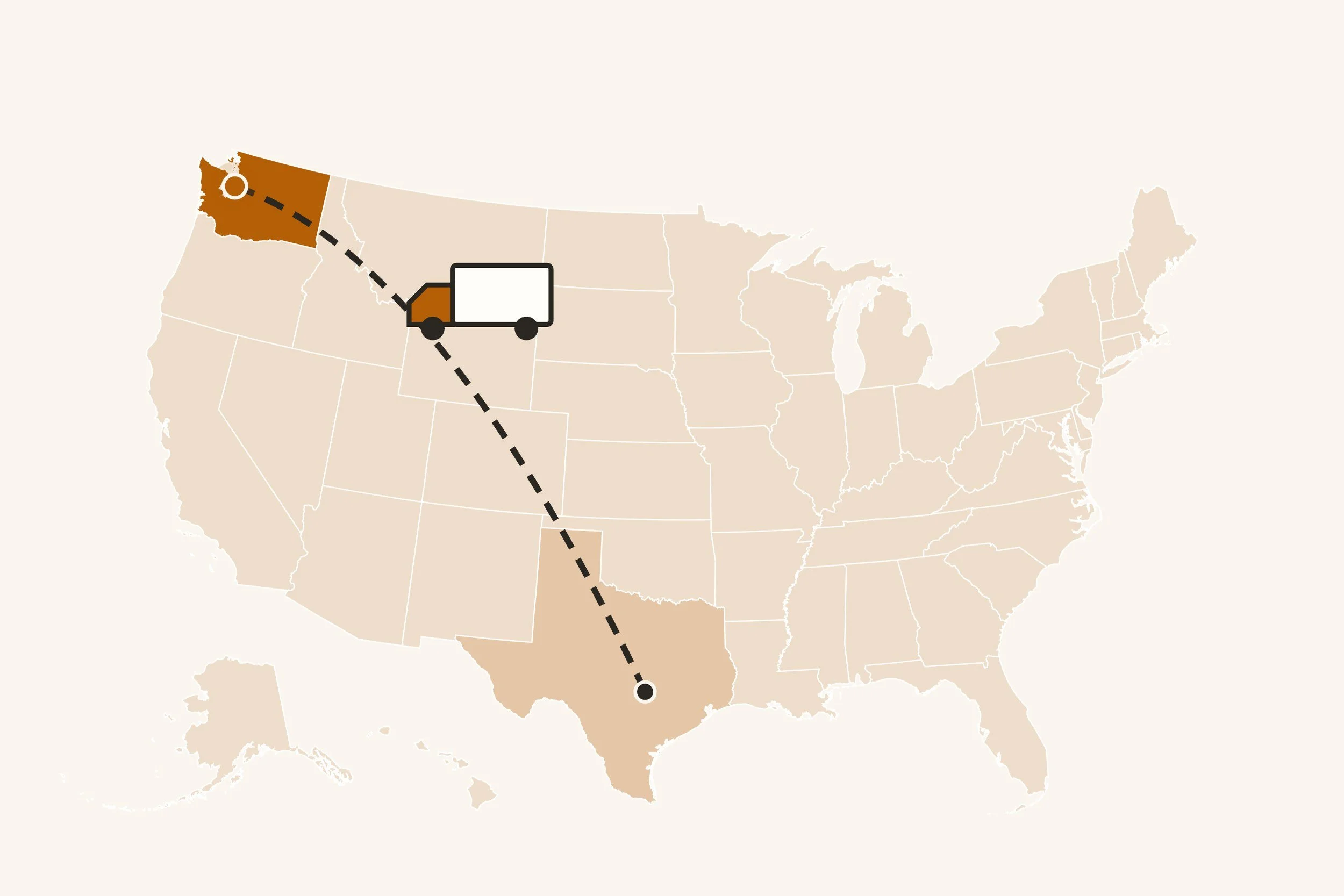
A Washington sale works differently from most states in a few ways that matter. A neutral escrow officer, not an attorney, closes it. Buyer and seller sign separately a day or two early, and “closing” means the day the county records the deed. The seller pays a graduated excise tax of 1.1% to 3%, plus 0.5% in Seattle. And nearly every deadline, including when the buyer gets the keys, runs to 9 p.m. Here’s what changes from where you bought or sold before, and what just feels a little off.
Washington difference finder
What’s different from where you bought or sold before?
Pick what you’re doing here and where you did it last. The answer updates as you change it. Nothing you pick leaves this page.
Your excise tax as the seller
Your checklist
General information about NWMLS forms and Washington law as of 2026, not legal or tax advice. Your contract controls; ask your attorney or CPA about your situation.
Most of my relocation clients ask some version of this in our first call. Some differences are big, like who runs the closing. Others just feel off: nobody meets at a table, the refrigerator is a checkbox, and everything happens before 9 p.m. Even I keep learning: a couple moving here from North Carolina this year had me comparing notes on how their last sale worked.
Same question, other names: is Washington an escrow state or an attorney state, the Washington closing process, who pays closing costs in Washington, buying a house in Washington from out of state, selling a home in Washington State.
Who closes the sale
Washington is an escrow state: a neutral escrow officer closes the sale, not an attorney
In attorney states, a lawyer runs the closing and often reviews the contract. The National Notary Association lists Connecticut, Delaware, Georgia, Massachusetts, South Carolina, Vermont and West Virginia as states where an attorney is required or customary, and says it can be customary in Illinois, northern New Jersey, New York, North Carolina and Ohio.
Here, the closing agent is neutral and works for both sides. It’s usually an independent escrow company or a title company’s escrow team, licensed by the state under RCW 18.44; Washington attorneys can act as closing agents too. Escrow officers are often limited practice officers, licensed under court rule APR 12 to prepare deeds, deeds of trust and excise tax affidavits. A separate title company issues the title insurance. Your broker writes the offer on the standard NWMLS forms.
- 1
Offer signed
On NWMLS Form 21 and its addenda
- 2
Escrow opens
Earnest money arrives; title is ordered
- 3
Each side signs
Separately, at escrow or with a notary
- 4
Money in, deed recorded
Lender funds; the county records
- 5
Closed
Seller is paid; keys to the buyer
Closing day
There’s no closing table: you sign early, and “closing” means recorded
This is the one that surprises people most. Sammamish Mortgage puts it plainly: in Washington, buyers and sellers usually sign separately through escrow, and buyers often sign one or two business days before closing. The seller often signs first, and may never meet the buyer.
The contract defines “Closing” as the day all documents are recorded and the sale proceeds are available to the seller, not the day you sign. Possession transfers at 9:00 p.m. on the possession date, which is closing day unless you agree otherwise. In practice, most of my buyers get keys once the county finishes recording, usually between 3 and 5 p.m. Sellers who need more time sign a rent-back (NWMLS Form 65B).
- 2 to 3 days beforeSeller signsDeed, excise tax affidavit, escrow papers. Shorter stack.
- 1 to 2 days beforeBuyer signs and wiresLoan documents and settlement statement. Call escrow before any wire.
- Closing day, morningLender fundsEscrow sends the documents to the county.
- Closing day, afternoonCounty recordsThat’s “closing.” The seller is paid.
- By 9 p.m.Keys change handsThe contract’s possession time. Often earlier.
Offers and deadlines
Offers live on paper, and the clocks stop at 9 p.m.
If you’re used to agreeing on terms by phone and papering them later, Washington will feel formal. Offers, counters and notices are written and signed, usually electronically. When my North Carolina clients asked how negotiating works here, my answer was short: we don’t do verbal negotiations, and counters usually go back and forth in hours, before a 9 p.m. deadline.
That 9 p.m. comes from the standard purchase agreement. An offer must be accepted by 9:00 p.m. on its expiration date. Every contract period ends at 9:00 p.m. on its last day. A period of 5 days or less skips Saturdays, Sundays and legal holidays, and a deadline that lands on one rolls to the next business day.
- Offer expires9:00 p.m. on the expiration date
- Every contract deadline9:00 p.m. on the last day
- Buyer possession9:00 p.m. on the possession date
- 5 days or lessBusiness days only
Contract clocks
No single due-diligence period: each protection runs its own clock
If your last contract had one due-diligence or option period, Washington’s will look different. Each protection is a separate addendum with its own clock, and each one can be shortened, extended or waived in the offer. If a clock runs out, that protection is gone, so the dates matter more than the paperwork.
These are the defaults when the blanks are left empty. In competitive markets buyers often shorten or waive some of them; whether that makes sense for you is a strategy question for your broker, and I keep my take in the buyer guide’s offers chapter for clients.
Financing
Your lender is part of the offer
If you’ve picked a lender after going under contract before, flip the order. Here the lender comes first. Sellers and listing brokers read the pre-approval as part of the offer, and the financing addendum, NWMLS Form 22A, has you apply within 5 days of mutual acceptance.
The 2026 revision added a twist relocating buyers trip on: if you change lenders without the seller’s written consent after the application deadline, or move away from a lender you named in the addendum, your financing contingency counts as waived. Form 22A also has no interest-rate condition, so a higher rate isn’t a way out. The full walk-through is in how Form 22A works; my lender introductions live on brianhuie.com/lenders.
- 1
Pre-approved
Before you tour
- 2
Lender named
In the offer and Form 22A
- 3
Apply in 5 days
After mutual acceptance
- 4
Keep the lender
A switch can waive your contingency
Closing costs
Who pays what in a Washington home sale
Closing costs split by custom in every state, and Washington writes most of its custom into the contract. The seller’s biggest line is the real estate excise tax. State law makes it the seller’s obligation, and the state rate is graduated: 1.1% on the first $525,000, 1.28% to $1,525,000, 2.75% to $3,025,000 and 3% above, for sales through 2026. Seattle and almost every King County city add a local 0.5%.
From January 1, 2027, the state tiers move up to $551,000, $1,551,000 and $3,051,000. On a $1,350,000 Seattle sale that’s $23,085 in 2026 and $23,038.20 in 2027. The tool above runs your price and closing date.
Seller pays
- Real estate excise tax, state plus local
- Owner’s title insurance policy
- Utilities through closing
- Payoff of the seller’s loan and liens
Split
- Escrow fee, half each
- Property taxes, prorated to closing
- HOA dues, prorated to closing
Buyer pays
- Lender’s title policy
- Loan costs: appraisal, credit report
- Extended title coverage, if wanted
- Oil left in the tank, if the seller has a statement
For a full estimate of your own costs, clients use the seller net sheet and the buyer cost estimator.
Disclosure and inspection
Disclosure is required here, and the buyer still verifies
You’ll hear people call Washington a “buyer beware” state. What that really means: the seller has to tell you what they know, and you’re expected to check the rest. Under RCW 64.06, most sellers of residential property give the buyer a disclosure statement, NWMLS Form 17, within 5 business days of mutual acceptance unless the buyer waives it. The buyer then has 3 business days to accept it or cancel and get the earnest money back.
The seller doesn’t have to inspect anything; the inspection is the buyer’s job, though some sellers order a pre-listing inspection. Washington also doesn’t require a builder warranty on a new single-family house. A new Form 17 version arrives January 1, 2027. More in Form 17, explained, what a home inspection covers and new construction warranties.
What feels a little off
The small things that feel a little off
None of these will sink a deal, but each one has caught a relocating client off guard.
Appliances are checkboxes
Built-ins, window coverings and fixtures stay. The refrigerator, washer, dryer, range, microwave, TVs and hot tub each have a box in Form 21; unchecked means it goes.
Earnest money moves in 2 days
Due 2 days after mutual acceptance by default. If your broker’s firm holds $10,000 or less, it sits in the state’s Housing Trust Fund account. A seller can keep no more than 5% of the price if the buyer defaults. More.
Both spouses sign
Washington is a community property state. One spouse can’t buy or sell community real estate without the other joining in.
A buyer agreement comes first
Since January 1, 2024, a firm needs a written services agreement before it can be paid for helping a buyer. The buyer agreement.
Every seller signs a FIRPTA form
Even U.S. citizens. It tells escrow whether federal withholding applies, and it’s due within 10 days.
CO alarms are the seller’s job
The seller of an owner-occupied single-family home installs carbon monoxide alarms before the buyer moves in.
Listings move on a weekly rhythm
Lately most new listings I see launch midweek and set an offer review date early the next week. It shifts with the season.
Titles say “statutory warranty deed”
That’s the default deed here: the seller warrants the title, backed by the owner’s title policy the seller pays for.
Owning here
Once you own in Seattle: Washington taxes work differently too
Washington has no individual income tax today, though a 9.9% tax on income over $1 million is scheduled to start January 1, 2028. The state’s capital gains tax exempts real estate, so selling your home doesn’t trigger it; federal tax rules still apply, so talk with your CPA.
Property tax is billed once a year in King County and due in two halves, April 30 and October 31. At closing it’s prorated, so a seller who paid the first half gets credit for the days after closing. If your first assessment looks off, here’s the King County appeal deadline.
FAQ
Frequently asked questions about buying and selling in Washington
Is Washington an attorney state for real estate?
No. Washington is an escrow state: a neutral escrow company or a title company’s escrow team usually closes the sale, though a Washington attorney can act as closing agent. You can always hire an attorney for advice.
Is Washington an escrow state?
Yes. Escrow agents are licensed by the state under RCW 18.44, and limited practice officers may prepare the closing documents. Buyer and seller each sign with escrow separately.
Who pays closing costs in Washington State?
By default in NWMLS Form 21, the seller pays the excise tax and the owner’s title policy, the buyer pays loan costs and the lender’s title policy, and the escrow fee splits in half. The offer can change any of it.
Who pays the real estate excise tax in Washington?
The seller. RCW 82.45.080 makes it the seller’s obligation, and escrow pays it from the proceeds at closing. If a seller doesn’t pay, the Department of Revenue says the buyer becomes responsible and unpaid tax can become a lien.
How much is the excise tax on a $1.35 million Seattle sale?
$23,085 for a 2026 closing: $16,335 in state tax plus $6,750 local. For a 2027 closing the new state tiers make it $23,038.20.
Who pays for title insurance in Washington?
The seller pays the owner’s homeowner policy by default. The buyer pays the lender’s policy and any upgrade to extended coverage.
Do buyers and sellers sit at a closing table in Washington?
No. Each side signs separately with escrow, usually one or two business days before closing. The sale closes when the county records the deed.
When does the buyer get the keys in Washington?
By default at 9:00 p.m. on the possession date, which is closing day unless the contract says otherwise. Keys often change hands earlier, once recording is confirmed.
How long does it take to close on a house in Washington?
In my files, financed purchases close in about 9 to 25 days and cash in about 7 to 14. Your contract sets the date.
Is Washington a buyer beware state?
Partly. Sellers must disclose what they know on Form 17 for most residential sales, but the buyer is expected to inspect and verify. The seller isn’t required to inspect.
Do appliances stay with the house in Washington?
Only the ones checked in Form 21. Built-in appliances and fixtures stay by default; the refrigerator, washer, dryer and range are each a checkbox.
Does my spouse have to sign to buy or sell a house in Washington?
Yes for community real estate. Washington is a community property state, and RCW 26.16.030 requires both spouses or registered domestic partners to join in buying or selling it.
The bottom line
Washington’s pieces exist in most states; the order and the people change. An escrow officer closes. You sign alone, days early. The deal closes when the county records it, and the 9 p.m. clock runs almost everything. The seller pays a graduated excise tax, and both spouses sign.
If you’re moving here, the tool above sorts what’s new for you. When you’re ready to write an offer or list, my buyer guide and seller guide hold the strategy side. Doing both at once? Start with buying and selling at the same time.
Sources
- NWMLS Forms 21, 22A and 35, Rev. 2/26 (sample packet), Northwest Multiple Listing Service, via a broker’s public sample packet
- RCW 64.06.030, seller disclosure delivery and buyer’s options, Washington State Legislature
- RCW 64.06.020, seller disclosure statement (effective until Jan. 1, 2027), Washington State Legislature
- RCW 82.45.080, excise tax is the seller’s obligation, Washington State Legislature
- RCW 82.45.060, graduated excise tax and threshold updates, Washington State Legislature
- Real estate excise tax: rates through 2026 and from Jan. 1, 2027, Washington State Department of Revenue
- Local real estate excise tax rates, effective May 1, 2026, Washington State Department of Revenue
- RCW 18.44.021, escrow agent license required, Washington State Legislature
- APR 12, Limited Practice Rule for Limited Practice Officers, Washington State Courts
- Signing agent state restrictions (attorney closing states), April 30, 2024, National Notary Association
- Does the seller attend the buyer’s closing in Washington? (updated Sept. 9, 2026), Sammamish Mortgage
- RCW 26.16.030, community property management and control, Washington State Legislature
- Publication 555, Community Property (12/2024), Internal Revenue Service
- RCW 18.86.080, compensation and services agreements, Washington State Legislature
- RCW 19.27.530, carbon monoxide alarms, Washington State Legislature
- RCW 64.04.005, earnest money forfeiture cap, Washington State Legislature
- Capital gains tax: real estate exemption, Washington State Department of Revenue
- Income tax, Washington State Department of Revenue
- Property tax FAQ: April 30 and October 31 due dates, King County Treasury