

In Washington, a buyer agreement is the short written contract between you and a real estate firm that makes its broker your buyer’s agent. State law has required one since January 1, 2024, signed before or as soon as reasonably practical after a broker starts working for you. It names your broker, runs 60 days unless you pick another term, says whether it’s exclusive, and spells out how your broker is paid. You can also buy a home without an agent; the listing agent then works only for the seller.
Buyer agreement planner
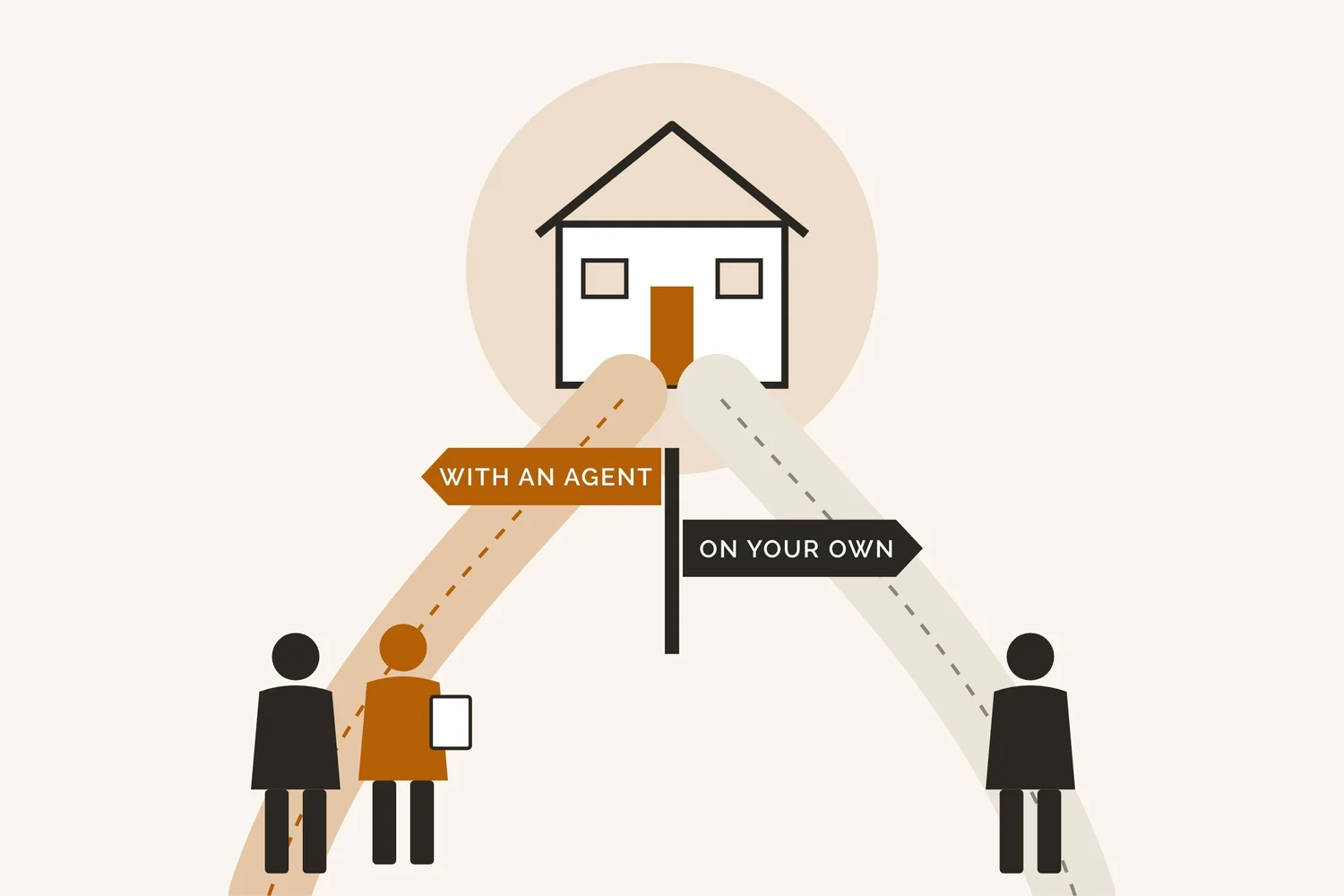
How are you buying? See what you sign, when it ends and who pays
Pick how you plan to buy. With an agent, add your dates and an example price to see when the agreement ends, how the seller’s offer and your agreement add up, and what each line of the agreement means. Without one, see what the listing agent owes you and what you take on.
Your dates
Your agreement, line by line
Your checklist
Based on RCW 18.86, NWMLS Form 41 (Rev. 8/24), Form 53, and the Rev. 2/26 Form 1A, Form 21 and Form 41C. Example numbers only: there are no standard commission rates, every amount is negotiable, and your lender decides what credits it allows. General information, not legal advice; for a specific contract, talk with your broker or a real estate attorney.
I sign the buyer agreement with my buyers before the first private tour, and I walk through it line by line. Before that, here’s how I put it: “I’m not allowed to advise or show homes until we have agency, but I can answer general questions and talk neighborhoods and market trends.” The agreement makes it clear to everyone, sellers and listing agents included, that I’m there for your best interest. How I set up mine, and how I’m paid, is on my buying page.
What it’s called
Buyer agreement, buyer broker agreement, Form 41: same contract, other names
You’ll hear this one contract called a lot of things. Here’s what each name means, so a search or a conversation lands on the same page.
- Buyer agreement
- Buyer’s agreement
- Contract with a realtor
- Buyer brokerage services agreement
- Buyer broker or buyer representation agreement
- Touring agreement
| Name | Who uses it | What it means here |
|---|---|---|
| Buyer agreement or buyer’s agreement | Most buyers, and most of my clients | The everyday name for the contract on this page |
| Buyer brokerage services agreement | Washington’s forms; the law says “services agreement” | The official name. NWMLS Form 41 is the standard version |
| Buyer broker, buyer representation or buyer agency agreement | Other states, national sites and older Washington forms | The same idea. Washington’s Form 41 used to be the “Exclusive Buyer’s Agency Agreement” |
| Contract with a realtor | How many people search for it | The same contract. “Realtor” is a trade association title; the license is “broker” |
| Touring agreement | Some national home search sites | A short agreement signed just to tour. In Washington it must still meet the state’s rules |
The contract
What a Washington buyer agreement has to say
Washington’s agency law, RCW 18.86, lists what every buyer services agreement must contain. NWMLS Form 41 covers each item in about 3 pages. Read these lines before you sign anything.
| Item | The law requires | Where it is on Form 41 |
|---|---|---|
| 1. Term | How long it lasts; 60 days by default, with the option of a longer term | Section 2. It extends on its own while you’re under contract |
| 2. Your broker | The broker appointed to represent you | Section 3b. Only that broker and their supervising managers are your agents |
| 3. Exclusive or not | Checkboxes so you choose exclusive or nonexclusive | Section 3c. Left blank, Form 41 is nonexclusive |
| 4. Dual agency consent | Whether you consent to your broker representing the seller too, initialed separately | Section 4a. Limited dual agency explained |
| 5. Same-firm consent | Whether you consent if another broker at the same firm represents the seller | Section 4b |
| 6. Pay | The amount you agree to, and consent to sharing or to payment from more than one party | Sections 5 to 7 |
| 7. Homes with no offer of pay | Whether your broker will show homes where no one has agreed to pay the firm | Section 7f: your broker brings you listings regardless of the seller’s offer |
Before you sign, your broker must also hand you the state pamphlet, “Real Estate Brokerage in Washington,” and get your acknowledgment. It’s 4 pages and worth the read.
Timing
When you sign it: before the first tour, not at the open house
- Browsing onlineNo agreement
- Open housesNo agreement; the host works for the seller
- First private tourSign the buyer agreement
- Writing an offerAgency and pay disclosed in writing
- ClosingYour broker is paid at closing
The law’s timing is “before, or as soon as reasonably practical after” a broker starts providing services to you. In practice that’s before a broker tours homes with you, gives you advice on a specific home or writes an offer. Nationally, NAR’s rules for its members have also required a written agreement before touring a home with a buyer since August 17, 2024; Washington’s law came first.
Open houses are different. Walking through an open house doesn’t require a buyer agreement. The host usually works for the seller. When I host one, I work for my seller, so anything a visitor tells me about budget or timing can reach the seller. If you already have an agent, say so and leave their card.
New construction has its own wrinkle: some builders won’t pay a buyer’s agent if your first visit to the model was without one. Bring your agent the first time, or check the builder’s policy before you go. Going in alone is, as I tell my buyers, like buying a car and paying whatever price they ask. My new construction warranty guide covers what comes after you buy.
The checkbox
Exclusive or nonexclusive: what changes
This checkbox decides whether you can sign with other firms during the term and when your broker is paid. On Form 41, if neither box is checked, the agreement is nonexclusive.
- 1Sign. Before, or as soon as reasonably practical after, your broker starts working for you. Usually before the first private tour.
- 2The term. 60 days unless you write in another number. Your broker keeps searching for you the whole time.
- 3Under contract when it ends? On Form 41 the term extends on its own until that sale closes or the contract ends.
- 4After it ends. For 60 days by default, pay can still be due on certain homes: ones the firm showed you (exclusive) or wrote an offer on (nonexclusive).
| Exclusive | Nonexclusive | |
|---|---|---|
| Other firms | No agency relationship with another firm during the term, in the area named | You may sign nonexclusive agreements with other firms too |
| When pay is due | When you buy a home in the area during the term and it closes | When it closes and this firm represented you on that purchase agreement |
| After it ends | Default 60 days: pay is due if you buy a home the firm brought to your attention or you asked it about | Default 60 days: only for a home this firm wrote an offer on during the term |
| Cancelling early | Cancelling without legal cause can make you liable for the firm’s damages | No damages clause; the after-it-ends terms still apply |
The area line matters too. Form 41 covers the areas written in, or everywhere if it’s left blank. If you’re buying a condo in Seattle and a cabin 2 counties away, you can name the areas.
Pay
Who pays the buyer’s agent in Washington?
The seller, the buyer, a third party, or a mix can pay, and Washington law says paying doesn’t change who your broker represents. Here’s how it fits together in a Washington sale:
Seller offers less than your agreement
Agreement 2.25% = $30,375; seller offers 2% = $27,000
Seller offers more than your agreement
Agreement 2% = $27,000; seller offers 3% = $40,500
Seller offers “None”
Agreement 2.25% = $30,375; your offer can still ask the seller
- 1Your agreement sets your broker’s pay. Form 41 says there are no standard rates and the amount is fully negotiable. Your firm can’t collect more than that amount from all sources combined.
- 2The listing shows what the seller offers. A seller can offer an amount, choose “Request in Offer” so you name it in your offer, or choose “None.” Offering is not required.
- 3Your offer asks for the rest. Form 21 has a line for the buyer brokerage pay the seller will cover. If the seller covers less than your agreement, you pay the difference.
- 4An offer above your agreement can become a credit. If the seller offers more than your agreement, Form 41 lets you request the extra as a credit to you, if your lender allows. NWMLS Form 41C writes it up.
Your broker must also disclose in writing, before you sign an offer, any pay a seller or firm has offered your broker’s firm. Whether to ask the seller to cover your broker, and how to frame it in a competitive offer, is strategy; it lives in my buyer guide’s offers chapter.
VA buyers: the VA now lets veterans pay reasonable and customary buyer-broker charges under Circular 26-24-14, valid until rescinded. The charges can’t be added to the loan amount, they count against your cash, and the lender keeps the buyer agreement in the file. Ask your lender before you write the offer.
Changing your mind
How to end or change a buyer agreement
- Agreement in placeYour broker represents you
- Form 53 acceptedThe term ends that day
- After-it-ends window60 days by default; pay can still be due on certain homes
- Free and clearNothing left owed under the old agreement
- 1Talk first, then put it in writing. The state pamphlet says either party can end the relationship by notice, but ending it doesn’t erase either side’s contract rights.
- 2Use the forms. NWMLS Form 41A changes the agreement (a new term, area or amount). Form 53 ends it; under Form 53 the term ends when both sides accept it.
- 3Read the “after it ends” clause. Form 53 keeps the agreement’s Compensation After Expiration terms alive, 60 days by default. Exclusive agreements can also carry damages if cancelled without legal cause.
- 4Tell the next broker. If you sign with someone new, mention the old agreement and any homes you toured or offered on during its term.
Self-representation
Buying a home without an agent in Washington
You can. Washington doesn’t require a buyer to have a broker. You’re then an unrepresented buyer: the purchase agreement’s agency line says “unrepresented,” and no one in the deal is advising you or negotiating for you. Attorneys and experienced investors sometimes buy this way.
The listing agent still works only for the seller. They owe you honesty and good faith, reasonable skill and care, timely delivery of every written offer and notice, accounting for your money, and disclosure of material facts they know that aren’t apparent. They must also give you the state pamphlet before you sign an offer, or as soon as reasonably practical. What they can’t do is advise you or keep your confidences.
- Your own forms and deadlines.Form 21 and its addenda, plus every date that runs from mutual acceptance: earnest money, inspection, financing, title and closing. Financing contingency and home inspection explain 2 of the biggest clocks.
- Your own research.Price, comparable sales, the seller’s Form 17 disclosure, HOA papers, permits and the title report.
- Your own negotiation.Across the table from someone whose job is the seller’s best interest.
- No automatic discount.A seller’s listing agreement can set a different listing-firm fee when the buyer has no broker. A lower total fee for the seller doesn’t automatically mean a lower price for you.
- Escrow and attorneys still help.An escrow or closing agent handles the money and documents, not advice. A real estate attorney can review the contract for a fee.
From my files
A renter once asked me to look at a condo they planned to buy straight from their landlord, no agents. The HOA papers showed thin reserves and a large special assessment on the way. They walked away. That’s the job a buyer’s side does: read what the seller doesn’t have to explain.
One broker, both sides
Buying through the listing agent
The third way is to have the listing agent represent you too. That’s limited dual agency: legal in Washington with both sides’ written consent, and limited because that broker can’t advocate for you against the seller. My limited dual agency guide covers what that broker can and can’t do. Choosing your own agent is in how to find and choose a buyer’s agent.
FAQ
Frequently asked questions about Washington buyer agreements
Do I have to sign a buyer agreement to see a house in Washington?
To tour with a broker, yes. Washington requires a written agreement before, or as soon as reasonably practical after, a broker starts working for you, and most brokers sign before the first private showing. Open houses don’t require one.
What is a buyer brokerage services agreement?
It’s Washington’s official name for the buyer agreement. NWMLS Form 41 is the standard version; some firms use their own form, which must include the same required terms.
How long does a buyer agreement last?
60 days if no other term is written in, and you can agree to a longer or shorter one. On Form 41 it extends on its own while you’re under contract until closing or termination.
Can I get out of a buyer agreement?
Ask your broker in writing; NWMLS Form 53 ends it. The after-it-ends clause survives, and cancelling an exclusive agreement without legal cause can carry damages.
Can I work with more than one buyer’s agent?
Only under nonexclusive agreements. With several, the firm that writes your accepted offer is the one paid, and each agreement’s after-it-ends terms still apply.
Does the seller pay the buyer’s agent in Washington?
Often, but not always. Sellers may offer pay, invite you to request it in your offer, or offer none. Your agreement says what your broker is owed; you cover any gap.
What if the seller offers more than my agreement?
You can ask for the difference as a credit toward your costs, if your lender allows. NWMLS Form 41C is the addendum for it.
Can I buy a house without a realtor in Washington?
Yes. You’d be an unrepresented buyer. The listing agent still owes you honesty and disclosure of known material facts, but works only for the seller.
Will the seller lower the price if I don’t have an agent?
Not automatically. A listing agreement can set a different fee when the buyer is unrepresented, and any savings is the seller’s to keep or share.
Can I pay my buyer’s agent with a VA loan?
Yes, under VA Circular 26-24-14. The fee must be reasonable and customary, can’t be financed into the loan and is paid from your cash.
Do both buyers have to sign?
If you’re buying together, I have each buyer on the agreement sign it. Ask your broker how they handle it.
Is the buyer agreement the same as the purchase agreement?
No. The buyer agreement is between you and your broker’s firm. The purchase and sale agreement, usually NWMLS Form 21, is between you and the seller.
The bottom line
Washington’s buyer agreement is short, required and negotiable. Read the term, the exclusive box, the dual agency initials and the pay lines before you sign, and keep a copy. If you’d rather go without an agent, you can; just know that nobody across the table is working for you.
If you’d like to walk through an agreement before you sign one, mine or anyone’s, send me a note. I’m glad to explain it line by line.
Sources
- RCW 18.86.020, Agency relationship and services agreement, Washington State Legislature
- RCW 18.86.080, Compensation, Washington State Legislature
- RCW 18.86.030, Duties of broker, Washington State Legislature
- RCW 18.86.050, Buyer’s agent duties, Washington State Legislature
- RCW 18.86.060, Limited dual agent duties, Washington State Legislature
- RCW 18.86.010, Definitions (services agreement, buyer’s agent), Washington State Legislature
- RCW 18.86.120, Pamphlet, Washington State Legislature
- SSB 5191 (2023), Chapter 318, Laws of 2023, effective January 1, 2024, Washington State Legislature
- Real Estate Brokerage in Washington (pamphlet, revised June 11, 2026), Northwest Multiple Listing Service
- Form 41, Buyer Brokerage Services Agreement (Rev. 8/24), Northwest Multiple Listing Service
- Form 53, Termination of Buyer Brokerage Services Agreement (Rev. 1/24), Northwest Multiple Listing Service
- Sample forms Rev. 2/26: Form 1A section 7, Form 21 Specific Terms 16 and 17, Form 41C, Northwest Multiple Listing Service
- Statewide forms revisions (2024 Buyer Brokerage Services Agreement), Washington REALTORS
- NAR settlement FAQs (written agreements before touring, August 17, 2024), National Association of REALTORS
- Circular 26-24-14, Temporary Local Variance for Certain Buyer-Broker Charges, U.S. Department of Veterans Affairs