
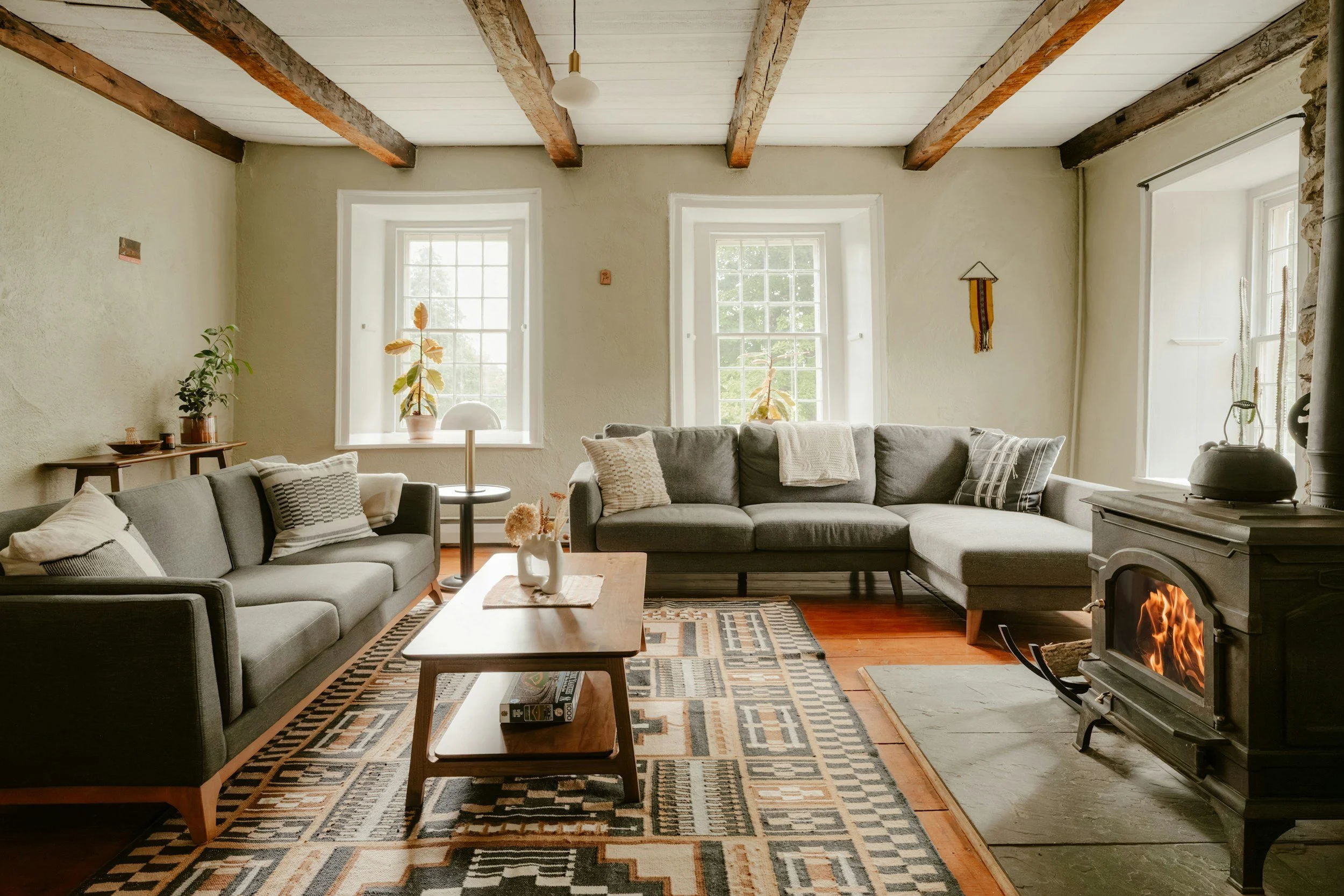
Short answer: Bigger than you think.
Real answer: Size the rug to the furniture first, then check the walls: leave about 8 to 24 inches of floor showing. Most living rooms want an 8x10 or 9x12, a six-seat table an 8x10, and a queen bed an 8x10.
Rug size finder
What size rug do you need? Try your room
Pick the room, enter its size and the main piece of furniture. You get the rug size, how much floor shows at the walls, the pad size to cut and a to-scale plan. Nothing you enter leaves this page.
Your short list
A planning aid. Stock sizes 4x6 to 12x15. The rug must leave at least 8 in of floor at every wall; when the right size leaves more than 24 in, it steps up one size if that still leaves 12 in. Living: rug at least 6 in past each end of the sofa, 8 ft deep with all legs on, 6 ft with front legs only. Dining: the table plus 24 in on every side (4 seats 48x36 in, 6 seats 72x40, 8 seats 96x42, 10 seats 108x42). Bed: 2 ft past each side and 20 in past the lower two-thirds. Pad: 1 in inside each edge. Rugs vary by maker; measure the one you buy.
Seattle loves its wood floors. We also love a little cushion on a cool gray morning. A good rug gives you both, if it’s the right size.
Same thing, other names: area rug size, rug size guide, rug size chart, what size rug for a living room, rug placement. The numbers below answer all of them.
Size
What size rug do I need? Start with the furniture
Furniture first, room second
Measure the furniture group before you measure the room. The rug holds the group together, so it has to be big enough for it.
Leave 8 to 24 inches of floor
Then check the walls. I like 8 inches of floor showing in a small room and up to 24 inches in a large one. Less looks like wall-to-wall carpet that shrank.
5x7, 6x9 or 8x10?
A 5x7 is tempting because it’s cheap. In most living rooms it floats like a bath mat. A 6x9 is the small-room minimum, and an 8x10 is the workhorse.
Living room
Living room: all legs on, or front legs only
All legs on the rug
All four sofa legs on the rug takes a big rug, usually 8x10 or larger. It’s the most finished look and the best way to define a seating area in an open plan.
If the sofa sits on the rug, every chair sits fully on it too. That keeps the group feeling like one room.
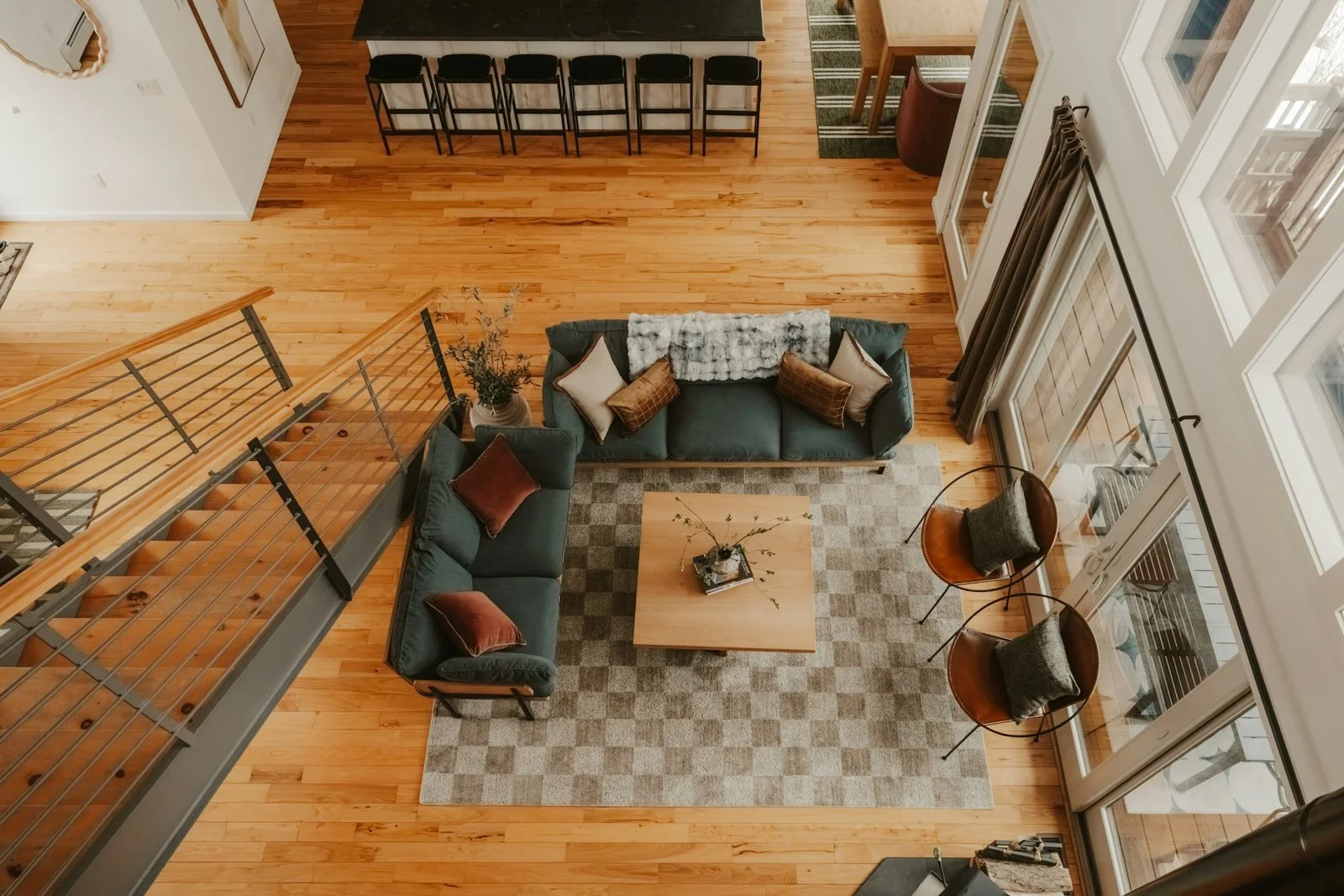
Front legs on the rug
Front legs only works in more homes, especially older Seattle houses with radiators, doors and windows in the way. Match the chairs: front legs on for the sofa, front legs on for the chairs.
There is nuance. Some rooms work best with the sofa’s front legs on and the chairs fully on. Play with it before you buy.
When something still looks off
If the rug is the right size and the room still looks wrong, the furniture scale is usually the problem. A smaller or differently shaped accent chair often fixes it.
Dining room
Dining room: the 24-inch rule
Measure the table, add 4 feet
Add 24 inches past the table on every side. Chairs pulled out to sit should still have all four legs on the rug.
In practice, a four- or six-seat table wants an 8x10. Eight seats want a 9x12. Ten seats want a 10x14.
Round tables and banquettes
A round table wants a round or square rug, with the same 24 inches all around. A banquette side doesn’t need the extra 24 inches.
Bedroom
Bedroom: rug size by bed
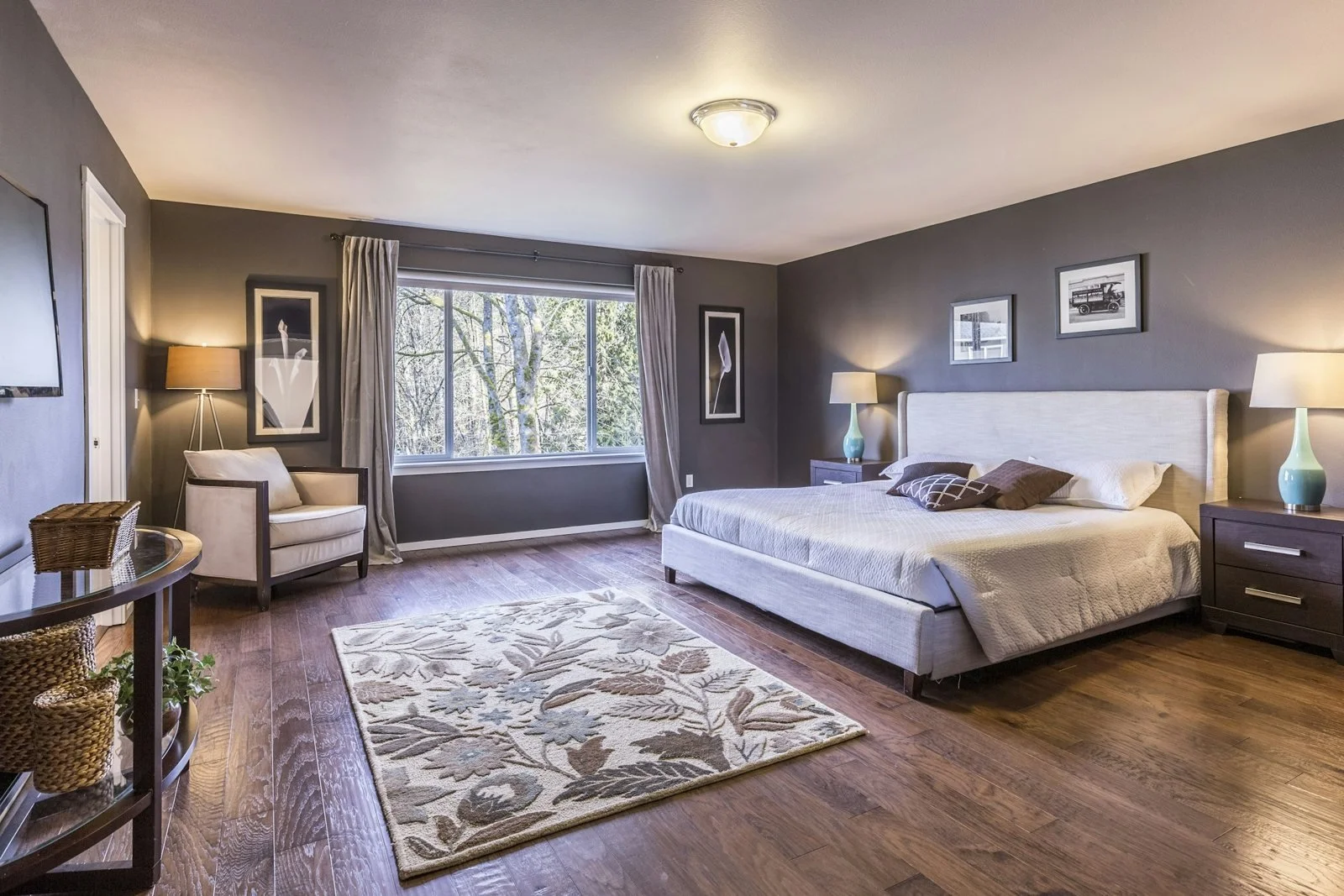
Two feet each side
I want about 2 feet of rug on each side of the bed, where your feet land in the morning. The rug covers the lower two-thirds of the bed and runs past the foot.
My chart: full bed, 6x9 or 8x10. Queen, 8x10. King, 9x12. California king, 8x10 in most rooms, 9x12 in a big one.
Small bedrooms
In a tight bedroom, two runners beside the bed beat one rug that’s too small.
Rug pads
Rug pads on wood floors, and how to cut one to size
Felt and natural rubber
On wood, a pad isn’t optional. It keeps the rug from sliding and the rug’s back from scuffing the finish. Felt with a natural rubber grip is the safe choice.
What to skip
The National Wood Flooring Association warns that some nonskid pads imprint their pattern into the finish. Natural fiber pads transfer less than some synthetics. Skip PVC and plastic waffle pads, and rubber-backed rugs.
How to cut a rug pad to size
Measure the rug, not the fringe. Cut the pad about 1 inch inside every edge. An 8x10 gets a pad of about 7 feet 10 inches by 9 feet 10 inches.
Sharp scissors or a utility knife cut most felt pads. Lay the pad rubber side down, put the rug on top, mark the line, then cut.
Wood floors
Seattle floors: fir, sun lines, new finishes and heated floors
Older fir floors change color
Rugs shade the wood under them. Over time the covered floor stays a different color from the rest. The wood flooring association says to expect it.
Douglas fir is everywhere in older Seattle homes, and it changes color a lot in light. Move the rug once, and you can see a pale rectangle. Rotate rugs now and then from day one.
Wait a week after a new finish
Timeframe At least 7 days after the last coat, longer if the finish maker says so
After a floor refinish, the association says no area rugs for at least 7 days after the last coat, unless the finish maker says otherwise.
Heated floors
A rug insulates a heated floor. Use a thin, low-pile rug and a thin pad. One radiant panel maker suggests covering no more than half the heated floor.
Curled edges
How to flatten a rug that curls
A new rug that won’t lie flat is maddening. Most canvas-backed rugs keep curling, even after a long time under something heavy.
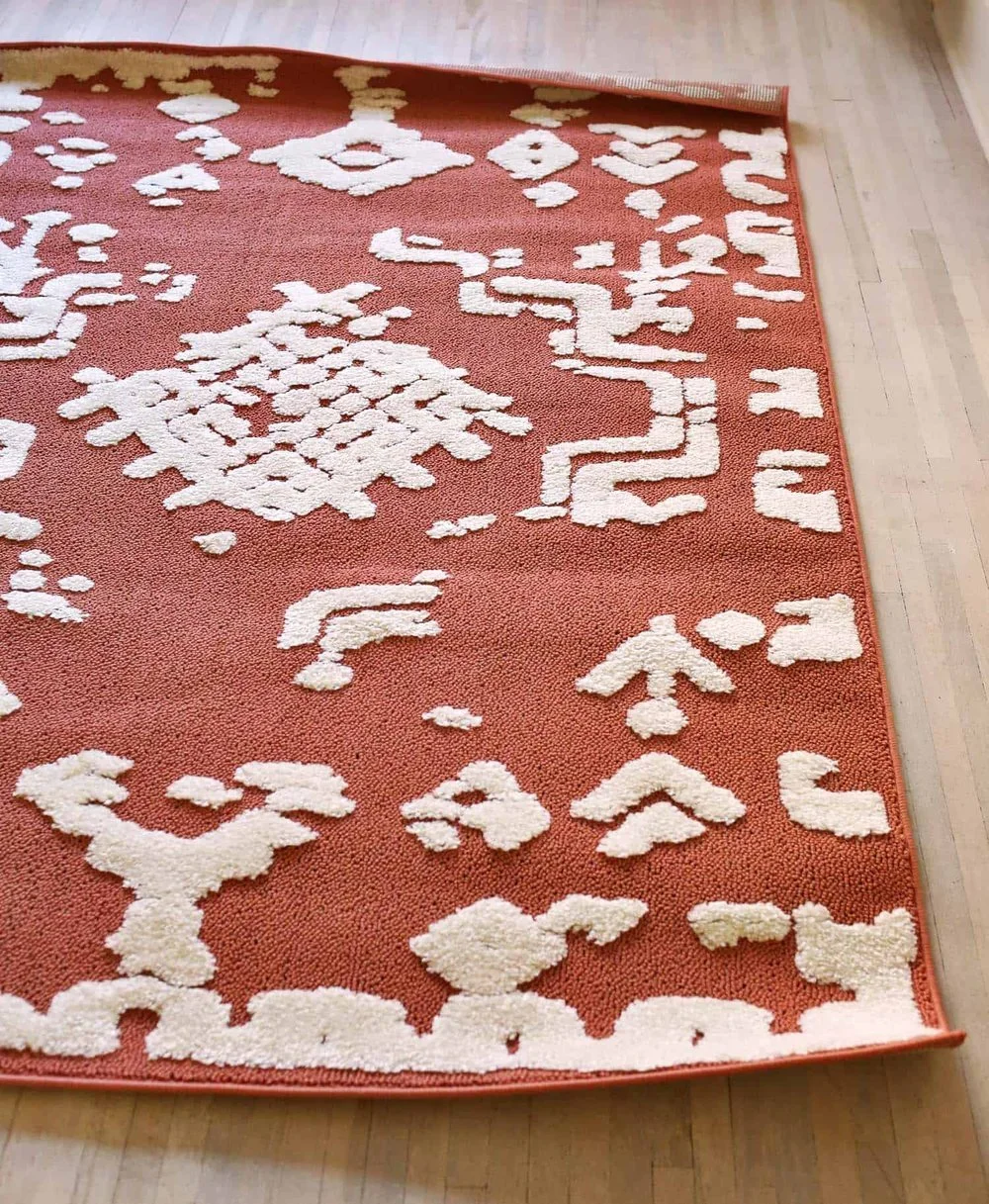
- 1Fold it backFold the edge back 6 to 8 in and press. Repeat every 12 in.
- 2Mist the backGarbage bag on the floor first. Dampen the curl from underneath.
- 3Weight itBooks on the edge until it dries flat.
Fold it back
Fold the curled edge backward, about 6 to 8 inches in, and squish it with your hands. Work along the edge every 12 inches or so. This usually does the trick.
Mist and weight it
Timeframe Until the damp edge dries flat under the weight
If not, lift the corner and lay a garbage bag on the floor to protect the wood. Mist the back of the curl until it’s thoroughly damp. Lay it down and weight it with a stack of books until it dries.
Condos and safety
Condos, stairs and safety
Condo floor rules
Many Washington condo declarations limit hard floors without board approval. Some older buildings go further and require a minimum area of rugs to dampen sound.
If you live above someone, read your declaration and rules before you buy furniture. A rug with a dense pad also helps your downstairs neighbor more than you’d think.
Rugs and falls
Small throw rugs are a classic trip hazard. The CDC’s fall checklist for older adults says remove them, or use double-sided tape or a non-slip backing.
Outdoor rugs
Don’t forget an outdoor rug. A patio or deck feels more like a room with one, and it’s the cheapest outdoor upgrade I know.
Selling and buying
Rugs when you sell or buy
Listing photos and staging
For listing photos, good rugs usually stay. My team often leaves rugs, lamps and throw pillows in place, then removes everything else. A rug under the sofa grounds a room in photos.
If a rug is worn or the wrong size, it comes out. Rooms often photograph better with more floor showing than with a bad rug.
Stays with the house
- Wall-to-wall carpeting (Form 21 General Term c)
- Any rug the contract names
Goes with the seller
- Area rugs and runners
- Rug pads and grippers
- Staging rugs (they belong to the stager)
What stays at closing
In Washington’s standard purchase form, wall-to-wall carpeting stays with the house. Area rugs don’t, unless the contract says so. Put any rug that stays in writing.
Buyers: look under every rug
Buyers, look under every rug when you tour. A rug can hide a stain, a patch or a sun line that only a full refinish fixes.
FAQ
Frequently asked questions about rug size
What is the 70% rule for rugs?
It’s a designer’s rule of thumb: the rug covers most of the open floor in the seating area. It isn’t a standard. The 8-to-24-inch wall gap does the same job, and you can measure it.
Should I get a 5x7 or an 8x10?
In a living room, almost always the 8x10. A 5x7 works at a bedside, in an entry or under a small reading chair.
Is a 6x9 rug big enough for a living room?
In a small room with front legs only, yes. If you want all the legs on, you need an 8x10 or larger.
Should I get an 8x10 or a 9x12?
Go 9x12 when the room leaves more than 24 inches of floor around an 8x10. Go 8x10 when a 9x12 would leave less than 8 inches.
What size rug goes under a queen bed? A king?
Queen: 8x10. King: 9x12. Both give you about 2 feet of rug on each side.
Should a rug be darker or lighter than the floor?
Contrast matters more than shade. On honey-toned fir, a lighter or warmer rug reads clean. On dark floors, a light rug shows lint. Pick what hides your life.
Do I need a rug pad on hardwood floors?
Yes. Use felt with a natural rubber grip. It stops sliding and protects the finish.
How do I cut a rug pad to size?
Lay the pad rubber side down, center the rug on it and mark about 1 inch inside each edge. Cut with sharp scissors or a utility knife.
Can I put a rug on a heated floor?
Yes, a thin one. Check your heating maker’s guidance and avoid covering most of the heated area.
Does an area rug stay with the house when it sells?
No, not under the standard Washington purchase form. Wall-to-wall carpet stays. An area rug stays only if the contract says so.
The bottom line
Size the rug to the furniture, then leave 8 to 24 inches of floor at the walls. When in doubt, go one size up.
On wood, use a felt and natural rubber pad trimmed an inch inside the edge. Rotate rugs on fir. Give a new finish a week.
Selling soon? Rugs, staging and the 2-week countdown are on how to get your house ready to sell. What stays and goes at closing is on the final walkthrough.
Sources
- National Wood Flooring Association, Protection, Care & Maintenance (technical publication, 2024 dealer copy), rugs: 7 days on a new finish, breathable rugs, nonskid pads that imprint, sun color change; 30 to 50% humidity
- Arciform, Flooring Care Guide, Douglas fir in Pacific Northwest homes, color change under rugs, pads for finished wood
- NWMLS Form 21, Residential Purchase and Sale Agreement, Rev. 2/26 (sample packet), General Term c: wall-to-wall carpeting is an included item
- CDC STEADI, Check for Safety: A Home Fall Prevention Checklist for Older Adults (2017), throw rugs: remove, or tape or non-slip backing
- Ruggable, rug under dining table size guide, 24 inches past the table on all sides
- Well Woven, What size rug pad do you need?, pad 1 to 2 inches inside the rug’s edge
- Rooms To Go, What size rug pad do I need?, measure without fringe, 1 to 2 inches smaller per side
- Warmboard, Radiant heat and rugs, limit rug coverage to about 50% of a heated floor
- Washington condominium attorney, “What’s that noise? Hard surface flooring” (2009), Washington condo declarations restricting hard floors
- Brian Huie and team, client emails 2020 to 2026, staging rugs, condo sound questions, marks under rugs; no names used