
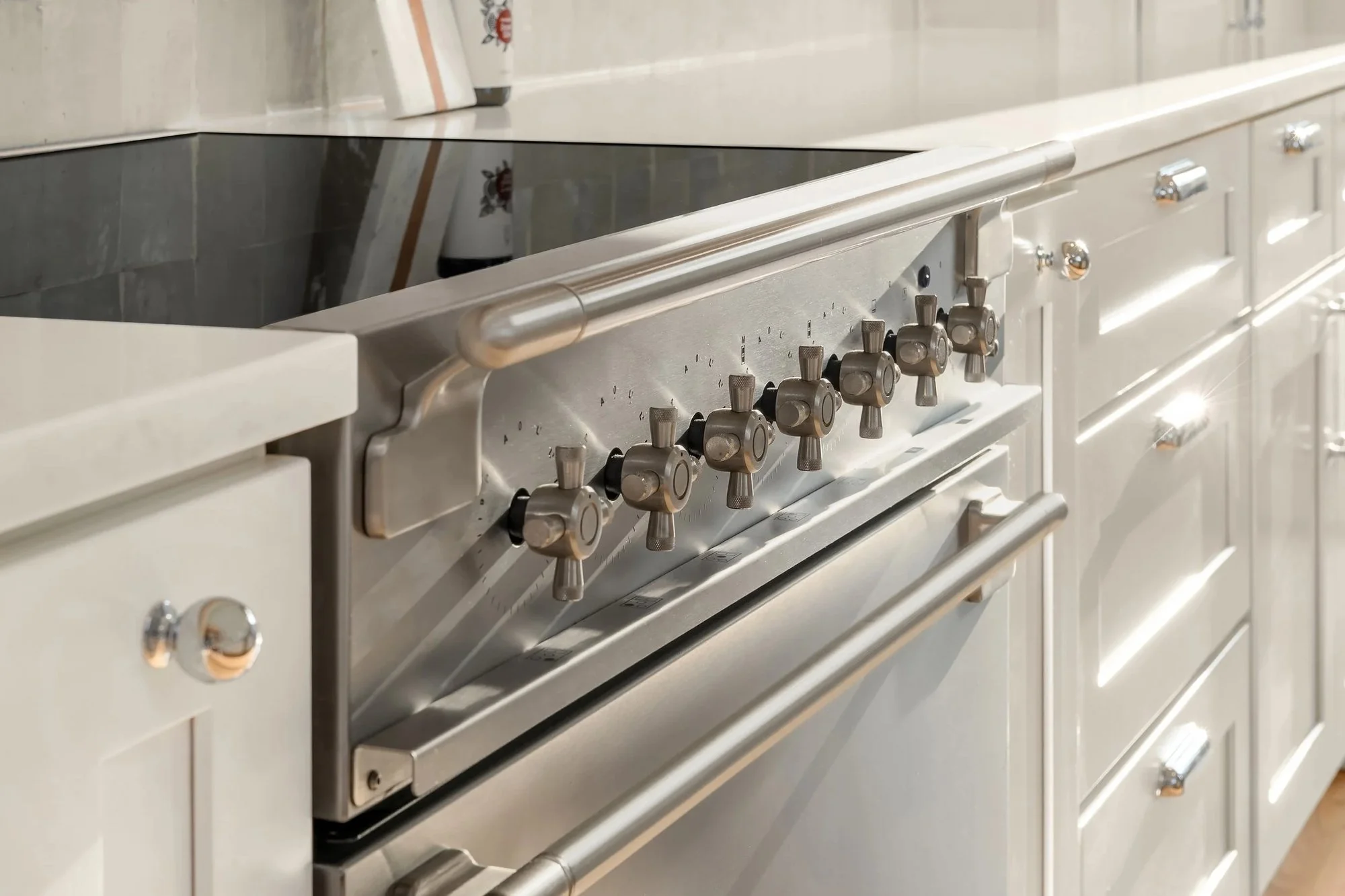
Short answer: yes. It is one of the smartest kitchen upgrades.
Real answer: For most Seattle kitchens, yes. An induction range boils water in about half the time of gas or a coil top. It puts about 85% of its energy into the pan instead of the room, and leaves no gas fumes behind. The catches: your pans have to pass a fridge-magnet test. And a home switching from gas usually needs a new 240-volt circuit and a capped gas line.
Induction switch planner
What switching to induction takes in your kitchen
Tap what you have now. The plan, the wiring and gas work, and the yearly cost to cook update as you tap. Nothing you pick leaves this page.
Yearly cost to run the cooktop, same cooking
Your steps
General homeowner information as of November 2026. Costs use ENERGY STAR’s 125 kWh-a-year award limit for an induction top, ENERGY STAR efficiencies (induction 85%, radiant about 77.5%, gas 32%), City Light’s current rates, PSE electric (Oct. 1, 2026) and PSE gas (Nov. 1, 2026). Your use will differ. Check the install guide of the range you buy.
I’ve listed homes where the induction range was a selling point, and I’ve shown homes to buyers who wanted gas or nothing. Here’s what really changes when you cook on induction, what the switch takes in a Seattle house, and what it costs to run.
Same thing, other names: induction stove, and induction cooktop (the built-in top without an oven). The British say induction hob, and an induction range is cooktop and oven in one. An electric glass top that glows red is a radiant cooktop, not induction.
How it works
How an induction range works, and why it isn’t the glass top you grew up with
Under the glass sits a copper coil. Turn on a zone and the coil makes a magnetic field that heats the bottom of the pan itself. The pan is the burner. The glass only gets warm where the hot pan sits on it.
Why it isn’t the old glass top
That’s why induction feels different from the smooth electric top in a rental. A radiant top heats a coil, the coil heats the glass, the glass heats the pan. Induction skips two of those steps, so it reacts the moment you turn the knob, more like gas than electric.
Induction vs gas vs electric
Induction vs gas vs electric: faster, cooler and cleaner, with one real trade-off
ENERGY STAR measures it plainly: induction gets about 85% of its energy into what you’re cooking. A radiant electric top gets about 75 to 80%, and gas about a third. Boiling water can take nearly half the time it takes on gas, radiant or coil.
| Induction | Gas | Radiant electric | |
|---|---|---|---|
| Heat into the pan | About 85% | About 32% | About 75–80% |
| Boil water | Fastest; about half the time | Slower | Slower |
| Control | Instant up and down | Instant | Lags as the glass cools |
| Surface after cooking | Warm only under the pan | Hot grates | Hot glass |
| Cleanup | Wipe the glass | Grates and caps | Wipe, but spills bake on |
| Indoor air | No combustion | Burns gas indoors | No combustion |
| Pans | Magnetic only | Any | Flat-bottomed |
In the kitchen that means less heat in the room on a July evening. Spills wipe off because the glass never bakes them on, and a low simmer stays low. What you give up is the flame. If you char peppers over a burner or toss a round-bottom wok, induction won’t do that the same way. If those dishes matter to you, a small outdoor burner covers them and induction handles the rest.
Cookware
Will my pans work? The fridge-magnet test
Hold a fridge magnet to the bottom of the pan. If it sticks, the pan works on induction. Cast iron, enameled cast iron and most stainless steel pass. Plain aluminum, copper and glass don’t, unless the bottom has a steel plate built in. New pans that work say so with an induction symbol on the box.
Flat bottoms
Flat bottoms matter too. A warped pan heats unevenly, and a round-bottom wok barely touches the glass.
A little sound is normal
Expect a little sound. A low hum or buzz, louder on high, is normal. Wolf says a pulsing or clicking sound on low power is the magnetic field at work. Heavy, flat pans are the quietest.
Switching from gas
Switching from gas in a Seattle home: the circuit, the permit and the gas line
A gas range runs on gas and plugs into a regular 120-volt outlet for its igniters; one 36-inch pro gas range draws 1.5 amps. An induction range needs its own 240-volt circuit. Wolf, for one, calls for a dedicated 50-amp circuit on its induction ranges; check the install guide of the exact model you pick.
A two-trade job
That makes it a two-trade job. An electrician runs the circuit and pulls the electrical permit; Seattle requires one any time wiring is installed, altered or extended. A licensed gas pro caps the old gas line; in Seattle, gas piping permits come from Public Health – Seattle & King County, not SDCI.
- 1Panel: a 240-volt breaker, often 40 or 50 amps
- 2New range outlet or hardwire box
- 3Old gas stub, capped by a licensed pro
- 4Hood duct to the outside: keep it
Real numbers from my files: in 2023 I was getting a kitchen ready for a sale. A plumber quoted $1,000 plus tax to run a new gas line to the range. A new 240-volt circuit would have run about the same. Your panel, the distance and the walls set your price.
Keep the hood
Keep the hood. Induction burns nothing, but searing still throws smoke and grease. The Washington Department of Health says to run the range hood every time you cook. If gas is leaving the whole house, my natural gas guide covers what to keep, replace or switch and what happens to the gas bill.
No 240-volt outlet
No 240-volt outlet? Three ways to cook on induction anyway
Plug-in burner
A single portable induction burner runs on a regular outlet. The low-cost way to try induction or add a zone.
Try it first
Battery range
Battery-equipped induction ranges and cooktops plug into a standard 120-volt outlet and recharge between meals.
From $5,999 (2024)
New circuit
The usual route: an electrician runs a 240-volt circuit to the range spot, with a permit.
Quote it
Battery induction is new and still pricey. Canary Media reported on the first models in 2024: a full range and a cooktop. Each plugs into a 120-volt outlet, and both start at $5,999. They make the most sense where opening walls is the expensive part, like a plaster wall or a condo with no spare panel space.
Health and safety
Indoor air, safety and pacemakers
Gas stoves put nitrogen dioxide into the kitchen air. The Washington Department of Health, citing the EPA, says homes with gas stoves run 1.5 to 4 times the NO2 of homes with electric stoves. Induction removes the burning, though not the smoke from the food itself, so the hood still earns its keep.
What gas leaves on the walls
I see the other side of it on walls and ceilings. Soot “ghosting” is extremely common with people who burn candles, incense and fires, or who don’t use their range hood.
Induction is easy around kids and pets. There’s no flame, the glass is cool beyond the pan, and a zone with no pan on it won’t heat. One group should ask first. Medtronic’s guide for its heart devices lists induction cooktops with a 2-foot distance. If someone in the home has a pacemaker or ICD, ask the cardiologist before you buy.
Cost
What an induction range costs to buy, install and run
Running it is pocket change either way. ENERGY STAR’s award test capped an induction top at 125 kWh a year. At today’s rates that’s about $17 a year on Seattle City Light and $26 on PSE electric. The same cooking on PSE gas runs about $19. Nobody switches to induction to save on the cooking bill; the gas savings come when the gas meter goes away entirely.
Buying
Buying is where the range is wide. In the luxury 36-inch class, list prices in 2026 run about $11,400 to $13,700 (Miele $11,399 to $13,699, Thermador $12,749, Wolf $13,690).
Rebates
Rebates are thin for most households. Washington’s state HEAR program counts induction cooking for households at or below 150% of area median income. It runs through local administrators, and some programs have already run out. PSE’s appliance rebates cover dryers and washers, not ranges, and City Light’s home rebates list none for cooking.
Condos and townhomes
Condos and townhomes: the HOA, the panel and the hood
In a condo, the range swap can need the board’s OK. That’s especially true if it means a new circuit, opening a wall or capping a gas line that serves the building. Ask for the rules before you order.
Check the hood
Look up at the hood. Many condo kitchens have a microwave hood that only recirculates. Before a buyer offer once, I asked the listing broker whether a condo’s hood vented outside; it was a recirculating microwave. The Department of Health says recirculating hoods are much less effective than ducted ones.
Buying or selling
Buying or selling a home with an induction range
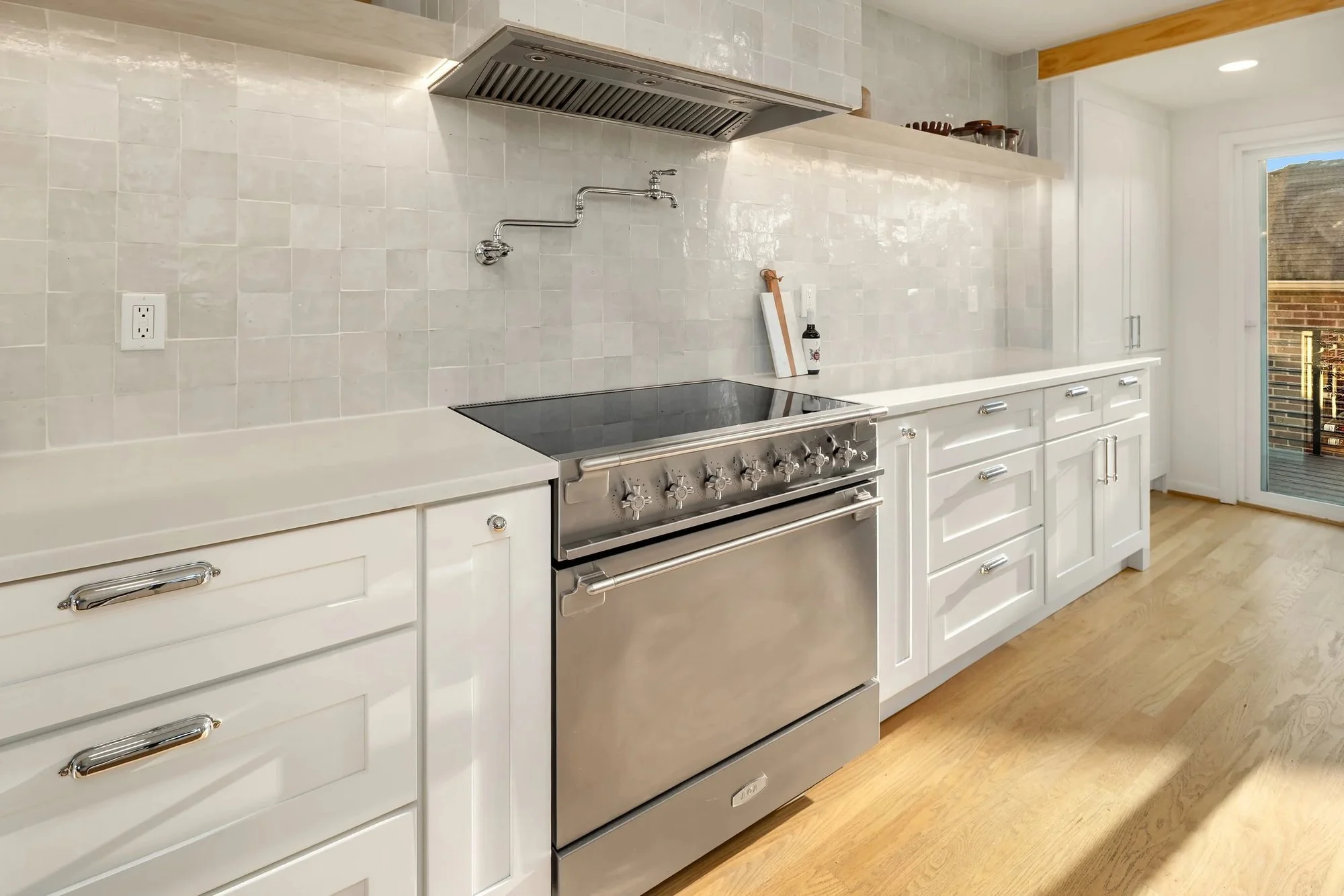
Buyers are split. One buyer’s wish list I worked from asked for a gas stove with five or more burners, or a mix of gas and induction. Others, often in remodeled homes, see a new induction range as a plus. Neither choice settles a price; condition and the rest of the kitchen do.
What the contract says
Whatever’s in the kitchen, the NWMLS purchase form has an Included Items box for stove(s)/range(s), so be clear about what stays.
Selling a home with induction
- Leave the manual and the pan list out for showingsBuyers ask whether their cookware will work
- Note the range in the listing and the Included Items boxOn the NWMLS purchase form
- Wipe the glass and clear the topA spotless black top photographs well
Buying a home with induction
- Bring a fridge magnet to showingsTest a pan you’d actually use
- Ask what circuit feeds the rangeAnd whether gas is capped or still live behind it
- Check the hood vents outsideEspecially in condos
FAQ
Frequently asked questions about induction ranges
Is induction cooking better than gas?
For speed, control, cleanup and indoor air, yes. ENERGY STAR says induction gets about 85% of its energy into the pan against about a third for gas. If you cook over an open flame, like charring or wok tossing, gas still does that better.
Is an induction stove the same as an electric stove?
It’s electric, but it isn’t a radiant top. A radiant top heats glass that heats the pan. Induction heats the pan directly with a magnetic field, so it’s faster and the glass stays cooler.
Do I need new pans for induction?
Only the ones a magnet won’t stick to. Cast iron, enameled cast iron and most stainless steel work; plain aluminum, copper and glass don’t.
Does an induction range need a special outlet?
Yes, a dedicated 240-volt circuit, often 40 or 50 amps; Wolf specifies 50 amps for its induction ranges. Battery-equipped models and single plug-in burners are the exceptions that run on a regular outlet.
Do I need a permit to switch from a gas stove to induction in Seattle?
Usually two. SDCI requires an electrical permit any time wiring is installed, altered or extended. Capping the gas line is gas piping work, permitted by Public Health – Seattle & King County. Your electrician and gas pro pull them.
Is induction cooking safe with a pacemaker?
Ask your cardiologist. Medtronic’s guide lists induction cooktops with a 2-foot distance from its heart devices.
Why does my induction cooktop buzz?
The magnetic field makes the pan vibrate slightly. A low hum or buzz is normal, especially on high; heavy, flat pans are quieter.
Does induction work in a power outage?
Not unless it has a battery. A standard induction range needs power from the panel; battery-equipped models can cook from their own battery for a while.
Are there rebates for induction ranges in Washington?
Only for income-qualified households so far: the state HEAR program, at or below 150% of area median income, through local administrators. PSE’s and City Light’s regular rebates don’t cover ranges as of November 2026.
Does an induction range add value to a home?
I don’t promise that about any appliance. Some buyers want it and some want gas; the condition of the whole kitchen moves the needle more than the range alone.
The bottom line
If your pans pass the magnet test and you aren’t set on cooking over a flame, induction is the better way to cook. In a home that already has an electric range, the switch is usually a straight swap. Coming from gas, budget for a 240-volt circuit, a capped gas line and two permits. Or look at a battery range if the walls are the problem.
Planning a sale or a remodel around the kitchen? My seller guide and buyer guide cover the strategy side for clients.
Sources
- Electric Cooking Products (efficiency, boil time, cookware, magnet test), ENERGY STAR
- 2021-2022 Residential Induction Cooking Tops (32%, 75-80%, 85%; 125 kWh a year), ENERGY STAR
- Electromagnetic compatibility guide: household and hobby items, Medtronic
- Gas stoves and indoor air quality (NO2; range hoods), Washington State Department of Health
- Wolf induction range electrical requirements, Sub-Zero Group
- Viking 7 Series 36-inch gas range specifications (120 VAC, 1.5 amps), AJ Madison
- Wolf induction cooktop or range noise, Sub-Zero Group
- Wolf 36-inch Transitional Induction Range (price), Sub-Zero Group
- Thermador 36-inch Pro Harmony induction range PRI36LBHU (price), Thermador
- Miele USA cooking price book 2026 (HR 1432-3 I, HR 1632-3 I), Miele
- Battery-powered induction stoves could be the future of clean cooking (July 31, 2024), Canary Media
- Electrical permit, Seattle Department of Construction and Inspections
- Fuel gas code (gas piping permits), City of Seattle
- State Home Electrification and Appliance Rebates (HEAR), Washington State Department of Commerce
- HEAR program update (induction stovetops, program closed), Snohomish County PUD
- Appliance rebates, Puget Sound Energy
- Home Energy Solutions rebates, Seattle City Light
- Residential rates, Seattle City Light
- Electric price summary, effective Oct. 1, 2026, Puget Sound Energy
- Gas price summary, effective Nov. 1, 2026, Puget Sound Energy
- NWMLS Form 21 sample, Rev. 2/26 (Included Items), Northwest Multiple Listing Service