
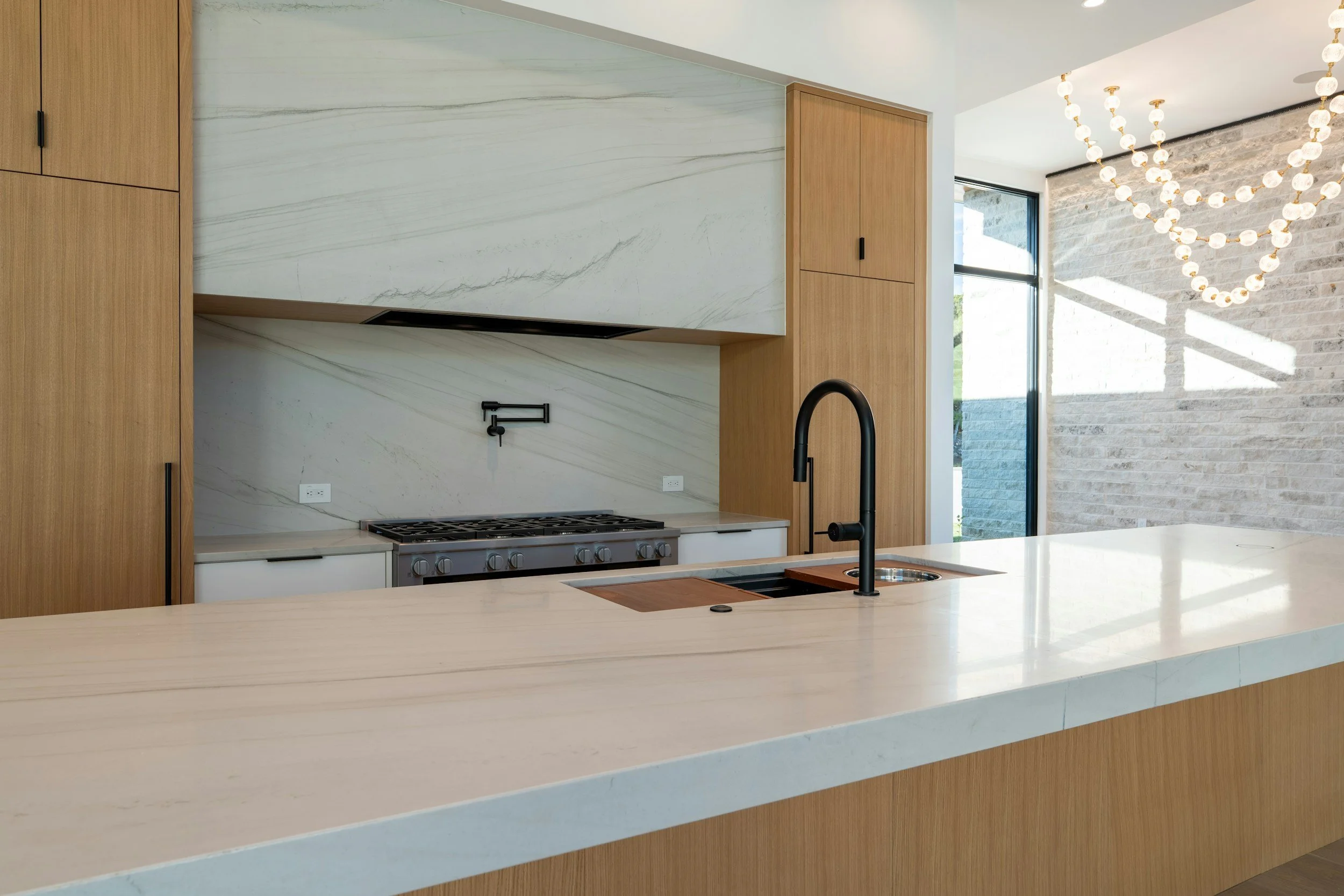
Short answer: Usually $4,000 to $18,000. Cabinets stay.
Real answer: Most countertop replacements in Seattle land between $4,000 and $18,000. The material sets most of the price, and the size of the kitchen and the extras set the rest. You can almost always keep the cabinets. Plan on about 3 to 4 weeks from approved bid to a working kitchen.
Countertop cost estimator
What your countertops could cost, and what to do first
Pick a kitchen size and a material, then the extras. You get a price range at national rates, where it lands in my Seattle tiers, and a checklist for your home. Nothing you enter leaves this page.
Your checklist
A planning aid, not a bid. National prices per square foot, removal, cutouts and edges: Fixr (January 2026). Seattle tiers: my clients’ projects. Silica: Washington L&I hazard alerts (2019, August 2026). Lead-safe rule: EPA. Quartz care: Caesarstone. Get written bids for your kitchen.
I like quartz for most kitchens. It shrugs off daily life, it photographs well when you sell, and I call it renter-proof in my own rentals. Marble is gorgeous and asks more of you. Old counters that announce early-2000s flip are the easiest kitchen fix there is.
Same thing, other names: countertop replacement cost, new countertop cost, countertop installation cost, or counter replacement. The shop that cuts the slab is the fabricator; the measuring visit is the template.
Seattle prices
What it costs to replace countertops in Seattle
Timeframe About 3 to 4 weeks from approved bid
Refresh: $4,000 to $7,000
I sort Seattle countertop jobs into three tiers. A refresh runs $4,000 to $7,000: standard quartz or a prefab slab, light demolition, and the old sink and faucet stay.
Refresh
Standard quartz or prefab slab, light demo, old sink and faucet stayBest for: Condos, townhomes, a pre-sale refreshPremium
Better quartz or local stone, new sink and faucet, custom edgeBest for: Most Seattle primary homesLuxury custom
Marble, quartzite or rare slab, waterfall edge, full-height backsplashBest for: Luxury and architect-designed homesPremium: $7,000 to $12,000
A premium upgrade runs $7,000 to $12,000: better quartz or local stone, a new sink and faucet, and a custom edge or a thicker profile. That’s where most primary homes in Seattle land.
Luxury custom: $12,000 and up
A luxury custom job starts around $12,000 and has no ceiling: marble, quartzite or a rare slab, full custom fabrication, a waterfall edge or a full-height backsplash. What counts as luxury in this city is its own question.
Scope
Can you replace just the countertops? Almost always
Cabinets stay
Yes. The cabinets stay, and a good crew protects them. It’s rarely a simple lift and drop, though, because a few things touch the counter.
- 1Counter: Comes off; the new slab sits on the same cabinets
- 2Backsplash: Comes off if bonded to the counter
- 3Sink: Often replaced; must fit the new cutout
- 4Faucet: Often upgraded while it’s open
- 5Cabinets: Stay, protected during the swap
The backsplash
A backsplash that’s bonded to the counter usually comes off with it. Tile set on the wall can sometimes stay; ask your fabricator.
The sink
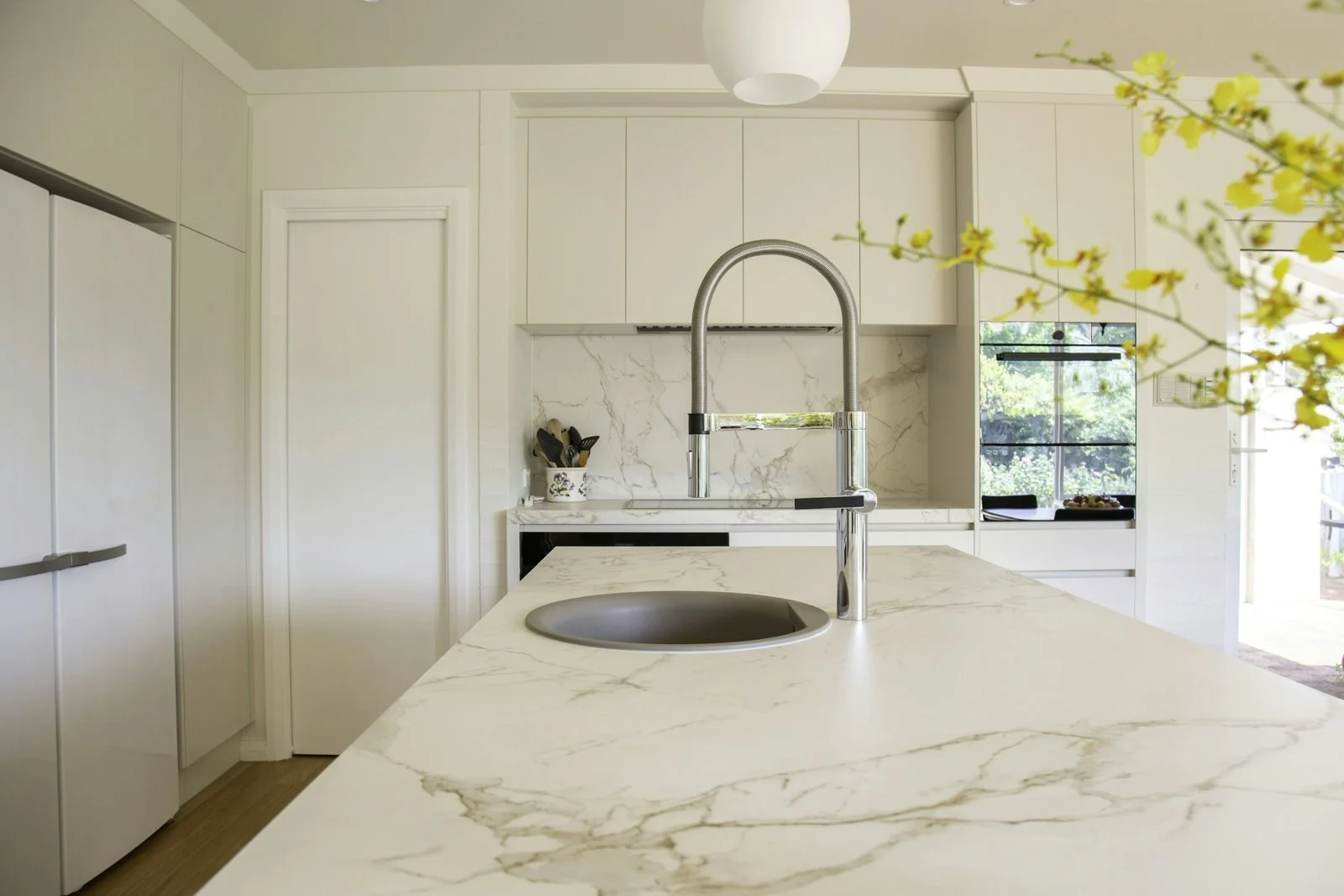
Old drop-in sinks often don’t survive removal. A new sink has to fit the new cutout, so pick it before the fabricator measures. A plumber once told a client of mine that the sinks they’d bought wouldn’t work in their counter.
Faucet and edges
Faucets often get upgraded simply because everything is open anyway. Edges, thickness and an integrated backsplash can lift the whole kitchen without touching a cabinet.
By material
Countertop cost per square foot, by material
National price per square foot
Fixr’s 2026 national figures run from $15 a square foot for laminate to $200 and up for quartz, quartzite and marble (Fixr). They price an average kitchen at about 35 square feet.
The small lines that add up
The small lines add up. Removing old counters runs $50 to $300. Each sink or cooktop cutout runs $100 to $200, and a fancier edge $10 to $40 a linear foot. Seattle labor sits above national averages, which is why my tiers start higher.
Materials
Choosing a countertop material for Seattle living
Quartz
Quartz is engineered stone: crushed quartz in resin. It needs no sealing, and it doesn’t love heat, so a trivet lives next to the stove (Caesarstone). It’s the choice I see most, and the one buyers expect.
Quartzite
Quartzite is natural stone, harder and pricier, and easy to confuse with quartz. Sellers often can’t tell me which one they have, so I ask for the brand or the receipt.
Marble and natural stone
Marble is stunning and demanding. Expect sealing, careful cleaning and a patina over time. For the right owner that lived-in look is the point. Natural stone wants a stone cleaner, never anything acidic or abrasive.
Picking a white quartz
Picking a white quartz is its own rabbit hole. I keep my favorite slabs by brand, with Seattle showrooms, on choosing white quartz.
Safety
The silica question: what Washington’s 2026 alert means for your kitchen
Why silica matters
Engineered quartz can be up to 93% silica; natural stone like granite usually runs 10% to 45% (L&I). Cutting, grinding and polishing it makes a fine dust that can cause silicosis, a lung disease with no cure.
Lower-silica options L&I lists
Washington’s August 2026 alert
In August 2026, Washington’s Department of Labor & Industries issued a hazard alert for the people who cut artificial stone. Its first advice to shops: switch to lower-silica materials where they can (L&I hazard alert).
What to ask your fabricator
Quartz is still legal and still sold here. If you choose it, ask your fabricator how they control dust: wet cutting, ventilation, and as little cutting in your house as possible. Never dry-cut or grind stone yourself.
Rules
Permits, older homes and condos
Permits
New counters are finish work, and most cities don’t require a permit for them. The Eastside cities in MyBuildingPermit list interior finish work as permit-free (MyBuildingPermit). Seattle’s own list doesn’t name countertops, so if you’re unsure, SDCI offers free 20-minute coaching (SDCI).
Check
Permit
- Counters alone: usually none
- Moving the sink: plumbing permit
- Unsure in Seattle: SDCI coaching
Check
Built before 1978
- Paint can hold lead
- Over 6 sq ft disturbed: certified firm
- Ask for lead-safe practices
Check
Condo
- HOA renovation request
- Elevator booked and padded
- Notice for a water shutoff
Moving the sink
Moving the sink or adding a line is different: plumbing work needs a permit from Public Health – Seattle & King County (plumbing permits). Work done without one tends to surface at sale time; here’s how that plays out.
Homes built before 1978
Built before 1978? Paint behind the backsplash can hold lead. A paid contractor who disturbs more than 6 square feet of interior paint must be lead-safe certified (EPA RRP).
Condos
In a condo, ask the HOA before you book. On one high-rise job we filed a renovation request in the HOA portal, booked and padded the elevator, and gave notice to the units sharing the water line.
Sellers and buyers
Replacing countertops before you sell, or after you buy
Before you sell
Kitchen refreshes tend to pay back. A minor kitchen remodel in Seattle cost about $32,271 in 2025 and added about $38,098 at resale, or 118% (Cost vs. Value). A national average isn’t your house, though.
Recouped at resale: about 118%
Keep counters buyers like
If buyers already love your counters, keep them. In 2024 I talked a seller out of new counters mid-listing for exactly that reason. Quartz is the new standard, so it rarely needs a line in the listing.
After you buy
Buying a home with tired counters? Plan the swap after closing, since the seller’s counters are theirs until then. How I weigh a dated kitchen in an offer is in my buyer guide (clients).
Install
How countertop installation works, step by step
Timeframe 1 to 3 weeks to start; 3 to 4 weeks total
Bid, template, slab
Once you approve a bid, work usually starts 1 to 3 weeks later. The fabricator measures the cabinets (the template), cuts the slab at the shop, then a crew removes the old counters and sets the new ones.
- Step 1BidMaterial, edges, cutouts, removal
- Step 2TemplateSink and faucet on hand
- Step 3FabricationSlab cut at the shop
- Step 4InstallOld out, new in
- Step 5Hook-upPlumber, then backsplash
Hook-up and backsplash
A plumber reconnects the sink, faucet and dishwasher. The backsplash goes in last. Plan on about 3 to 4 weeks from approved bid to a working kitchen, and set up a coffee corner somewhere else.
Seams and the walk-through
Ask where the seams will fall before the slab is cut, and walk the finished job with the installer before they leave. Seattle buyers notice seams, gaps and chips, especially at higher price points. A good install quietly says the house was cared for.
FAQ
Frequently asked questions about replacing countertops
How much does it cost to replace just the countertops?
In Seattle, most jobs land between $4,000 and $18,000. A small quartz refresh can come in near $4,000; marble or quartzite with a waterfall edge can pass $18,000.
What does countertop installation cost in Seattle?
It’s usually quoted with the slab, as one price per square foot plus cutouts, edges and removal. Seattle labor runs above national averages.
Is $10,000 enough to redo kitchen countertops?
For most Seattle kitchens, yes: $10,000 sits in my premium tier, with better quartz, a new sink and faucet. It isn’t enough for a full kitchen remodel.
How much would 20 feet of quartz countertop cost?
Twenty feet of standard 25½-inch-deep counter is about 43 square feet. At Fixr’s $50 to $200 a square foot, that’s roughly $2,100 to $8,500 before Seattle labor and extras.
Can you replace countertops without replacing cabinets?
Yes. The cabinets stay and get protected during the swap. Very old or damaged cabinets are the exception.
Can you replace countertops without replacing the backsplash?
Sometimes. Tile set on the wall can stay if the new counter matches the old thickness. A backsplash bonded to the counter usually comes off with it.
Do I need a permit to replace countertops?
Usually not, since counters are finish work. Moving the sink or plumbing does need a permit. In Seattle, SDCI offers free coaching if you’re unsure.
What is the most durable countertop material?
For everyday kitchens, quartz is the easiest to live with: no sealing, few stains. Keep hot pans off it. Quartzite and granite handle heat better but want sealing.
Is quartz safe to have in my kitchen?
The silica risk L&I describes is to the workers who cut it. Ask your fabricator about wet cutting and dust control, and never cut or grind it yourself.
Is replacing countertops worth it before selling?
Often, when the old ones date the kitchen. Minor kitchen refreshes in Seattle returned about 118% in 2025. If buyers already like your counters, keep them.
The bottom line
Budget $4,000 to $18,000, keep the cabinets, choose the sink before the template, and hire a fabricator who controls dust. Pick the material you’ll still like cleaning in five years. The goal isn’t just a new surface; it’s a kitchen that feels right to live in and easy to love when it’s time to sell.
Next: getting a house ready to sell, induction ranges and choosing white quartz. How I prep a client’s listing is in my seller guide (clients).
Sources
- Washington L&I, DOSH Hazard Alert (August 2026), artificial stone countertop workers; lower-silica alternatives
- Washington L&I, DOSH Hazard Alert (April 2019), silica content of engineered vs natural stone
- OSHA/NIOSH Hazard Alert 2026-101, silica during countertop fabrication and installation
- Fixr, kitchen countertop cost (January 28, 2026), price per square foot, cutouts, edges, removal
- Cost vs. Value 2025, Seattle, minor kitchen remodel cost and resale value
- Seattle SDCI, Do You Need a Permit?, work that usually needs no permit; free coaching
- MyBuildingPermit Tip Sheet 00 (June 11, 2026), interior finish work without a permit, Eastside cities
- Public Health – Seattle & King County, plumbing and gas piping permits
- EPA Renovation, Repair and Painting program, lead-safe certification for pre-1978 homes
- Caesarstone care and maintenance, no sealing; protect from heat
- Brian Huie’s client projects, Seattle tiers, timing (1 to 3 weeks to start, 3 to 4 weeks total), condo logistics