
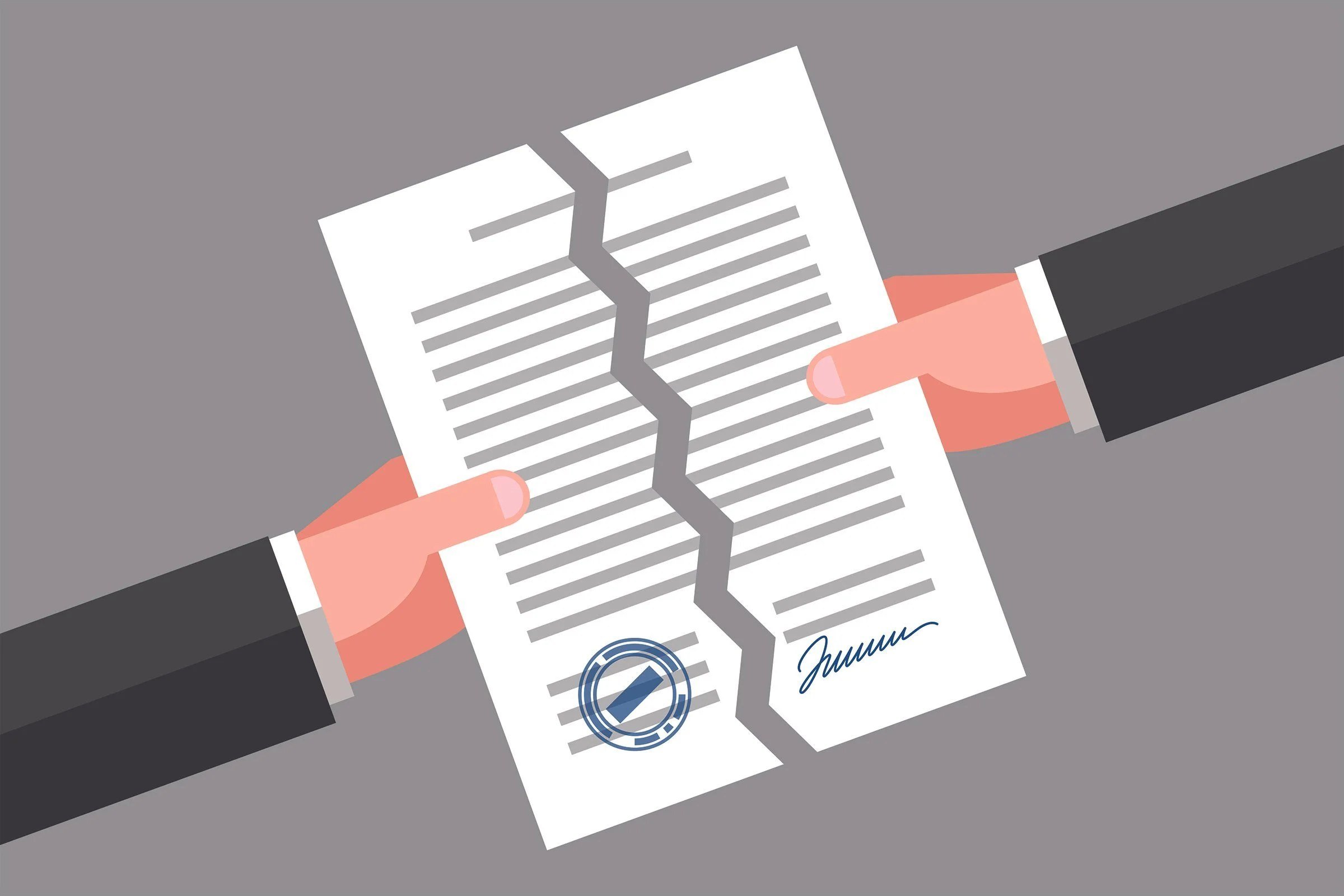
It depends on whether the buyer still had a way out. If a contingency still covered them (inspection, financing, the seller disclosure, the sale of their own home), a buyer can usually leave and get the earnest money back. If every exit has closed and the buyer still doesn’t close, Washington’s standard contract calls that a default, and one checkbox decides what the seller gets: the earnest money, capped at 5% of the price, or the seller’s election of remedies.
Buyer backed out? Earnest money checker
Refund, or default?
Tap your side and what happened. Add your numbers and, if one was made, the date of a written earnest money demand. Answers update as you tap; nothing leaves this page.
Earnest money against the 5% line
If someone won’t sign: the RCW 64.04.220 clock
Your to-do list
General information about how the standard NWMLS forms and Washington statutes work, not legal advice. Your own agreement and addenda control; for a dispute, talk to an attorney.
Most deals that fall apart in Seattle do it the clean way, inside a contingency, and the earnest money goes back with a signature. The messy ones are rare, and they follow a set path. Use the checker above for your situation; below is how each piece works. This is how the forms work, not legal advice: when real money is in dispute, talk to an attorney.
Same thing, other names: the buyer backs out, pulls out, walks away, gets cold feet or cancels. Agents and lawyers say buyer default or breach. It isn’t the same as a buyer defaulting on a real estate contract (seller financing), which follows its own rules.
The exits
Backing out through a contingency isn’t a default
A contingency is a written exit. While it’s open, the buyer can give notice, end the agreement and get the earnest money back. Each one closes on its own clock, and most close in the first 2 or 3 weeks. Once a door closes, the buyer can’t use it.
3 business days after receipt
10 days
10 days + repair rounds
5 business days after receipt
Day 21 on: waiver notice
As the addendum says
Until closing
Never an exit
These are the standard NWMLS exits and their default timing (the days when the blank is left empty). Your agreement may set different days, so read yours. Each linked post covers its own exit in full.
| Exit | Default timing | Earnest money | More |
|---|---|---|---|
| Seller disclosure (Form 17) | 3 business days after the buyer receives it (RCW 64.06.030) | Refunded on a timely rescission | Form 17 |
| Information verification | 10 days after mutual acceptance (Form 21, Specific Term 15) | Refunded on timely notice | This post |
| Inspection (Form 35) | 10 days, then 3-day repair rounds | Refunded if the buyer disapproves and terminates in time | Home inspection |
| Financing (Form 22A) | Apply in 5 days; from day 21 the seller can ask for a waiver, or it waives itself | Refunded with the lender’s letter | Financing contingency |
| Sale of the buyer’s home (Form 22B) | As written in the addendum | Per the addendum | Buying and selling |
| Condo resale certificate | 5 business days after the buyer first receives it (RCW 64.90.640) | Refunded on timely cancellation | Resale certificate |
| Title | Until closing | Refunded if title can’t be insured (Form 21, General Term e) | This post |
Default
When backing out becomes a default
Form 21, Washington’s standard purchase and sale agreement, calls it a default when the buyer “fails, without legal excuse, to complete the purchase.” A legal excuse is an exit the contract gives: an open contingency, a seller who can’t deliver insurable title, or a term the seller broke.
- 01Notice in writingEvery termination is written
- 02Exit still open?Contingency, title, seller breach
- 03Yes: terminatedEarnest money back to the buyer
- 04No: no legal excuseThe buyer is in default
- 05Specific Term 8Decides the seller’s remedy
Form 21 also has the buyer say they have the money to close and aren’t relying on loans, the sale of another home, gifts or future earnings unless the agreement says so. And time is of the essence. So the usual defaults look ordinary: a buyer who waived inspection and changed their mind, lost a job with no financing contingency, couldn’t sell their old home with no sale contingency, or simply didn’t fund by the closing date.
Specific Term 8
One checkbox decides the seller’s remedy
Specific Term 8 on page 1 of Form 21 has 2 boxes, and the form says to check only one. General Term o spells out what each means if the buyer defaults.
8. Default: (check only one)
Forfeiture of earnest money. The seller keeps the earnest money, up to 5% of the price, and that’s the seller’s only remedy. Washington law backs this up: RCW 64.04.005 makes a sole-remedy forfeiture enforceable up to 5% of the price whether or not the seller lost anything. On a $1,350,000 sale, 5% is $67,500. With a 3% deposit of $40,500, all of it is at stake. With $100,000 down as earnest money, the form forfeits only the part up to $67,500.
Seller’s election of remedies. The seller chooses: keep the earnest money as liquidated damages and stop there, sue for actual damages, sue to make the buyer close (specific performance) plus incidental damages, or pursue any other remedy the law allows.
| Forfeiture of earnest money | Seller’s election of remedies | |
|---|---|---|
| What the seller can get | The earnest money, up to 5% of the price | The earnest money, or a lawsuit for damages or to force the sale |
| Seller’s other remedies | None: it’s the sole and exclusive remedy | Damages, specific performance, other remedies at law |
| Earnest money over 5% | Only the part up to 5% is forfeited | Kept as liquidated damages if the seller picks that path |
| Where it’s written | Form 21, Specific Term 8 and General Term o(i) | Form 21, Specific Term 8 and General Term o(ii) |
Which box to check when you write or accept an offer, and what to do with it after a default, are strategy I cover with clients in the seller guide and buyer guide.
The earnest money
What happens to the earnest money after a buyer backs out
Escrow (or the buyer’s brokerage, whichever holds it) can’t hand the earnest money to anyone on its own. When the agreement ends, the usual path is a release form that both sides sign, saying who gets it. In NWMLS paperwork that’s the Earnest Money Disbursement Agreement, Form 50. Form 21 says a party who refuses to sign when the contract requires it is in breach.
If one side won’t sign, the other makes a written demand to the holder, and RCW 64.04.220 starts a clock in calendar days:
- 15Notice. Within 15 days of the demand, the holder notifies the other side (or releases the money, or files an interpleader).
- 20Objection window. The other side has 20 days from the holder’s notice to object in writing.
- 10Release. With no objection, the holder pays the demanding party within 10 days after those 20 days.
- 60Dispute. With an objection, the holder holds the money and files an interpleader, handing it to a court, within 60 days, unless both sides agree on new instructions.
The holder can take up to $750 from the earnest money for the interpleader, the court must award the holder its reasonable attorney’s fees, and if the buyer and seller sue each other, the winner gets reasonable attorney’s fees. That’s why most of these settle with a signature.
A default I handled went that way. A buyer backed out of a Seattle sale near closing with $30,000 down, about 3% of the price. The seller hired an attorney (“An attorney is critical,” I told him), escrow sent its notice, and about 5 days later the buyer signed the release. The seller kept all of it, no court, and the home was back under contract 10 days after that notice.
Listing agreement
If the seller keeps the earnest money, who gets it
Sellers ask me this one quietly. Washington’s standard listing agreement (NWMLS Form 1A, paragraph 16) answers it: costs the listing firm advanced or committed on the seller’s behalf come out first, and the rest goes to the seller, or is split equally with the firm if that box was checked. If neither box is checked, the seller keeps it.
Whether kept earnest money is taxable, and how, is a question for your CPA.
The other direction
What if the seller backs out instead
Form 21 has no checkbox for a seller who refuses to close. It limits the buyer only on title: if the seller can’t deliver insurable title, the buyer’s sole remedy is the earnest money back, with no right to damages or to force the sale. For anything else, a buyer’s options come from the agreement and Washington law, and the prevailing party in a lawsuit gets attorney’s fees. That’s a conversation for an attorney, quickly.
Buyer backs out
Exit open?Refund
No exitDefault
Specific Term 8Seller’s remedy
Seller backs out
Title can’t be insuredRefund only
Other refusalBuyer’s remedies at law
LawsuitWinner gets fees
Buyers have asked me whether they could lose their deposit if the seller backs out. Form 21’s forfeiture terms apply only when the buyer fails to close, so the real question is what else the buyer can recover.
By the numbers
How often Seattle sales fall through, and why
Less often here than nationally. Redfin counted just over 47,000 U.S. home-purchase agreements canceled in April 2026, 13.4% of homes that went under contract. In the Seattle metro the share was 10.9%, up a point from a year earlier.
The reasons Redfin heard from agents were the familiar ones: repair costs after the inspection, appraisals, more homes for sale giving buyers a better option to switch to, and worries about jobs and the economy. Most of those play out inside a contingency, which is why the earnest money usually goes back.
For sellers, reading how likely an offer is to close is part of how I review offers with clients (offer review). For buyers, bidding wars, cash offers and appraisal gaps explain the pressure to waive the exits above.
FAQ
Frequently asked questions about a buyer backing out
What happens if a buyer backs out of a house sale in Washington?
If a contingency still covered the buyer, the agreement ends and the earnest money goes back to the buyer. If no exit was open, it’s a default under Form 21, and Specific Term 8 decides the seller’s remedy: the earnest money up to 5% of the price, or the seller’s election of remedies.
Does the seller get the earnest money if the buyer backs out?
Only if the buyer had no legal excuse. Backing out during an open inspection, financing or disclosure period, done on time and in writing, gets the buyer a refund.
Can a seller sue if a buyer backs out?
Only if the agreement says so. With the forfeiture box checked, the earnest money (up to 5%) is the seller’s only remedy. With the seller’s election of remedies, the seller can sue for actual damages or to force the sale instead of keeping the earnest money.
What does buyer default mean?
Form 21 says a buyer defaults when they fail, without legal excuse, to complete the purchase: no contingency, title problem or seller breach gives them a way out, and they still don’t close.
Can a buyer back out after the inspection period?
Through another open contingency, like financing or a sale contingency, or by mutual agreement with the seller. Without one, walking away puts the earnest money at risk.
Can a buyer back out on closing day?
The same rules apply on closing day as the week before. Time is of the essence in Form 21, so not funding by the closing date is a default unless an exit or an extension covers it.
How long does it take to get earnest money back after a buyer backs out?
When both sides sign the release form, escrow usually pays within days. If one side won’t sign, RCW 64.04.220 runs up to about 45 days (15 + 20 + 10), or longer if someone objects and it goes to an interpleader.
What if the other side won’t sign the earnest money release?
Make a written demand to whoever holds the money. Escrow notifies the other side, who has 20 days to object; with no objection, escrow releases it. Form 21 says refusing to sign when the contract requires it is itself a breach.
Is the 5% earnest money cap a law in Washington?
Yes, for sole-remedy clauses. RCW 64.04.005 makes a forfeiture or liquidated damages clause enforceable up to 5% of the price whether or not the seller lost anything; a clause above 5% is judged under common law instead.
What happens if the seller backs out?
Form 21 has no seller default box. If the seller can’t deliver insurable title, the buyer gets the earnest money back and that’s all. For other refusals, talk to an attorney about the buyer’s remedies.
Can the buyer and seller just agree to cancel?
Yes. Both sign a termination and a release that says how the earnest money is split. Many failed deals end that way.
Is earnest money a seller keeps taxable?
Ask your CPA. How it’s treated depends on the property and your situation.
The bottom line
A buyer who backs out through an open contingency, on time and in writing, gets the earnest money back. A buyer who backs out after every exit has closed is in default, and Specific Term 8 decides the seller’s remedy: up to 5% of the price, or the seller’s election of remedies.
Most of these end with a signature on a release. When they don’t, the RCW 64.04.220 clock and an attorney take it from there. If you’re listing, start with how I sell homes; if you’re buying, how I help buyers.
Sources
- NWMLS 2026 forms revision samples: Form 21 Residential Purchase and Sale Agreement (Rev. 2/26), Form 1A, Form 22B, Form 35, Northwest Multiple Listing Service (sample packet)
- RCW 64.04.005, Liquidated damages and earnest money deposit, exclusive remedy, Washington State Legislature
- RCW 64.04.220, Handling of earnest money, notice from holder, interpleader, Washington State Legislature
- RCW 64.06.030, Seller disclosure, buyer’s right to rescind, Washington State Legislature
- Home-purchase cancellations, April 2026 (published May 21, 2026), Redfin