

Limited dual agency is Washington's name for one real estate broker representing both the buyer and the seller in the same sale. It's legal here only if both sides agree in writing, and the word “limited” is the point: once a broker has both sides, they can't push for terms that favor you over the other party. Pick your side and setup below to see who works for you, what your broker can still do, and where it shows up in your paperwork.
Agency checker
Who works for you in this deal?
I'll say where I stand up front: I'd rather every buyer on my listings have a broker of their own. I've had buyers at Seattle open houses ask me to be their agent on the spot, and I steer them elsewhere, because the moment I'm on both sides, I can't fight for either one. That doesn't make limited dual agency wrong. It just makes it a choice worth understanding before you initial it.
The basics
What limited dual agency means in Washington
In Washington, a broker who represents both the buyer and the seller in the same transaction is a limited dual agent. The state renamed it from plain “dual agent” on January 1, 2024, to make the limits obvious. Any broker can show you a home; agency is about whose interests the broker is bound to protect.
It happens two ways, and they feel very different from the inside:
- One broker on both sides. Your broker also represents the other party. That broker, plus the managing broker who supervises them and the firm's designated broker, are all limited dual agents.
- Two brokers at the same firm. The buyer's broker and the listing broker are colleagues. Each one still represents only their own client. Only the supervising managing broker and the designated broker become limited dual agents. At a large firm, this is common.
Four setups
Four ways a sale can be set up, compared
Here's who works for whom in each setup, and what that means for you.
| Separate firms | Same firm, two brokers | One broker, both sides | Buyer with no broker | |
|---|---|---|---|---|
| Who represents the buyer | Buyer's broker | Buyer's broker | The shared broker, with limits | No one |
| Who represents the seller | Listing broker | Listing broker | The shared broker, with limits | Listing broker |
| Negotiates for you | Yes | Yes | No, for either side | Seller only |
| Keeps your information private | Yes | Yes | Yes, both ways | Seller only |
| Consent needed | None | Signing the agreement (section 4b) | Initials from both sides (section 4a) | None; buyer gets the pamphlet |
| Paragraph 16 of the purchase agreement | Buyer Broker / Listing Broker | Buyer Broker / Listing Broker | Limited dual agent, both lines | Buyer: unrepresented |
The law
What a limited dual agent can and can't do
The duties come straight from state law, and they can't be waived.
- Can't advocate. A limited dual agent may not push terms that favor one side to the detriment of the other: not on price, not on inspection repairs, not on deadlines.
- Can't share secrets. Neither side's confidential information goes to the other, even after the deal ends. That covers your top price, your timeline and why you're moving.
- Must take no action that hurts either side. The broker owes both of you that duty at the same time.
- Must disclose conflicts and send you to experts. Both sides are told to get expert advice on anything beyond the broker's expertise: an inspector, an attorney, a lender.
- Still owes everything every broker owes. Reasonable skill and care, honesty, presenting every written offer and notice on time, disclosing known material facts and accounting for your money.
- Can keep working. Showing other homes to the buyer, or other buyers to the seller, isn't a conflict by itself, until there's a contract.
Paperwork
How consent works, step by step
Consent isn't a handshake. It's written, it's initialed and it shows up in three places.
- The pamphlet comes first. Every broker has to give you “Real Estate Brokerage in Washington” before you sign an agreement with them, or before you sign an offer if you have no broker, and get your signed receipt.
- Your agreement asks the question. Washington requires every listing and buyer agreement to say whether you consent to limited dual agency. On the NWMLS forms it's section 4a, with its own initial line, and an acknowledgment that the broker can't advocate for you over the other side.
- Same-firm consent is in the fine print. Section 4b covers two brokers at the same firm. Signing the agreement agrees to it; there's no separate initial.
- The purchase agreement discloses it. Paragraph 16 of the NWMLS purchase and sale agreement, “Agency Disclosure,” has a box for each side. One broker on both sides is checked as a limited dual agent on both lines.
- Compensation is disclosed too. Before the deal is mutual, brokers have to disclose in writing any compensation offered by one party or firm to a firm representing the other.
Didn't initial section 4a? Then your broker can't represent the other side in your deal. Both sides can add consent later with a written amendment, but nobody can assume it.
Commission
Who pays, and do dual agents get double commission?
A firm can be paid by more than one party, and its pay can be based on the price, without breaking its duties, but only on terms its client agreed to in writing. There are no standard rates. The amounts are set before any buyer shows up:
- Sellers: the listing agreement. On the current NWMLS listing form, section 7(b)(ii) sets what the listing firm is paid for the buyer side when its broker represents both. Left blank, it's the same as the amount offered to an outside buyer's firm. Section 7(a)(ii) sets the fee when the buyer has no broker at all.
- Buyers: the buyer agreement. On the NWMLS buyer brokerage form, section 5(b) sets the fee when your broker also represents the seller. Left blank, it's the same as your regular fee.
- So, double? Only if the agreements say so. Read those lines before you sign, not after you fall for a house.
On my own listings, the seller doesn't pay more if I end up representing the buyer too. The paperwork lets a firm keep both fees; I'd rather the conversation be about the house.
Buyers
Buying through the listing agent: what actually happens
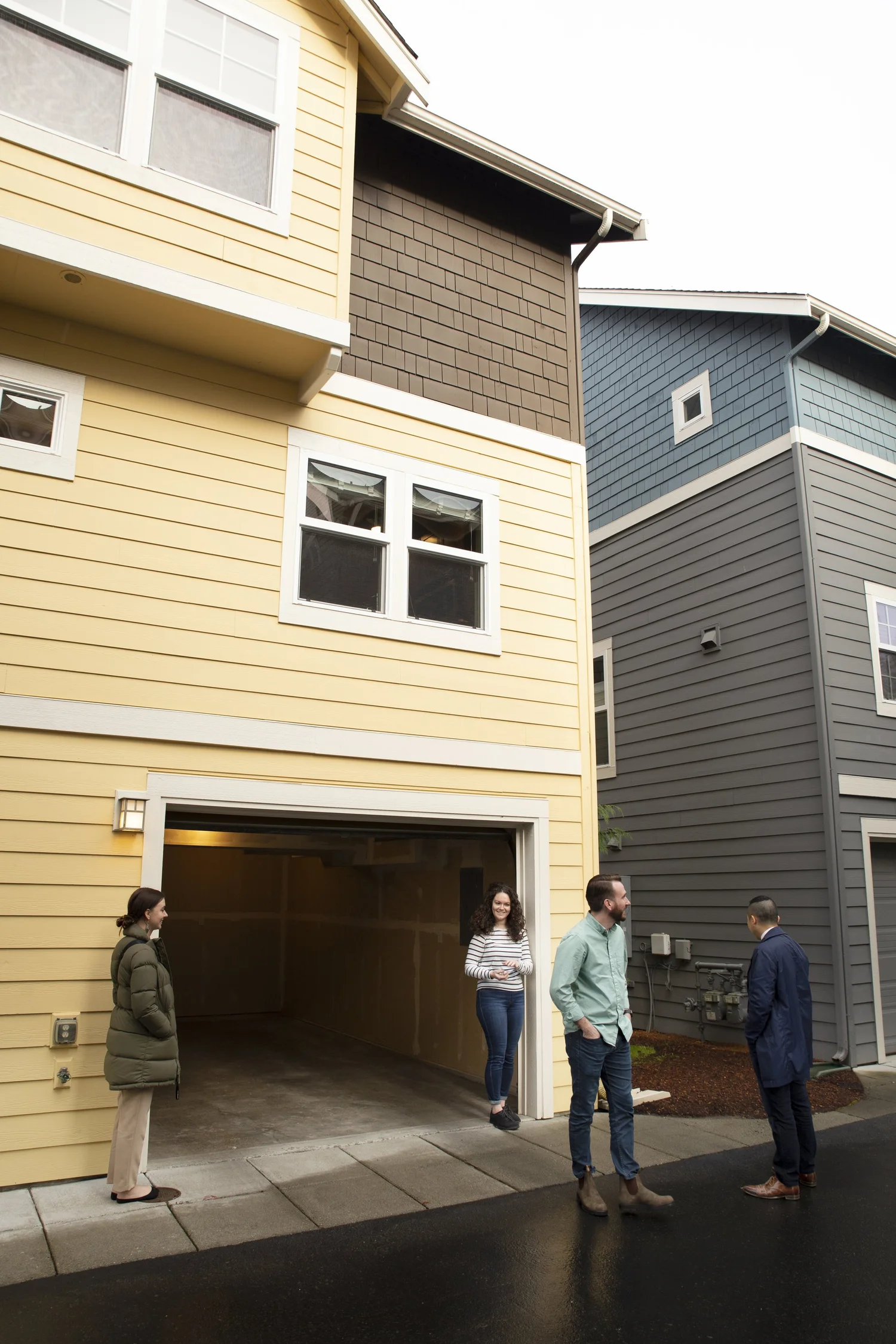
It's one of the most common questions I get: can I just call the listing agent and skip having my own? You can, and it goes one of two ways.
- You stay unrepresented. The listing broker remains the seller's agent. You get honesty, the pamphlet, your offers presented and known material facts disclosed. You don't get advice, advocacy or confidentiality.
- You both consent to limited dual agency. You and the seller initial consent, and the broker represents both of you, with the limits above.
- Either way, ask about the fee. Whether the seller pays less when there's no outside buyer's broker is set in the listing agreement, not by the listing agent's mood that day.
Before you decide, read what a buyer’s agent does, buying without an agent and how to find a buyer’s agent. How I work with buyers on offers lives in my buyer guide.
Judgment
When limited dual agency can make sense
In my experience it fits best when the two sides have already agreed on the deal themselves, and the broker's job is the contract, the deadlines and a clean closing. Think of a sale between family members or friends, or an off-market sale where price and terms were settled before anyone called a broker.
- Good fit: terms already agreed. Nobody needs an advocate for the negotiation, because it's done.
- Harder fit: competing offers. When a broker's own buyer is bidding against outside buyers, staying neutral gets hard to do and hard to believe.
- Harder fit: a tough inspection or appraisal. Repairs, credits and price changes are exactly where you'd want someone on your side.
- Sellers still get the open market. Since June 2026, Washington bars brokers from marketing a home only to a limited or exclusive group of buyers or brokers, unless it’s also marketed to the public and all other brokers or a health or safety need applies. A listing can’t be kept in-house just to find a buyer inside the firm. Related: NWMLS First Look.
FAQ
Frequently asked questions about limited dual agency
What is limited dual agency?
It's when one broker represents both the buyer and the seller in the same Washington real estate sale, with written consent from both. The broker can't advocate for either side or share either side's confidential information.
Is dual agency legal in Washington State?
Yes, as limited dual agency, and only with the written consent of both the buyer and the seller in their agreements with the firm.
Why is it called limited?
Because the broker's representation of each side is limited by law. A limited dual agent may not advocate terms that favor one client to the detriment of the other.
What's the difference between a limited dual agent and a seller's agent?
A seller's agent is loyal only to the seller and can negotiate for them. A limited dual agent represents both sides and can negotiate for neither.
Can two agents at the same brokerage represent the buyer and the seller?
Yes. Each broker represents only their own client. The managing broker who supervises both of them and the firm's designated broker are limited dual agents, and the buyer and seller consent to that in their agreements.
Do dual agents get double commission?
A firm can be paid by both sides, but only on terms each client agreed to in writing. The listing and buyer agreements each have a line for the dual agency fee; if it's blank, it matches the regular fee.
Does dual agency save the seller money?
Only if the listing agreement says so. Section 7(b)(ii) of the NWMLS listing form sets the fee when one broker represents both sides; if it's blank, the seller pays the same as with an outside buyer's broker.
Should I use the listing agent to buy a house?
You can, but the listing agent works for the seller unless you both consent to limited dual agency, and even then they can't negotiate for you. Many buyers want an advocate of their own.
What happens if I refuse to consent to dual agency?
Your broker can't represent the other side in your deal. The other party can hire their own broker, a buyer can go ahead unrepresented, or the deal can proceed with separate brokers at the same firm.
Can I change my mind after consenting?
An agency relationship can be ended by notice, but ending it doesn't erase obligations you've already signed up for. If an offer is already in motion, talk to a real estate attorney before you act.
Does an unrepresented buyer get any protection?
Yes. Every broker owes every party honesty, reasonable skill and care, timely presentation of offers, disclosure of known material facts and the “Real Estate Brokerage in Washington” pamphlet before the buyer signs an offer.
Which states don't allow dual agency?
Rules vary by state. Texas, for example, doesn't allow one broker to represent both parties as a dual agent; it uses an intermediary arrangement instead. Washington allows it with written consent.
The bottom line
Limited dual agency is legal, disclosed and sometimes the simplest way to get a deal closed. It's also a trade: one broker for the whole sale, and no advocate for either side. Know which setup you're in, read section 4a before you initial it, check the fee lines in your agreement and paragraph 16 in your contract, and decide whether you want someone on your side when the negotiating starts.
Sources
- RCW 18.86.010, Definitions (limited dual agent, confidential information), Washington State Legislature
- RCW 18.86.020, Agency relationship and services agreement, Washington State Legislature
- RCW 18.86.030, Duties of broker, Washington State Legislature
- RCW 18.86.040, Seller's agent duties, Washington State Legislature
- RCW 18.86.050, Buyer's agent duties, Washington State Legislature
- RCW 18.86.060, Limited dual agent duties, Washington State Legislature
- RCW 18.86.080, Compensation, Washington State Legislature
- RCW 18.86.120, Real Estate Brokerage in Washington pamphlet, Washington State Legislature
- RCW 18.86.130, Residential property must be marketed publicly (2026), Washington State Legislature
- Real Estate Brokerage in Washington (sample pamphlet), Northwest Multiple Listing Service
- May a broker act as a dual agent?, Texas Real Estate Commission
- NWMLS Form 1A, Exclusive Sale and Listing Agreement, Rev. 2/26: sections 4a, 4b, 7(a)(ii), 7(b)(ii), Northwest Multiple Listing Service (member form)
- NWMLS Form 41, Buyer Brokerage Services Agreement, Rev. 8/24: sections 4a, 4b, 5(b), Northwest Multiple Listing Service (member form)
- NWMLS Form 21, Residential Purchase and Sale Agreement, Rev. 2/26: paragraph 16, Agency Disclosure, Northwest Multiple Listing Service (member form)