
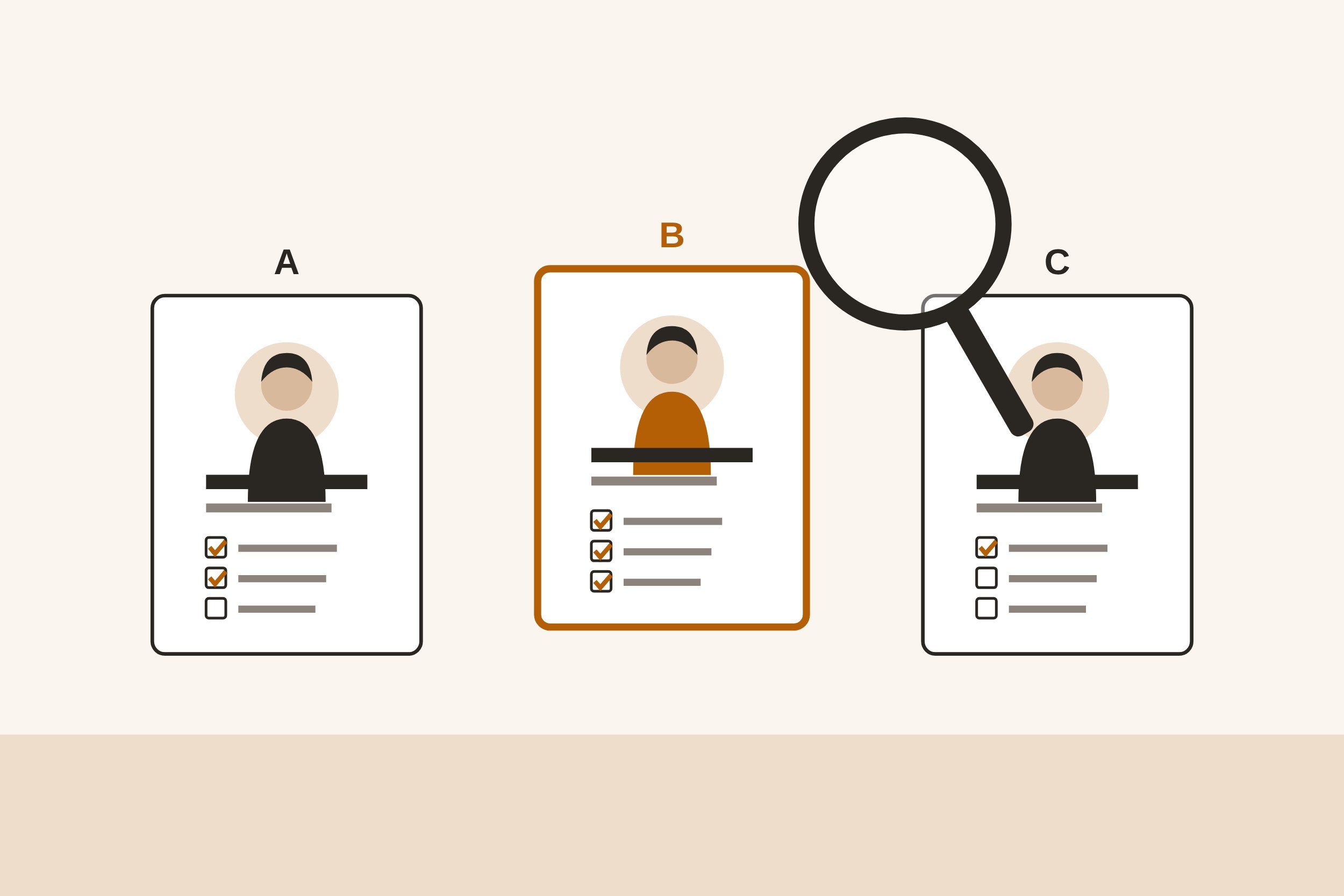
To find a good buyer’s agent in Seattle, gather 2 or 3 names from people you trust and from recent sales near the homes you want, check each one’s Washington license, then interview them. Choose the agent who has sold at least 20 homes as the lead agent, sells often in your area, works full time, handles your search personally and picks up the phone. Then sign a buyer agreement before your first private tour.
Buyer’s agent scorecard
Score up to 3 agents before you choose
Pick your situation, then answer what you know about each agent. Leave anything you haven’t checked as “Not sure yet” and the scorecard turns it into the question to ask next. Nothing you enter leaves this page.
Your agents side by side
Scores count only what you’ve checked. A license that isn’t active scores zero.
Red flags for this agent
Ask next
The weights reflect what I look for before I refer anyone to an agent; they aren’t an industry standard. Check licenses on the Washington DOL license lookup. General information, not legal advice.
I vet agents more often than most buyers ever will. I refer past clients to agents in other cities, and I mentor newer agents. For one family moving across the country, I narrowed nearly 300 agents who had sold in their neighborhoods down to 6, and we interviewed every one of them together. This is the checklist I use.
Who you’re hiring
Buyer’s agent, Realtor or buyer’s broker: who you’re choosing
Same job, other names. In Washington the license is “broker”; a buyer’s agent is a broker who represents you, the buyer, under a written buyer agreement. “Realtor” means a broker who belongs to the National Association of REALTORS. People also say buying agent, buyer’s realtor or real estate agent. If you’ve searched how to choose a realtor to buy a house, this is the person you’re choosing.
- Buyer’s agent
- Buying agent
- Buyer’s realtor
- Broker (the WA license)
- Buyer’s broker
- Real estate agent
Washington has 2 license levels. A broker has passed 90 hours of courses and the state exam, and must finish 90 more hours before the first renewal. A managing broker has at least 3 years as a full-time broker and 90 more hours. Neither one tells you how good someone is at helping buyers; the record does.
| Title | What it means | What it tells you |
|---|---|---|
| Broker | Washington’s basic real estate license; works for one firm, supervised by a managing or designated broker | Licensed and supervised. Not experience |
| Managing broker | 3 or more years full time, plus 90 more hours of courses and a second exam | Time in the business. Still not buyer experience |
| Buyer’s agent | A broker who represents you under a buyer agreement: loyalty, confidentiality, disclosing conflicts | The role you’re hiring for |
| Realtor | A broker who belongs to the National Association of REALTORS and its code of ethics | A membership, not a license level |
Finding names
Where to find buyer’s agent candidates in Seattle
Most buyers hire the first agent they talk to. In NAR’s 2025 buyer survey, 43% found their agent through a referral from a friend, neighbor or relative. A referral is a fine start, as long as it’s from someone who actually bought with that agent. Then widen the list:
- Ask people who bought recently.Ask what the agent did that they couldn’t have done themselves, and whether the agent showed every home personally.
- Look at recent sales near the homes you want.Sold listings on Zillow, Redfin and brokerage sites name the agents. Notice who keeps showing up on the buyer’s side in your neighborhoods.
- Open houses, with one caution.The host usually works for the seller. Meeting agents there is fine; save your budget and timing for the agent you hire.
- Ask an agent you trust in another city.Agents refer each other across the country, and a good one will screen names for you. That’s most of what I do when a client moves away.
- Ask your lender.Lenders see which agents keep deals on schedule. Ask who they’d send their own family to, and why.
Homework
Check the license and track record before you meet
10 minutes of homework before the first call saves you an hour of sales pitch. Here’s what to look up, in order:
- 01LicenseDOL lookup: issued, active, expiry
- 02Lead-agent salesCount only the ones they led
- 03Verified volumeRealTrends sides and dollars
- 04Their listClosed NWMLS sales with their role
- 1License. Washington’s DOL license lookup shows whether a broker’s license is issued and active, and when it expires. Search by name in the advanced search. The data updates each morning.
- 2Sales as the lead agent. Zillow and Realtor.com profiles list past sales, but they can credit an agent with sales where they only assisted. Count the ones where this agent was the agent of record.
- 3Verified volume. RealTrends Verified profiles show an agent’s yearly transaction sides and sales volume from brokerage data.
- 4Ask for the list. Ask the agent for their closed NWMLS sales from the last 2 years, with their role on each one. A strong agent sends it the same day.
Reviews help, but read the dates and the details. Five stars that all say “so nice” tell you less than 3 that describe how the agent handled an inspection or a lost bid.
My checklist
What I look for before I refer anyone to an agent
This is the bar I use before I send a friend, a family member or a client to any agent, in any city:
- Personal service from start to finish.The agent handles your search, offer and contract personally. Assistants support that work; they don’t take you over.
- Full time, shown by the record.Not just claimed. In lower-priced markets it’s harder to tell who is truly full time, so the sales list matters even more.
- At least 20 homes sold as the lead agent.Not as an assistant or co-agent. And far more sales than the average local agent.
- Knows your area.Has sold at least one home in your immediate area in the last couple of years, and your search area sits near the center of their last 100 sales. Look at the last 6, 12 and 24 months.
- Seven-day coverage.A named partner agent or team for days off and planned trips, especially spring through fall. An experienced agent already has one lined up.
- Answers fast.Picks up or calls back within an hour, and answers email within 12 hours.
- A lender who knows their deals.Recommends a local lender who has closed at least 20 of the agent’s sales and can underwrite a loan and close in under 21 days. How I think about lenders.
- Considerate and engaged in the community.With searchable proof, not a slogan.
One more thing I notice in newer agents I mentor: athletes and musicians often make strong agents because of their routine, discipline and attention to detail. Any earlier work that demanded the same habits can carry over, and agents who bring them into real estate tend to do very well.
The interview
Questions to ask a buyer’s agent in the interview
Ask the same questions of every agent, and write down the answers. Good agents like this part.
1Experience
- How many homes have you sold as the lead agent, and how many in the last 12 months?
- How many buyers did you help in my price range and area in the last 2 years?
- Can you send your closed NWMLS sales with your role on each?
2Who does the work
- Will you personally tour homes with me and write my offers, or does someone else?
- Who covers for you on your days off or a trip, and have I met them?
- How fast do you return calls and texts, and on weekends?
3Your search
- What would you want to know before we tour, and how do you preview homes?
- What do you look for in a house that most buyers miss?
- Which lender would you suggest, and how many of your sales have they closed?
4The paperwork
- Will you walk me through your buyer agreement line by line before I sign?
- Exclusive or nonexclusive, how long is the term, and how are you paid?
- Would you ever represent the seller too, and how would you handle that?
Offer strategy questions (how they’d win a bidding war, when to waive a contingency) are fair to ask. Their answers are where agents differ most, and mine are in my buyer guide’s offers chapter for clients.
Walk away
Red flags when choosing a realtor
Who does the work
Teams, new agents, part-time agents and friends in the business
Teams can work well when you know who does what. My concern is the handoff: you meet the experienced agent, then a newer agent shows the homes and writes your offers. NAR’s 2026 Member Profile found the typical agent completed 9 transaction sides on their own in 2025, while teams typically completed 31. A team’s numbers belong to the team; ask whose they are.
| Choosing | What to ask | What a good answer sounds like |
|---|---|---|
| A team | Who tours with me, writes my offers and negotiates? | The same person you’re interviewing, with named backup |
| A newer agent | Who reviews your contracts, and has that person sold in my area? | An experienced broker who checks every offer, by name |
| A part-time agent | What’s your other job, and how fast can you see a home on a Tuesday afternoon? | Real availability, in hours, not a promise |
| A friend or relative | Would you be comfortable if I interviewed 2 others first? | Yes. A friend who’s good at this won’t mind |
| The listing agent | Can you advocate for me against your own seller? | No. That’s limited dual agency; know the limits first |
Part-time isn’t automatically worse; NAR found 73% of REALTORS had real estate as their only occupation. But the first weekend a new listing hits, availability is the job.
Next step
After you choose: sign the agreement, then start touring
- 01Shortlist2 or 3 names
- 02CheckLicense and sales list
- 03InterviewSame questions for each
- 04ChooseSign the buyer agreement
- 05TourYour agent works for you
Washington requires a written buyer agreement before, or as soon as reasonably practical after, a broker starts working for you. Most sign it before the first private tour. My buyer agreement guide covers the term, the exclusive box, who pays and how to end one. If it isn’t working, you can switch: talk first, then end it in writing, and know the after-it-ends clause still applies.
My record
Considering me? Here’s where to check my record

I hold myself to the same list. In the Seattle area, these are the places to check my work:
- Zillow.My Zillow profile and its reviews. My Zillow history lists only my own sales.
- RealTrends Verified.25 transaction sides and $20.76M in volume, based on 2025 sales data.
- Reviews and bio.Client reviews and my biography on brianhuie.com, and Instagram.
- How I work with buyers.My buying page explains my service and how I’m paid.
Compass Real Estate is my brokerage. Ask me for my closed sales list with my role on each.
FAQ
Frequently asked questions about finding a buyer’s agent
How do I find a good buyer’s agent in Seattle?
Start with 2 or 3 names from recent buyers you trust and from recent sales near the homes you want. Check each license on the DOL lookup, ask for their closed sales with their role on each, then interview them with the same questions.
How many agents should I interview?
2 or 3. Most buyers interview only one, which is how a lot of mismatches start.
What should I ask a buyer’s agent before hiring them?
How many homes they’ve sold as the lead agent and recently in your area, who tours and writes offers, who covers when they’re away, how fast they answer, which lender they suggest, and whether they’ll explain the buyer agreement line by line.
How do I check a real estate agent’s license in Washington?
Use the Department of Licensing’s license lookup at professions.dol.wa.gov. It shows whether a license was issued, whether it’s active and when it expires.
How can I see a realtor’s past sales?
Zillow and Realtor.com profiles list past sales, and RealTrends Verified shows yearly sides and volume. Ask the agent for their closed NWMLS sales with their role on each; profile sites can credit sales an agent only assisted on.
Is a Realtor the same as a real estate broker?
In Washington the license is broker or managing broker. Realtor means the broker is a member of the National Association of REALTORS.
Should I choose a team or a solo agent?
Either can work. What matters is who tours with you, writes your offers and negotiates. If that’s someone other than the person you interviewed, interview them too.
Is it bad to hire a new real estate agent?
Not if an experienced broker reviews their work and they have time for you. Ask who that broker is and whether they’ve sold in your area.
Do I need a buyer’s agent to buy a house in Washington?
No. You can buy without one, and the listing agent then works only for the seller. The trade-offs are in my buyer agreement guide.
Can I switch buyer’s agents?
Yes. Talk first, then end the buyer agreement in writing; NWMLS Form 53 is the usual form. The after-it-ends clause can still apply to homes you saw or offered on.
Is 3% standard for a buyer’s agent?
There are no standard commission rates. Every fee is negotiable, and your buyer agreement says what your agent is paid.
What is the 80/20 rule for realtors?
It’s shorthand for a small share of agents doing most of the business. NAR found the typical agent closed 9 sides in 2025, which is why checking an agent’s own sales list matters.
The bottom line
Choose your buyer’s agent the way you’d choose a surgeon: by their record, not their pitch. Check the license, count the sales they led in your area, ask who actually does the work, and notice how fast they answer while they’re still earning your business.
If you’re buying anywhere else in the country, send me a note. I’m glad to screen agents for you the same way.
Sources
- License lookup, Washington State Department of Licensing
- Look up the status of a business or professional license, Washington State Department of Licensing
- RCW 18.85.011, Definitions (broker, managing broker), Washington State Legislature
- RCW 18.85.101, Broker’s license requirements, Washington State Legislature
- RCW 18.85.111, Managing broker’s license requirements, Washington State Legislature
- RCW 18.86.030, Duties of broker, Washington State Legislature
- RCW 18.86.050, Buyer’s agent duties, Washington State Legislature
- Real Estate Brokerage in Washington (pamphlet), Northwest Multiple Listing Service
- The Feature Sheet: 2026 Member Profile (August 19, 2026), National Association of REALTORS
- Key takeaways from NAR’s 2025 Profile of Home Buyers and Sellers (December 8, 2025), Virginia REALTORS
- Brian Huie, RealTrends Verified profile (2025 sales data), RealTrends