
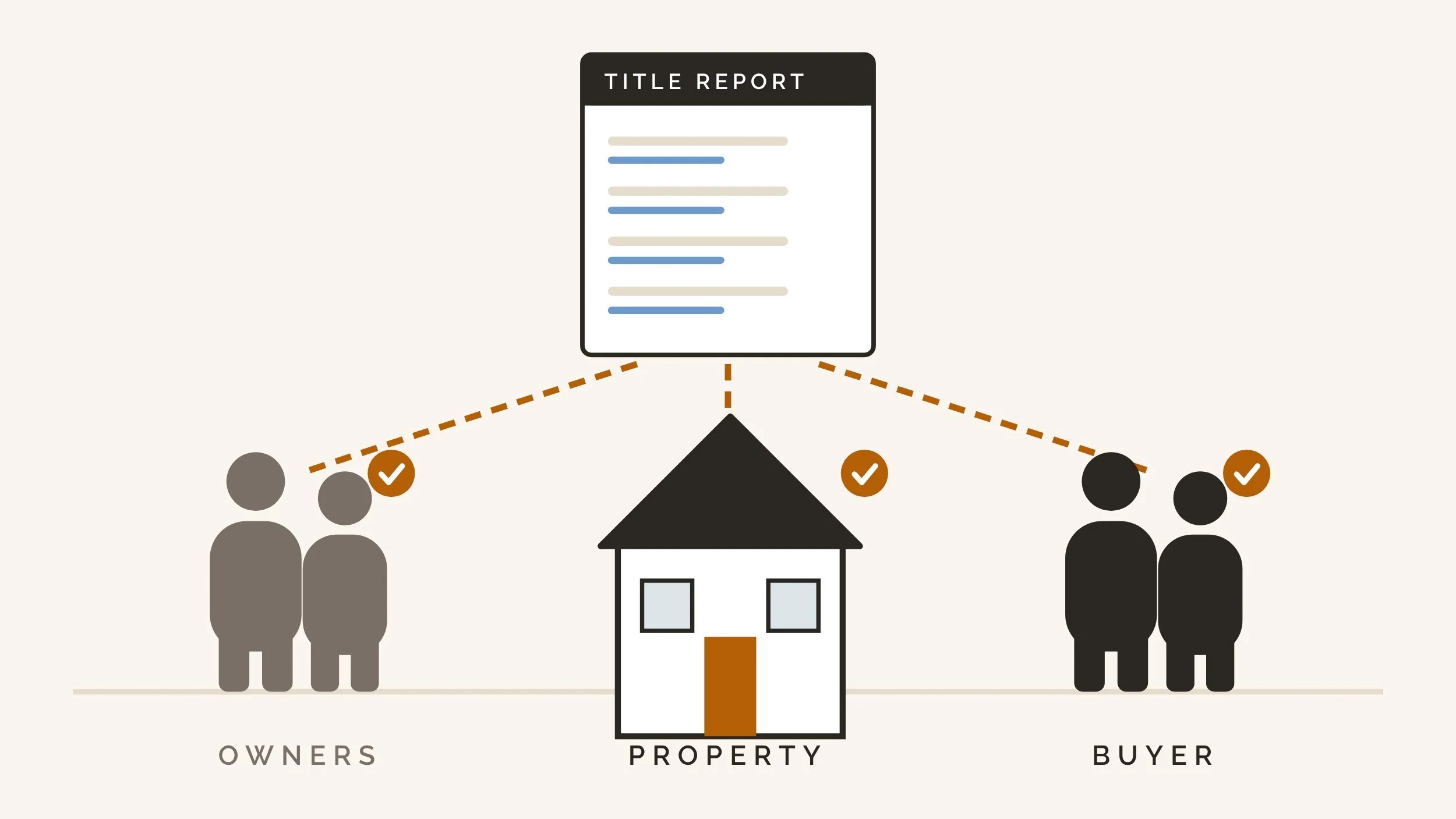
A title report, formally a preliminary commitment for title insurance, is the title company’s research on the property, its owners and, once named, the buyer: who owns it, what’s recorded against it, and what the policy won’t cover. Read it in three passes: check the commitment date, scan Schedule B, Part I for what must happen before closing, then open every recorded document linked in Schedule B, Part II.
Title report checker
What is your title report telling you?
Enter the commitment date and tap what you see. Your piles, plan conflicts and to-do list update as you tap. Nothing you enter leaves this page.
Your report, decoded
Your checklist
General information, not legal advice. Based on the 2021 ALTA commitment form, NWMLS Form 21 (Rev. 2/26), RCW 6.13.060, 26.16.030, 64.38.160 and 64.90.350, and City of Seattle recorded-document forms. For what an exception means for you, talk to a real estate attorney.
For this post I went back through 68 title reports from my own deals, 2016 to 2026, from five Seattle-area title companies. Most of what’s on them is ordinary: current taxes, the seller’s loan, an old plat, a utility easement. The items that matter tend to hide inside the linked documents, not in the summary lines.
Same thing, other names: title report, prelim, preliminary title report, title commitment, preliminary commitment, commitment for title insurance. Updated copies are called supplements, revisions or versions. The exceptions list is Schedule B, Part II.
The basics
What a preliminary commitment is, and when Seattle buyers get it
The commitment is the title company’s offer to insure, on stated terms. On Washington’s standard purchase contract (NWMLS Form 21), the title company named in the contract sends a copy of the preliminary commitment to the seller, the listing broker, the buyer and the buyer’s broker. Sellers often open title when they list (I do on mine), so a first version can exist before you offer; updates follow once you’re under contract.
Every 2021 ALTA commitment has the same skeleton. Schedule A holds the commitment date, the policy and amount, who holds title today (the vesting) and the legal description. Schedule B, Part I lists requirements: what has to be paid, signed or recorded before the policy issues. Schedule B, Part II lists exceptions: recorded matters the policy will not cover. That last list is the one to read slowly.
- 1Commitment date: everything recorded up to this date and time was searched
- 2Vesting: who owns it now, and how
- 3Legal description: the lot and plat, not the street address
- 4Requirements: payoffs, signatures and affidavits due before closing
- 5Exceptions: recorded items the policy won’t cover, each with a recording number
- 6Linked documents: the recorded PDFs behind each exception
Form 21 also sets the bar. Title has to be marketable at closing, but recorded covenants and restrictions “general to the area,” easements that don’t materially affect value or reasonable use, and reserved oil or mining rights do not make it unmarketable, and the seller pays off liens. A separate NWMLS addendum, the Title Contingency Addendum (Form 22T), can give a buyer a set review period; what to do inside that window is in my buyer guide (clients).
Who gets researched
What the title company researches: the property, the owners and the buyer
A title search isn’t only about land. The company has to know who can sign the deed, and who might hold a claim against the people on either side. That’s why Part I fills up with names.
The property
- Legal description and plat
- Who holds title, and since when
- Taxes and assessments
- Liens and loans to pay off
- Recorded easements, covenants, agreements
The owners
- Spouse or partner signatures
- Trusts, estates, LLCs
- Powers of attorney
- Judgments under similar names
- Owner’s affidavit
The buyer
- Name search once named
- Statement of identity if needed
- Lender and loan added
- Anyone else taking an interest
- The policy amount
The owners. In Washington, a spouse or registered domestic partner generally has to sign to sell a homestead or community real property (RCW 6.13.060, RCW 26.16.030), so marital status and spouse signatures showed up in about 7 of every 10 reports in my files. Trusts need a copy of the trust, an LLC needs proof of who can sign, an estate needs probate, and title companies routinely ask whether anyone will sign by power of attorney, is incapacitated or has died.
The buyer. Once you’re named, you’re searched too. The 2021 ALTA form tells the buyer to report anyone else who will take an interest or make a loan, and says the company may then add requirements. If a judgment or lien turns up under a name like yours, expect a statement of identity: a short confidential form that tells you apart.
The date
Why the commitment date matters
The commitment is a snapshot. It covers what was in the public record at the commitment date and time on Schedule A, and the 2021 ALTA form adds a standing exception for anything that appears for the first time between that date and the day the requirements are met. In my files, the review usually reached me 7 to 15 days after its commitment date, so even a brand-new report is already a week or two old.
The form also ends itself: if the Schedule B, Part I requirements aren’t met within 180 days after the commitment date, the commitment terminates. The company can amend it at any time, and it does: one deal of mine saw five versions in three weeks as loans were cleared, the lender was added and the buyer’s name went in.
My rule: if the report you’re reading is more than a month or two old, ask escrow or the title officer for an updated commitment before you rely on it. That’s doubly true for one you saw before you offered.
A few years ago, an updated commitment days before one of my buyers closed showed a recorded city notice: the seller had cleared vegetation on a steep slope without approval. We extended closing until the city’s release was recorded. That’s why I read every update, not just the first report.
How to read it
How to read Schedule B, Part II, one document at a time
Each numbered exception names a type (easement, covenants, agreement, deed of trust), a recording date and a recording number. Online commitments link each one in blue. Open every link. The one-line summary tells you a document exists; only the document tells you what it says, how wide the easement is, or what the covenant forbids. In my 68 reports, a one-house-per-lot or fence rule never appeared in a summary line. Those live inside the linked plats and covenants.

Older documents are often scans of typed or handwritten pages. Skim for the property: the lot, the street, a width in feet, a party who can enforce it, and words like “shall not,” “only,” “reserving” or “subject to.” Then sort each item into one of four piles, below.
Owners can read their own recorded documents too, no sale required. To hear when anything new is recorded on your home, set up the county’s free title fraud alert.
What shows up
What shows up on Seattle title reports
Here’s how often each kind of item appeared in the 68 reports from my deals (49 houses and townhomes, 19 condos). Below the chart, what the less common ones mean. Each is a starting point for a question, not a verdict; for what one means for your plans, confirm with a real estate attorney.
What showed up in 68 title reports from my deals
- 1Slope rights: the city may cut or fill the edge along the street
- 2Easement: a utility line, drainage or access path someone else can use
- 3Covenant: a plat rule such as one dwelling per lot
- 4Minerals: rights below ground reserved by an old deed
- 5Recorded notice: a critical-area covenant, drainage memorandum or violation
Restrictive covenants
Older plat covenants can set setbacks, cap fences or, like a 1950s covenant allowing one single-family dwelling per lot, limit how many homes a lot may hold. That can collide with a plan for an ADU, a backyard cottage or a lot split. Washington’s 2023 ADU law bars HOA and condo documents created after July 23, 2023 in urban growth areas from restricting ADUs beyond what a city may, and a city can’t be held liable for permitting an ADU that breaks a covenant (RCW 64.38.160, RCW 64.90.350). Those rules look forward. As MRSC puts it, older restrictions can still be privately enforced, so a neighbor with standing could sue even after the city issues the permit. Read who can enforce it and whether it was ever amended, then confirm with a real estate attorney before you count on the cottage.
Discriminatory covenants
Some older plats still contain racial or religious restrictions. They are void under RCW 49.60.224, the 2021 ALTA commitment treats them as redacted, and 40 of my 68 reports carried a note deleting them. Owners can strike them from the record through the court process in RCW 49.60.227; an HOA board can remove them by majority vote (RCW 64.38.028).
Drainage memoranda
Newer Seattle houses, townhomes and condos often carry a recorded Memorandum of Drainage Control. Per the city’s MDC instructions, it tells current and future owners about the drainage system they must maintain, and it gives the city an ongoing right to enter and inspect it. Ask the seller for the drainage plan and any upkeep records.
Slope rights from old street deeds
Plats, street deeds and vacation ordinances can give the city “the right to make all necessary slopes for cuts or fills” on the lot when it grades the street (here’s the wording in a 2004 Seattle ordinance). You still own that strip; the city keeps a right to slope it. It matters most on hillside lots and when you plan a driveway, retaining wall or garage near the street. For distances and building lines, see set-backs.
Critical-area covenants
When an owner builds in a mapped landslide or liquefaction-prone area, Seattle has them record a covenant that accepts the risk, runs with the land and includes a duty to inform later owners (the city’s liquefaction and landslide covenant forms). Three of my 68 reports had a landslide or geologic-hazard covenant and one had a liquefaction covenant. Read it with my geotechnical guide.
A neighbor’s construction easement
Temporary construction, tieback, shoring or soil-nail easements let a neighboring project reach into the lot while it builds. Five of my 68 reports had one. Read when it ends and what has to be restored.
Mineral reservations
Some old deeds reserved coal, oil, gas or other minerals (and now and then timber) to an earlier owner. Washington commitments I read carry a standard exception for minerals “previously conveyed, leased or retained,” and Form 21 says reserved oil or mining rights don’t make title unmarketable. When I’ve seen a specific one, it’s been a very old reservation. A surface owner can sometimes extinguish a mineral interest unused for 20 years (RCW 78.22.010, .050); ask an attorney whether that’s worth doing.
Recorded violations and liens
Notices of violation, lien claims (one condo in my files had an association lien of about $16,000) and judgments get recorded, so they can appear in Part II or in a late update. Liens are paid at closing; a recorded violation stays until it’s resolved and released. If one shows up, ask a real estate attorney before you close.
Checklist
A title report checklist for buyers
Tick it in the tool above or print it. Each line takes minutes, and every one is easier before you remove contingencies than after.
Read it
- Check the commitment dateOlder than a month or two? Ask escrow for an update.
- Confirm Schedule AThe seller named matches your contract; the legal description matches the lot.
- Read Part IEvery payoff, signature and affidavit, and who owes it.
- Answer what’s asked of youStatement of identity, lender details, anyone else on title.
- Open every link in Part IIRead the documents, not just the summary lines.
Before your deadline
- Sort each exceptionRead and keep, paid at closing, seller signs, or ask an attorney.
- Match covenants to your plansADU, addition, fence, height, short-term rental.
- Note upkeep you inheritDrainage systems, shared side sewers, shared driveways.
- Read each updated versionLook for what changed and why.
- Ask before your deadlineYour broker, the title officer, or a real estate attorney.
FAQ
Frequently asked questions about title reports
Is a title report the same as title insurance?
No. The report (commitment) is the offer to insure; the policy issues after closing. What the policy covers is in my title insurance post.
What’s the difference between a title report and a title commitment?
In Washington they’re the same document. “Preliminary title report” is the older and West Coast name; Washington title companies issue the ALTA commitment.
Who orders and pays for the title report in Washington?
On Form 21 the seller pays for the buyer’s homeowner’s title policy, and the title company sends the preliminary commitment to both sides. The buyer pays for the lender’s policy unless the contract says otherwise.
What is Schedule B, Part II?
The list of recorded items the policy won’t cover: easements, covenants, agreements and the like. Part I is the to-do list before closing.
Why does the title company want to know if the seller is married?
Because a spouse or registered domestic partner generally has to sign to sell a homestead or community real property in Washington. It’s routine: about 7 in 10 reports in my files asked.
What is a statement of identity?
A short, confidential form that helps the title company tell you apart from someone with a similar name who has a judgment or lien.
Why do I keep getting updated title reports?
Each update reflects a change: a loan paid off, the lender added, the buyer’s name in, a new recording. Read what changed.
Can a covenant stop me from building an ADU in Seattle?
Possibly. Washington’s 2023 law limits ADU restrictions in HOA documents created after July 23, 2023, but older covenants can still be privately enforced. Confirm with a real estate attorney before you buy for that plan.
Does a title report show permits, soil or earthquake risk?
No. It covers recorded documents. Permits, complaints and hazard maps are separate research; mine is in my buyer guide (clients), and my permits post shows how to look up a permit history.
What if I find something I don’t like?
Ask your broker and the title officer, and for legal questions a real estate attorney. How buyers handle it inside their review period is in my buyer guide (clients).
The bottom line
Check the date, read Part I, open every Part II link, and sort what you find. Most of it is routine; the few items that matter are usually a covenant that meets your plans, an upkeep duty you inherit, or a recorded notice that has to be released before you close.
Next: what to do once your offer is accepted, title insurance, finding the property line, set-backs.
Sources
- 2021 ALTA Commitment for Title Insurance (Schedule A, Schedule B Parts I and II, Commitment Conditions), American Land Title Association, via Florida OIR
- NWMLS Form 21, Residential Purchase and Sale Agreement, Rev. 2/26, General Terms d, e and h (sample), Northwest Multiple Listing Service
- Legal Bulletin 219, 2021 forms revisions (Title Contingency Addendum, Form 22T), Northwest Multiple Listing Service
- RCW 6.13.060 and 26.16.030, spouses and domestic partners joining in a sale, Washington State Legislature
- RCW 64.38.160 and 64.90.350, new associations and accessory dwelling units, Washington State Legislature
- Covenants and zoning (MRSC Insight), Municipal Research and Services Center
- RCW 49.60.224 and 49.60.227, discriminatory covenants void and how to strike them, Washington State Legislature
- RCW 64.38.028, removing discriminatory provisions from HOA documents, Washington State Legislature
- Memorandum of Drainage Control, instructions and form, City of Seattle
- Liquefaction-Prone Area Covenant and Potential Landslide Area Covenant forms, Seattle Department of Construction and Inspections
- Ordinance 121404 (2004), reserving the right to make slopes for cuts or fills, Seattle City Clerk
- RCW 78.22.010 and 78.22.050, extinguishing unused mineral interests, Washington State Legislature
- 68 preliminary commitments and title reviews from Brian’s transactions, 2016 to 2026, CW Title, WFG, Ticor, Chicago Title and Fidelity, First American