
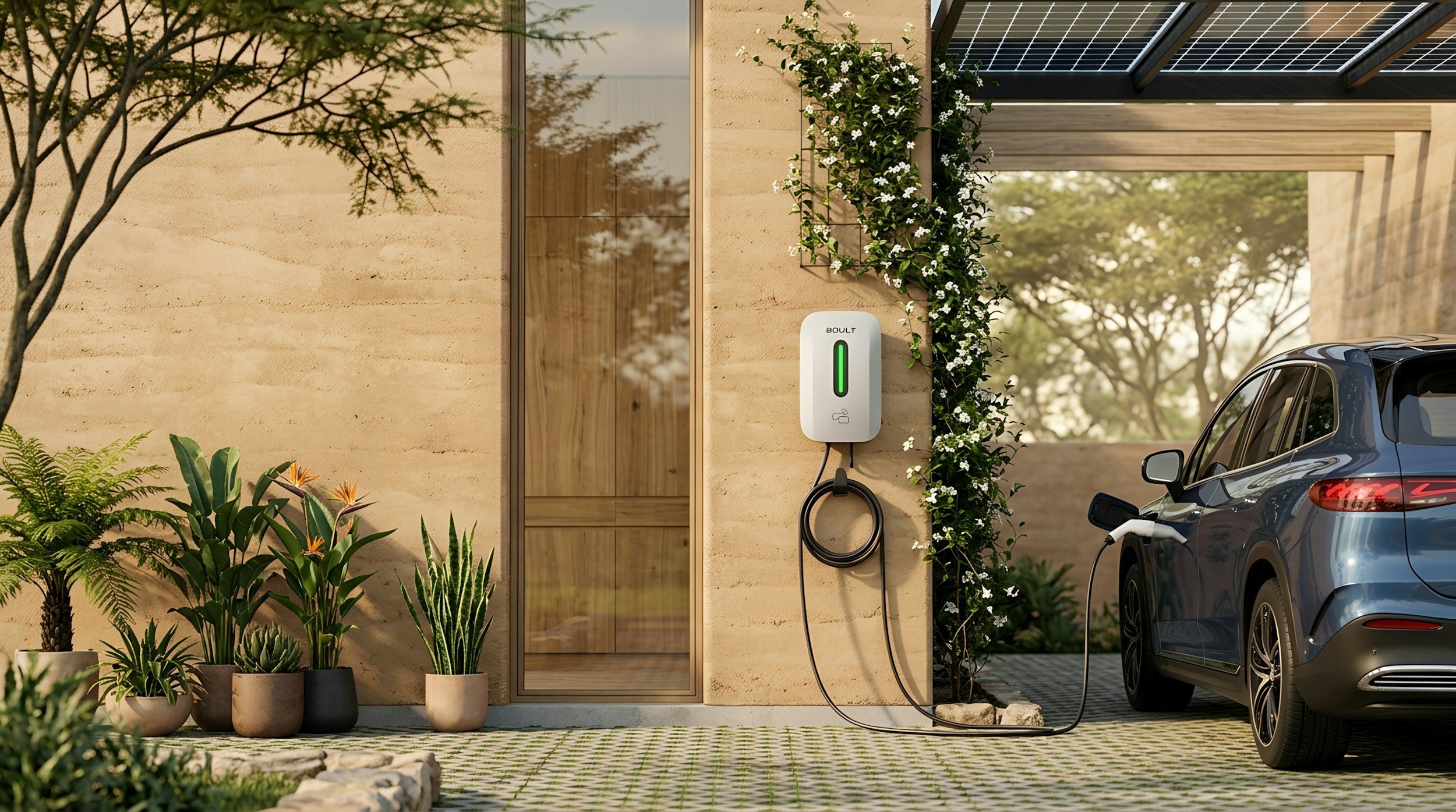
Yes, you need a permit to add an EV charger to a Seattle-area home, and in most cities it is an online permit you buy the same day, followed by an inspection when the work is done. A house usually needs one new 240-volt circuit. A condo needs that plus your association's sign-off, and Washington law says the association can't unreasonably say no. What decides your cost and timeline is the wiring between your panel and your parking spot.
Charging counts as a continuous load, so the circuit is sized at 125% of the charger. Fees are for Seattle, Bellevue and Washington L&I.
Find your permit
Pick your city
- Who issues it
- Choose a city above
- How you buy it
- Inspections
- Fee
- Official page
Who can pull the permit, everywhere: a licensed electrical contractor, or you, if you own the home, live in it and do the work yourself. A relative or property manager can't pull it for you. Based on Washington L&I's list of cities that run their own electrical permits; confirm on your city's permit page.
Houses
Adding a charger to a Seattle-area house is one new circuit and one permit
Most houses here can take a Level 2 charger without drama. The work is a 240-volt circuit from your panel, or a garage subpanel, to where you park. Level 2 adds roughly 12 to 30 miles of range per hour, depending on the car and the charger. Level 1, a regular outlet, adds about 2 to 5. Fine for a light commute, slow for everything else.
What decides the job
- Distance. Panel to parking spot. A charger on the garage wall next to the panel is the easy version. A detached garage or a driveway across the yard means a trench, and a bigger bill.
- Panel room. The charger needs its own circuit, sized at 125% of the charger: 50 amps for a 40-amp charger. If the panel is full or the house service is small, an electrician runs a load calculation. Some chargers can share power with the house through load management, which can avoid a service upgrade.
- Outlet or hardwired. A NEMA 14-50 outlet lets you unplug and take the charger with you. Code requires GFCI protection on that outlet. A hardwired charger skips the outlet entirely and is the only choice for two-way charging that can power the house.
- The charger itself. Usually the owner buys it; the electrician installs it. In my experience a licensed electrician runs about $200 an hour, and a simple garage install takes a few hours.
What a simple install costs
| Item | Cost | Notes |
|---|---|---|
| Charger | $300 to $800 | Most Level 2 chargers |
| Installation | From about $550; about $1,000 on average | A simple run near the panel. Distance, trenching or a panel upgrade add more. |
| Permit | Under $200 | Seattle, Bellevue or L&I |
| Typical total | $1,500 to $1,800 | Charger plus installation, per PSE |
Installation range: Consumer Reports, citing HomeAdvisor ($551 to $1,385 for most jobs). Total: PSE.
Charger size and charging speed
More amps only help if the car can take them. Some rear-wheel-drive Teslas top out at 32 amps. Level 2 rows: Tesla Wall Connector installation, Tesla Model Y. Level 1: US DOT.
The permit, step by step
Buy the permit before work starts. Your electrician usually does this. If you own and live in the home and do the work yourself, you can buy it. (More on permits and unpermitted work.)
Rough-in inspection, if walls are open. Seattle and L&I inspect wiring before it is covered. Patch drywall only after it passes.
Final inspection. The inspector looks at the panel, the breaker, the run and the charger or outlet. In Bellevue the charger stays off until it passes.
Service upgrade only if needed. A bigger service adds a utility inspection and more time.
A checklist before you call an electrician
- Photo of your panelDoor open, so the electrician can see free spaces and the main breaker size
- Where you parkAnd where the car's charge port sits
- Indoor garage or outdoor post
- Outlet or hardwired
- One EV now, or two laterSize the run for the future once
Condos
In a Washington condo, the law says yes and the building decides how
Washington condo associations can't ban a charger in your unit or your designated stall, or restrict it unreasonably. The rule is RCW 64.90.513, and it reaches condos and HOAs created before 2018 too. Reasonable does not mean “we made it so expensive you'll give up and buy a bicycle.” Rules can't significantly raise the cost or cut the charger's performance.
What the law does not do is add electrical capacity to your building. That part is physics, and physics doesn't attend board meetings.
Is your stall “designated”?
The right covers a space that is legally yours: a deeded stall on your title, or a limited common element assigned to your unit in the condo documents. The spot you've parked in since 2018 by habit doesn't count.
How approval works
- Step 1ApplyIn writing, like any other architectural request. Only the usual processing fee; no special EV fee.
- Within 60 daysThe board answers in writingNo written denial in 60 days and it counts as approved, unless the board is waiting on reasonable information from you. Ghosting is not an approval strategy.
- Within 14 days of approvalInsuranceA certificate of insurance naming the association.
- A month or twoPermit, install, inspectionYour electrician's permit and the city's final inspection.
- Within 30 days of installRegister the chargerWith the association.
What the owner agrees to
| Item | Who handles it |
|---|---|
| Installation, permits and inspections | Owner, using an electrical contractor familiar with EV chargers |
| Electricity used, plus any meter or submeter to track it | Owner |
| Insurance naming the association | Owner |
| Registering the charger with the association | Owner |
| Maintenance, repair, replacement, and damage to common areas | Owner |
| Removal and restoring the area | Owner, if the charger comes out |
| Disclosing the charger to a buyer | Owner, when selling |
An association that willfully breaks the law can owe actual damages, a civil penalty of up to $1,000, and the owner's attorney fees.
Why it still takes time in a condo
- Capacity. Older buildings often have a garage panel sized for lights and a door opener. One seller I worked with spent two years getting a seven-unit building to agree on an electrical upgrade. It cost about $15,000, paid through a special assessment by every owner, most of whom didn't drive an EV.
- Metering. The charger has to run on power you pay for. Sometimes the unit's meter sits right in the garage. Sometimes an electrician can't separate garage power from unit power without a large project.
- Shared systems. Some buildings installed a third-party charging network on the building's meter, billed back to each user. When that equipment reaches end of life, the owner often stays with that provider rather than moving it to their own meter.
- Timeline. Even with approval in hand, permit, install and final inspection take a month or two. Big buildings that fund per-unit circuits can take years.
An association can also install shared chargers in common areas and set usage rules and rates. Your right to request a charger in your own stall still stands.
Buying or selling
Buying or selling a home with a charger
A listing that says “EV charging” can mean a working charger, a live 240-volt outlet, or a junction box waiting for someone else's charger. I've seen all three under the same two words.
- “Charging station” in a listing. It may be a junction box or a capped circuit, not a charger. It may also be on the street, not at the home.
- An old garage outlet. A 240-volt outlet from a previous owner may be a dryer or welder circuit, the wrong amperage, or not connected at all. The amperage on the breaker tells you which charger fits.
- Condo charging. The resale certificate a Washington condo seller provides has to disclose an owner-installed charger. If a unit has none, the condo section above is the real question: can this building add one, and how soon?
- Parking. Deeded, assigned, or by easement makes a difference. A charger on a shared easement is a legal question as much as an electrical one.
- Timing. Plan on a month or two after closing before you charge at home, even in an easy house. Longer in a condo.
- Sellers. Whether the charger stays or goes belongs in the purchase agreement, in writing, not in a hallway conversation at the final walkthrough.
For a buyer, the useful question isn't “does it have a charger?” It's “what would it take to add one here?” The answer for a house is usually a few hours of electrician time. For a condo, it can be a two-year board conversation.
Rebates and rates
Rebates and rates in 2026: less than there used to be
The federal tax credit for home chargers is gone, and Washington's sales tax break expired. What's left is mostly at the utility level, and the cheapest kilowatt is the one you buy at night.
| Program | What it offers | Status, November 2026 |
|---|---|---|
| Federal 30C tax credit | Was 30% up to $1,000 in eligible census tracts | Ended for chargers placed in service after June 30, 2026 |
| Washington sales tax exemption on EV charger labor and parts | Was a sales tax exemption | Expired July 1, 2025 |
| PSE home charger rebate | Up to $300 on a qualified Level 2 charger; up to $600 plus installation help for qualifying incomes | Listed on PSE's site; confirm it's open before you buy |
| PSE time-of-use rate | Cheapest power 11 PM to 7 AM daily | Open, but PSE says it may be at capacity |
| Seattle City Light time-of-use rate | Off-peak about 8 cents per kWh, midnight to 6 AM; peak about 16 cents, 5 to 9 PM Monday to Saturday | Opt-in, launched May 2026 |
| Seattle City Light multifamily program | Funding for 240-volt outlets or chargers in buildings of 5+ units, applied for through the HOA | 2025 applications were limited to affordable housing; confirm current status |
| PSE multifamily program | Funding per charging port for buildings of 5+ units | Listed on PSE's site |
Seattle City Light doesn't list a rebate for single-family home chargers. Charge overnight and the rate does the work.
FAQ
Frequently asked questions about EV chargers in Seattle
Can I install my own EV charger?
In Washington, an owner can buy the permit and do the electrical work on a home they own and live in. The inspection is the same either way. Most people hire a licensed electrical contractor, and the contractor buys the permit.
How much is an EV charger permit in Seattle?
A Level 2 charger on a 50-amp circuit comes to roughly $168 with Seattle's minimum permit, admin and technology fees. Bellevue's 2025 fee is $164. Through L&I it's $78.80.
Does my HOA have to approve a charger at my house?
In a community of detached single-family homes, the HOA can't require approval unless the charger sits on common property or uses common power. In a condo or attached community, it can require an application, and the 60-day rule applies.
Does Washington law make my condo pay for my charger?
No. The law stops the association from blocking you. The owner pays for installation, electricity, insurance and upkeep, and the association never has to buy the charger. The older HOA statute some sites still cite, RCW 64.38.062, was repealed effective January 1, 2026; RCW 64.90.513 governs.
Do I need to upgrade my electrical panel?
Often not. An electrician runs a load calculation on your house. If it comes up short, a charger with load management can share power with the house instead of forcing a bigger service.
Is a NEMA 14-50 outlet safe for charging?
Yes, when it's on its own correctly sized circuit with GFCI protection, which code requires. For chargers above 48 amps, hardwire.
Does an EV charger add value to a home?
There's no reliable Seattle data putting a dollar figure on it. What I do see: buyers with EVs ask about charging early, and a home that's ready for one answers a question before it becomes a worry.
The bottom line
A house is usually a simple job: one circuit, one online permit, an inspection, a few hours of electrician time. A condo is a legal yes and a practical maybe, decided by your building's wiring and your board's pace. If an EV is in your future and you're buying, ask what it would take to add a charger before you write the offer, not after you get the keys.
I'm a real estate broker, not an electrician or an attorney. Confirm permit details with your city or L&I, and talk to your attorney about condo or easement questions.
Sources
- Seattle SDCI, Electrical Permit
- Seattle SDCI, Tip 132, Electric Vehicle Charging
- Seattle SDCI 2026 Fee Subtitle
- City of Bellevue, Electrical Permits
- City of Bellevue, 2025 electrical fee sheet
- City of Bellevue, Handout B-4
- Washington L&I, Electrical permits, fees and inspections
- Washington L&I, Cities that do their own electrical inspections
- RCW 19.28.261, owner electrical work
- RCW 64.90.513, EV charging in common interest communities
- RCW 64.90.365, application to older communities
- RCW 64.38.062 (repealed)
- PSE, Home charging
- PSE, EV FAQ
- PSE, Time-of-use FAQ
- PSE, Multifamily charging
- Seattle City Light, Time-of-use rate
- Seattle City Light, Multifamily EV charging
- IRS, Alternative Fuel Vehicle Refueling Property Credit
- RCW 82.08.816, expired sales tax exemption
- US DOT, EV charging speeds
- Seattle City Light, EV Charging 101
- Consumer Reports, choosing a home charger
- Mike Holt, NEC Article 625 summary